


MR. HELLA MEDIA | LATEST | NOVEMBER 17, 2026
Apple Says Over 200,000 Apps Are Now Optimized for iPhone Duo, Doubling Support in Just 10 Days
Apple’s first foldable iPhone has reached a major software milestone just weeks after its release, with the company announcing that more than 200,000 applications are now optimized for the iPhone Duo, doubling the number reported earlier this month.
The announcement came Monday, November 16, from Greg Joswiak, Apple’s senior vice president of Worldwide Marketing, who shared the updated figure on X. The company had previously reported more than 100,000 optimized applications on November 6, meaning the total increased by approximately 100,000 in just 10 days.
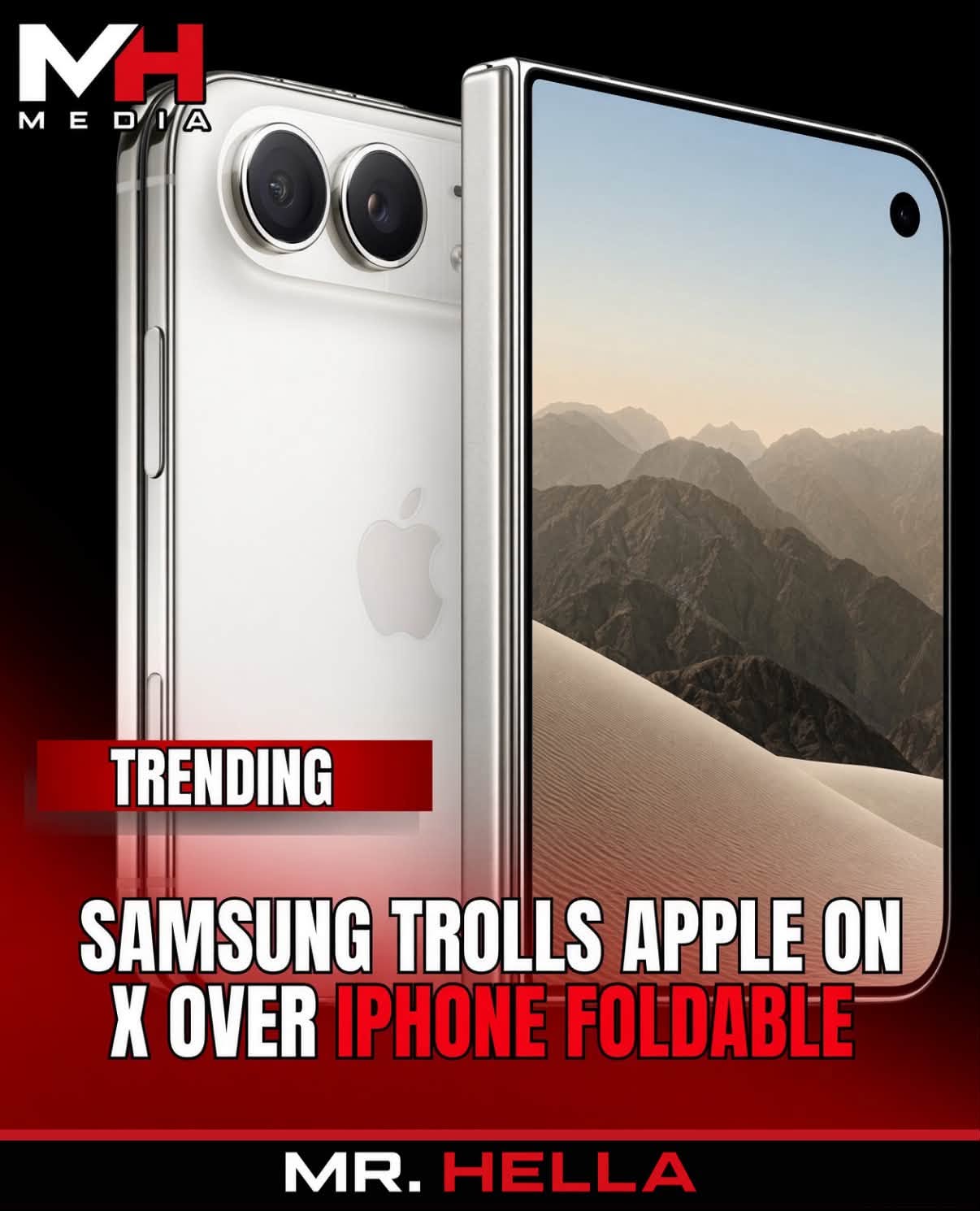
The rapid expansion represents an important development for Apple’s first foldable smartphone, which launched October 23 with a starting price of $1,999. Unlike conventional iPhones, the Duo features two displays: a 5.4-inch exterior screen for everyday use and a larger 7.6-inch interior display that unfolds to provide additional space for multitasking, entertainment and productivity.
However, the announcement comes with an important distinction. While Apple describes more than 200,000 apps as optimized, that designation does not necessarily mean each application has been completely redesigned to take advantage of the foldable device’s unique capabilities.
Many apps qualify simply by being built with Apple’s updated iOS 27.1 software development kit, which allows their interfaces to expand across the larger display. More sophisticated applications incorporate dual-pane layouts, specialized controls and features that respond to the device’s folding position.
The milestone nevertheless signals growing developer support for Apple’s entry into the foldable smartphone market, an industry where inconsistent application experiences have remained a significant challenge. MacRumors +2
Apple Doubles iPhone Duo App Support in Less Than Two Weeks
Apple’s latest announcement highlights the speed at which developers are adapting to the company’s new hardware.
When the iPhone Duo launched on October 23, its unusual screen configuration presented developers with challenges not found on traditional iPhones. Applications designed for a fixed rectangular display needed to accommodate changes in screen size, orientation and interface placement as users folded or unfolded the device.
On November 6, Apple’s vice president of Worldwide Developer Relations, Susan Prescott, announced that more than 100,000 applications had already been optimized for the Duo.
Prescott credited developers for embracing the new form factor and said Apple was seeing thousands of optimized applications added to the App Store daily.
Ten days later, Joswiak announced that the figure had surpassed 200,000.
In his November 16 post, the Apple executive emphasized that the number had doubled in just over a week and expressed enthusiasm about the pace of developer adoption.
IPHONE DUO OPTIMIZED APP GROWTH
The growth suggests that Apple’s developer tools are allowing companies to adapt existing software relatively quickly. It also reflects the importance of application compatibility for a device designed around a fundamentally different way of using an iPhone.
For consumers, the larger catalog means a greater number of familiar applications can now use the Duo’s expanded display without being confined to a conventional smartphone-sized window. WebProNews +1
How Apps Work on the iPhone Duo’s Foldable Display
The iPhone Duo’s central feature is its ability to switch between a conventional smartphone and a larger, tablet-like interface.
When folded, users interact with the 5.4-inch exterior display. When unfolded, the device reveals a 7.6-inch internal screen designed to accommodate larger layouts and multiple content areas.
Applications built using Apple’s latest development tools can detect changes in the available display space and adjust their interfaces accordingly.
For example, an app that displays a single column of information on the smaller screen can expand into a more detailed layout when the device opens.
A productivity application might show a list of projects alongside individual tasks, while a messaging or writing application could provide additional room for conversations, documents or editing tools.
Apple has also introduced support for interface elements that adapt to the Duo’s distinctive status bar arrangement.
With the iOS 27.1 SDK, applications can extend across the entire display while placing certain toolbar and navigation controls vertically beneath the status bar.
This arrangement helps developers use the available screen space more effectively without allowing important interface elements to become obscured.
Apple’s developer documentation emphasizes that applications should avoid relying on fixed screen dimensions and instead respond dynamically to the space available.
That approach is essential for foldable devices because an application’s dimensions can change while it is actively running, rather than only when it is first launched. Apple Developer +1
Full-Screen Continuity Makes Switching Between Displays Easier
One of the most important improvements involves what Apple describes as dynamic resizing.
On a traditional smartphone, applications generally operate within a consistent display area. The iPhone Duo introduces a different experience because users can move between two substantially different screen sizes.
With properly updated software, an application can transition from the exterior display to the larger interior screen without requiring the user to close and reopen it.
For example, someone reading an article on the cover screen can unfold the phone and continue reading with a larger view.
Similarly, a user composing an email can expand the device to access more screen space while maintaining the same editing session.
The goal is to make the transition feel natural rather than forcing applications to restart or display awkward borders around content.
Apple’s developer guidelines explain that applications compiled with the iOS 27.1 SDK can extend across the full width of both displays.
Older applications may still function, but their layouts can remain restricted to smaller windows, reducing the usefulness of the larger screen.
For users who purchase a foldable device specifically for its expanded display, this difference can significantly affect the everyday experience. Apple Developer
Split-Screen Multitasking Brings More Productivity to iPhone
Productivity apps
Project lists and detailed tasks can appear alongside one another.
Entertainment apps
Video, playback controls and supporting content can use separate screen areas.
The iPhone Duo’s larger internal display also creates opportunities for applications to present information in multiple columns.
Instead of simply stretching a traditional smartphone interface across a larger surface, developers can divide the screen into complementary sections.
Task management apps such as Things 3 can use the additional space to display navigation and project details together. AI assistants and writing applications can similarly benefit from layouts that accommodate conversations alongside documents or other working material.
For entertainment, a larger display provides more flexibility for separating video playback from controls, captions or supporting information.
The difference is particularly important because a foldable smartphone is intended to offer capabilities beyond those of a conventional handset. If an application merely becomes larger without adding functionality, users may see relatively little benefit from unfolding the device.
Apple has encouraged developers to adopt adaptive interface frameworks that can reorganize content as the available space changes.
However, not every application in the 200,000-plus count provides a specialized split-view experience. The company’s reported figure includes apps that meet its updated SDK requirements without necessarily offering extensive custom layouts.
Hinge-Aware Features Introduce New Ways to Use Apps
Beyond screen size, the iPhone Duo’s folding mechanism creates another opportunity for software developers.
Applications can use Apple’s arrangement and hinge-related APIs to respond to different device positions, including partially folded configurations.
For example, a video application could place playback on the upright portion of the display while keeping controls accessible on the lower half.
A recipe application could similarly present instructions on one section and supporting information on another, allowing the phone to rest on a table without requiring a separate stand.
Games may also benefit from layouts that separate primary gameplay from maps, controls or other information.
These possibilities represent a more advanced level of optimization than simply allowing an application to fill the internal display.
The challenge for developers is designing interfaces that remain intuitive whether the device is folded, unfolded or positioned at an intermediate angle.
Apple’s developer documentation emphasizes testing applications across the Duo’s supported arrangements and orientations, particularly when existing software relies on assumptions about screen size or device position. Apple Developer +1
Not All 200,000 Optimized Apps Offer the Same Experience
Although Apple’s announcement represents substantial progress, the reported total does not reveal how deeply every application has been customized.
In practical terms, app support can be understood through three broad levels.
Support level What users can expect
Advanced optimization Custom layouts, multiple content panes and potentially fold-aware features
Basic optimization Full-width display support and updated navigation without extensive interface redesign
Legacy compatibility Apps continue running but may appear in smaller windows with unused display space
These are descriptive categories rather than three separate official Apple certification tiers.
Apple’s actual technical distinctions are primarily based on the SDK used to build an application.
Applications compiled with iOS 26 or earlier generally remain centered on the larger display, leaving unused space around their windows.
Those built with iOS 27 expand to fill most of the interior screen but do not use the entire available width.
Applications built with iOS 27.1 or later can extend edge to edge, with controls repositioned to accommodate the Duo’s status bar.
The distinction means an application can technically qualify as optimized while still offering a relatively conventional interface.
Apple has not published a verified breakdown showing how many of the 200,000-plus applications incorporate advanced hinge features or custom dual-pane designs. Apple Developer +1
Netflix, Microsoft and Other Major Developers Have Embraced the Duo
Several prominent developers have already introduced support for Apple’s foldable device.
Among the applications Apple has highlighted are Netflix, Amazon Prime Video, Instagram, WhatsApp, YouTube, Zoom and Microsoft’s productivity applications, including Word, Excel, PowerPoint and OneNote.
Other updated apps include Goodnotes, Flighty, Fantastical and Halide Mark III.
Their participation is important because consumers purchasing a new smartphone generally expect their most frequently used services to function properly from the beginning.
Streaming services benefit from the larger display, while productivity applications can use the expanded screen to show more information simultaneously.
However, early experiences have demonstrated that an optimization label does not necessarily guarantee a flawless interface.
The Verge previously reported that Instagram exhibited some awkward behavior on the Duo despite carrying Apple’s optimization designation.
That illustrates why real-world testing remains important, even as the official app count increases. MacRumors +1
Apple Introduces a “Made for iPhone Duo” App Store Badge
To help customers identify compatible software, Apple has introduced a “Made for iPhone Duo” designation on eligible App Store listings.
The badge allows users to distinguish applications updated for the foldable device from older versions that may not use the expanded display effectively.
Apple also provides developer guidance and App Store presentation tools to help companies showcase their software on the new hardware.
Beginning in April 2027, developers submitting apps will face additional requirements involving screenshots for the Duo.
The initiative is designed to encourage more consistent support for the foldable form factor as Apple’s hardware ecosystem expands.
Still, consumers should understand that the badge primarily communicates technical compatibility with Apple’s optimization requirements, rather than guaranteeing a completely redesigned experience. MacRumors +1
Why the 200,000-App Milestone Matters for Apple’s Foldable Future
Apple entered a foldable smartphone market already occupied by Samsung, Google and Motorola, each of which has spent years developing devices with larger flexible displays.
One of the industry’s recurring challenges has been persuading application developers to build software that takes meaningful advantage of the additional screen space.
Without strong app support, foldable devices risk functioning like expensive conventional smartphones with larger displays.
Apple’s growing optimization count suggests that its developer ecosystem is responding quickly to the new form factor.
The company’s ability to encourage software updates is particularly important given the Duo’s premium positioning and $1,999 starting price.
Customers paying that amount are likely to expect more than an unusual hardware design. They also need applications that make the larger display useful for work, entertainment, communication and everyday tasks.
At the same time, the 200,000-app milestone should be viewed in context. The App Store contains millions of applications, meaning many services have yet to receive the latest optimization updates.
Apple has not disclosed what percentage of its total catalog now meets the Duo’s requirements, nor has it published detailed figures separating basic compatibility from more advanced software experiences.
What Comes Next for the iPhone Duo?
With more than 200,000 optimized applications available, Apple has established a substantial early software library for its first foldable iPhone.
The next stage will likely involve improving the quality of those experiences rather than focusing exclusively on increasing the number of supported applications.
Developers have opportunities to introduce more sophisticated multitasking interfaces, improve controls for partially folded configurations and create features that would be impractical on a traditional smartphone.
Apple’s continuing updates to iOS and its developer tools could also make it easier for companies to take advantage of the hardware.
For consumers, the key question will increasingly shift from whether their favorite applications work on the Duo to whether those applications provide meaningful advantages when the phone is unfolded.
Apple’s latest announcement demonstrates that developer support is growing rapidly, but the real test of the iPhone Duo will be how effectively those applications use its unique design.
The jump from 100,000 to more than 200,000 optimized apps in just 10 days is a significant achievement for a device that has been available for less than a month. Whether that momentum translates into more innovative software experiences could help determine the long-term success of Apple’s first foldable iPhone.


Comments