

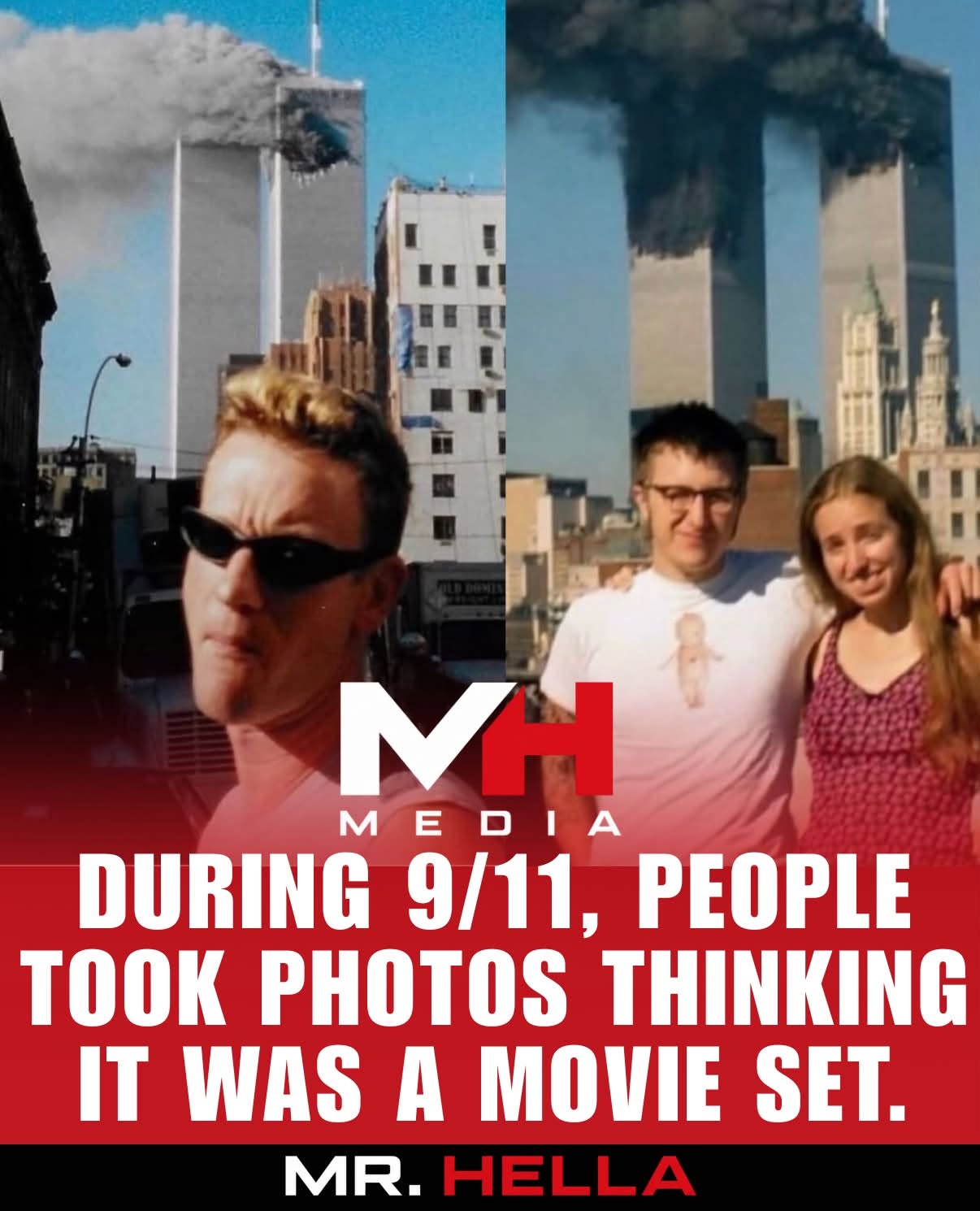
At 8:46 a.m. on September 11, 2001, American Airlines Flight 11 hit the North Tower of the World Trade Center. For the next seventeen minutes, until United 175 hit the South Tower at 9:03, a lot of New York still had a category for what it was looking at: accident. A small plane. A terrible pilot. Something that happens in a city that already knew plane noise and movie crews and smoke that was supposed to be fake. That misread is not stupidity. It is what a brain does when the alternative has not been invented yet for that morning.
Jules Naudet, filming FDNY probationary firefighters in Lower Manhattan, heard the roar, saw an American Airlines tail, swung the camera, and caught the impact. He thought it was a bizarre accident. Then he followed firefighters into the North Tower because that is what you do when you think a plane has hit a building by mistake. People on the sidewalk pulled cameras for the same reason people pull cameras at a wreck: the eye refuses the scale and tries to store it. Hollywood had used those blocks for years. Special-effects smoke was a local industry. The first minutes borrowed that file. It was the wrong file.
Air-traffic and cockpit reality moved faster than the street. Controllers and crews were already inside a hijacking language. The ground was not. A private-plane story is how a city protects itself for a quarter hour. The second plane ended the protection. After 9:03 the word accident left the block. What remained was an attack on purpose, two towers, and a day that would also include the Pentagon and a field in Pennsylvania.
What the cameras were doing
They were not journalism yet. They were shock with a shutter. Naudet’s tape and Pavel Hlava’s tunnel tape are why we can still see the first strike. Most other people were holding cheap cameras toward a wound they had not named. Recording a monumental sight is an instinct. Understanding that the sight is mass murder takes a second plane, or a television, or a radio that has caught up. People 8,000 miles away at a desk sometimes knew more than people in the lobby. Naudet said that later. It is still true.
How to talk about the confusion without making it cute
Nearly 3,000 people were killed. First responders walked into buildings that would come down. The “movie set” feeling is a footnote about human perception, not a genre. Survivors have said it because disbelief is part of trauma, not because the day was cinema. Do not aestheticize the smoke. Do not turn the seventeen minutes into a twist. They were the last minutes a lot of people were allowed to believe in a smaller disaster.
September 11 is history. The first minutes are history of incomprehension. Both belong in the record. The record should stay with the dead, the firefighters Naudet followed, and the fact that an accident was the kindest story available until it was not. After 9:03 nobody on that street needed a metaphor. They needed a way out. Many did not get one. That is the article the confusion sits inside. Keep it there.


Comments