

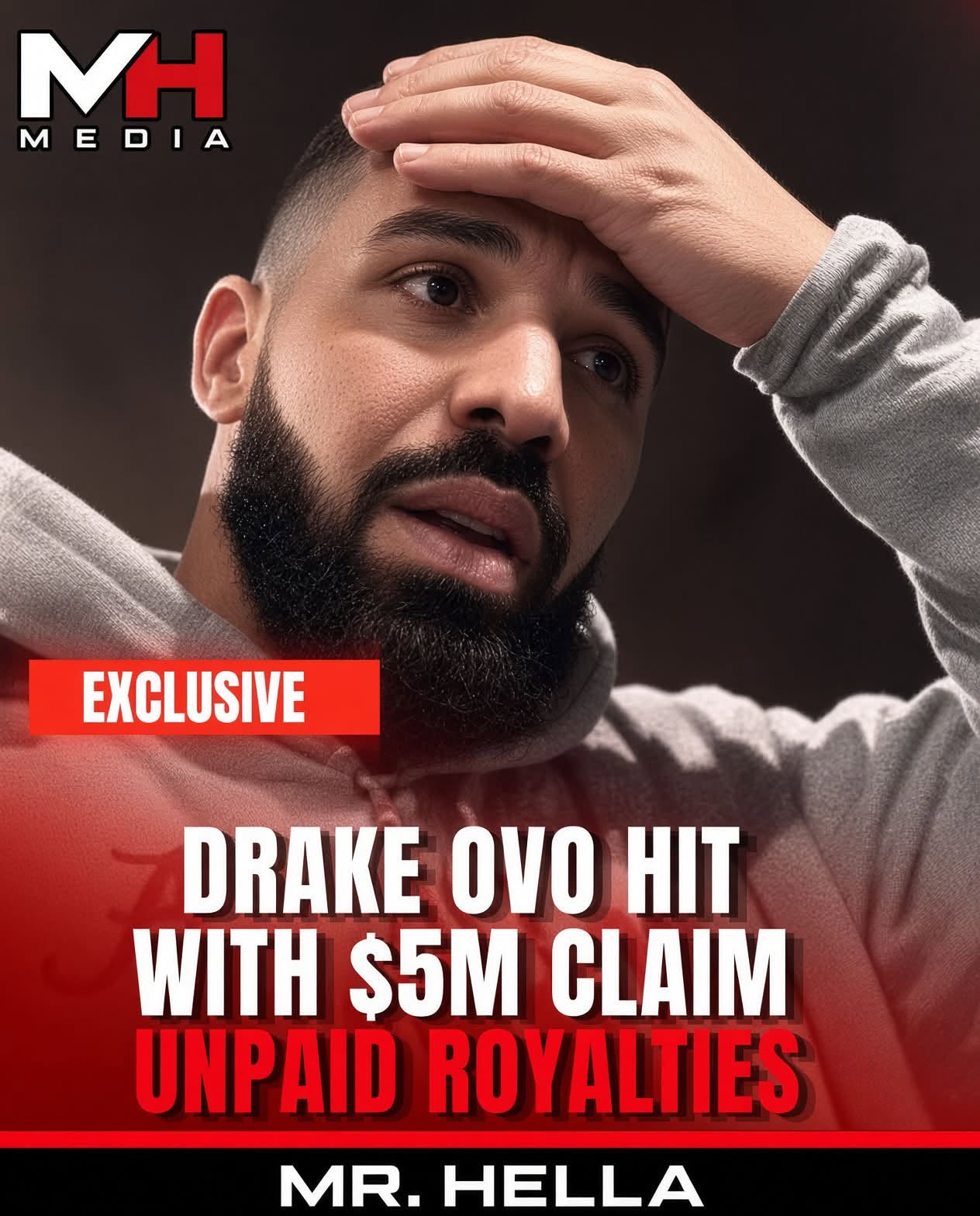
Drake’s October’s Very Own is facing a multimillion-dollar dispute with one of its investors just weeks after a major transaction shifted control of the OVO brand’s intellectual property to Authentic Brands Group.
Applied Real Intelligence, or A.R.I., says millions of dollars in contractual obligations remain unpaid following an investment it made in OVO earlier this year. The investment firm claims it was not properly informed about negotiations leading to the August transaction involving Authentic Brands Group and Vince Holding Corp., was not asked to provide a payoff amount and received none of the transaction proceeds.
OVO and A.R.I. were already fighting over the financing in Ontario Superior Court before the deal closed.
A.R.I. calculated that approximately C$5.04 million was outstanding as of July 31, according to material describing its court filing. That figure includes disputed amounts for a make-whole fee, interest, default interest, lender expenses and legal expenses.
The amount should not be characterized as a final debt judgment against OVO. It represents A.R.I.’s calculation of what it says it is contractually owed, and the dispute remains subject to litigation.
A.R.I. Invested in OVO Earlier This Year
The relationship between the two companies began publicly on much friendlier terms.
In January, A.R.I. announced that it had made a growth-capital investment in October’s Very Own, the Toronto lifestyle company founded by Drake, Oliver El-Khatib and Noah “40” Shebib.
Financial terms were not publicly disclosed in the initial announcement.
At the time, A.R.I. founder and managing general partner Zack Ellison described OVO as positioned to capitalize on global demand for culturally influential brands spanning fashion, music and lifestyle.
What began as a growth investment eventually became a contractual dispute.
A.R.I. says defaults occurred after it provided the financing and that the firm temporarily refrained from exercising certain enforcement rights while OVO was given additional time to address its obligations.
When the parties failed to resolve the dispute, the matter moved into court.
The Dispute Predated the OVO Sale
One of the most important details in the timeline is that A.R.I.’s dispute with OVO did not emerge after Authentic and Vince announced their transaction.
The litigation was already underway.
A.R.I. says its claim had been the subject of litigation for more than two months by the time the OVO transaction closed on August 24.
The investment firm subsequently pointed to a 391-page motion record dated August 10 and accepted for filing in Ontario Superior Court on August 13.
A.R.I. argues that its financing agreements gave it information and change-of-control rights that became relevant as OVO negotiated the transaction.
The firm claims it was not informed of those negotiations before the transaction was publicly announced.
“We received no portion of the transaction proceeds,” A.R.I. said in a statement concerning the dispute.
The firm further said it was not asked to provide a payoff amount or payoff letter and did not authorize a release of its claims.
Those are A.R.I.’s allegations and interpretation of its contractual rights. The litigation will ultimately determine the legal consequences of the disputed agreements and transactions.
SEC Filings Confirm OVO’s Ownership Changed
While the investor dispute is being fought in court, filings with the U.S. Securities and Exchange Commission provide a much clearer picture of what happened to OVO itself.
On August 24, Authentic Brands Group, Vince Holding Corp., Drake and several OVO entities entered into a complicated series of transactions involving both the intellectual property behind the OVO brand and the companies operating its retail business.
Authentic formed a new subsidiary to hold OVO’s intellectual property.
Under the resulting structure, Authentic owns 51% of the OVO intellectual property entity, Drake owns 44% and Vince owns the remaining 5%.
That means Drake retained a substantial economic interest in the intellectual property associated with the company he helped build, but Authentic became its majority owner.
The intellectual-property assets covered by the transaction are extensive.
The purchase agreement filed with the SEC describes assets associated with “October’s Very Own” and “OVO,” including trademarks involving OVO Sound, OVO Fest and the company’s recognizable owl logo, among other intellectual-property rights connected to the brand and merchandising business.
Vince Took Over OVO’s Operating Business
There was another major piece to the transaction.
Vince Holding Corp. acquired OVO’s operating business through its subsidiary, OWL Opco.
That means the ownership of OVO's intellectual property and the operation of the actual apparel business are now separated under the new structure.
Vince owns and operates OVO’s retail, e-commerce and wholesale businesses and serves as the brand’s core apparel and retail licensee.
The company said OVO had 12 stores across Canada, the United States and the United Kingdom when the transaction was announced.
Vince later disclosed that OVO generated nearly $50 million in sales during calendar year 2025 and said it believes the business has the potential to exceed $100 million in sales by fiscal 2030.
Vince paid a nominal cash amount for OVO’s operating business, according to its subsequent SEC disclosure, while separately paying $6 million for its 5% ownership interest in the newly created OVO intellectual-property holding entity.
SEC Filing Specifically References Repayment of OVO Debt
This is where A.R.I.’s dispute becomes particularly notable.
Vince’s August 27 Form 8-K does not merely say that OVO changed hands.
The filing specifically describes a step called the “Repayment of Debt.”
According to the SEC filing, the sellers were required to cause the “repayment and satisfaction in full” of defined OVO debt, along with the release, termination and discharge of related liens, before Vince acquired the OVO operating companies.
The filing further states that Vince would acquire those companies “free of the OVO Debt.”
Vince itself and its subsidiaries were not responsible for funding that debt repayment, according to the filing.
That language does not, by itself, establish that A.R.I.’s disputed claim qualified as “OVO Debt” under the purchase agreement or that A.R.I. was legally entitled to receive transaction proceeds.
But it creates a significant factual intersection between the SEC disclosures and the pending court dispute.
The transaction documents say specified OVO debt was to be satisfied.
A.R.I. says its own multimillion-dollar obligations were not.
Exactly how A.R.I.’s financing fits within the transaction documents — and whether OVO complied with all of its obligations to A.R.I. — is part of what remains disputed.
A.R.I. Says It Was Owed More Than C$5 Million
A.R.I.’s claimed balance is also more complicated than simply saying OVO borrowed C$5 million and never repaid it.
The investment firm says OVO made a partial repayment.
The remaining amount claimed by A.R.I. includes several contractual components, including the disputed make-whole fee and various forms of interest and expenses.
As of July 31, A.R.I. calculated the outstanding total at C$5,037,977.
A make-whole provision generally operates as contractual compensation to a lender or investor when financing is repaid or terminated under circumstances covered by the agreement. Whether a particular fee is triggered depends on the language of the underlying contract and the circumstances surrounding repayment.
That matters here because A.R.I.’s claimed total is not simply unpaid principal.
Its demand includes amounts that OVO can challenge as part of the litigation.
A.R.I. Says It Was Left Out of the Transaction
A.R.I.’s broader complaint concerns more than money.
The firm says its contractual rights entitled it to information concerning what was happening at OVO and that the eventual sale triggered provisions relevant to a change of control.
A.R.I. alleges it did not learn about the transaction negotiations in the manner required under its agreements.
It also says nobody approached the firm for a payoff letter before closing.
“We were not informed of the transaction negotiations, asked to provide a payoff amount or payoff letter, or asked to authorize the release of our claims,” A.R.I. said.
The firm says it continues to seek information concerning the transaction and how its rights were treated.
Again, those statements represent A.R.I.’s account of the dispute. They should not be treated as a judicial determination that OVO, Drake, Authentic or Vince violated the investor’s rights.
Drake Remains Deeply Connected to OVO
The transaction also did not amount to Drake simply selling OVO and walking away.
The SEC documents show that he retained a 44% interest in the entity holding OVO’s intellectual property, making him by far the largest owner after Authentic.
Vince holds the other 5%.
Drake also remains connected to OVO’s creative direction and public identity. Vince’s investor presentation describes Drake’s role around “creative vision,” brand personification, global storytelling and continued brand support.
When the deal was announced, Drake framed Authentic and Vince as partners capable of expanding what he and his co-founders had spent roughly two decades building.
“We’re just a couple kids from Toronto who started something we believed in, here we are 20 years later, same kids with bigger dreams,” Drake said in the announcement. “Authentic and VNCE are the perfect partners to help us continue to grow.”
What the SEC Documents Do — and Don't — Establish
Taken together, the public records establish several important facts.
OVO entered a major transaction on August 24. Authentic emerged with 51% of the OVO IP entity, Drake retained 44% and Vince acquired 5%. Vince also acquired OVO’s operating companies, while the transaction documents contemplated repayment and satisfaction of defined OVO debt.
A.R.I., meanwhile, had already been litigating with OVO and now says more than C$5 million in contractual obligations remained outstanding shortly before the transaction.
What the SEC filings do not establish is that A.R.I.’s interpretation of its financing agreements is correct.
They also do not establish that Authentic Brands Group, Vince or Drake personally owe A.R.I. the amount the investment firm is claiming.
Those are precisely the kinds of questions that make the Ontario litigation important.
A.R.I. says it invested in OVO, obtained contractual protections, encountered defaults and was then left outside a transformative deal involving the same company while millions remained disputed.
The transaction documents show that OVO's corporate structure changed dramatically and that debt repayment was expressly contemplated as part of closing.
Now the court fight will help determine whether A.R.I.’s disputed obligations survived that restructuring — and, if they did, who is legally responsible for paying them.
Comments