

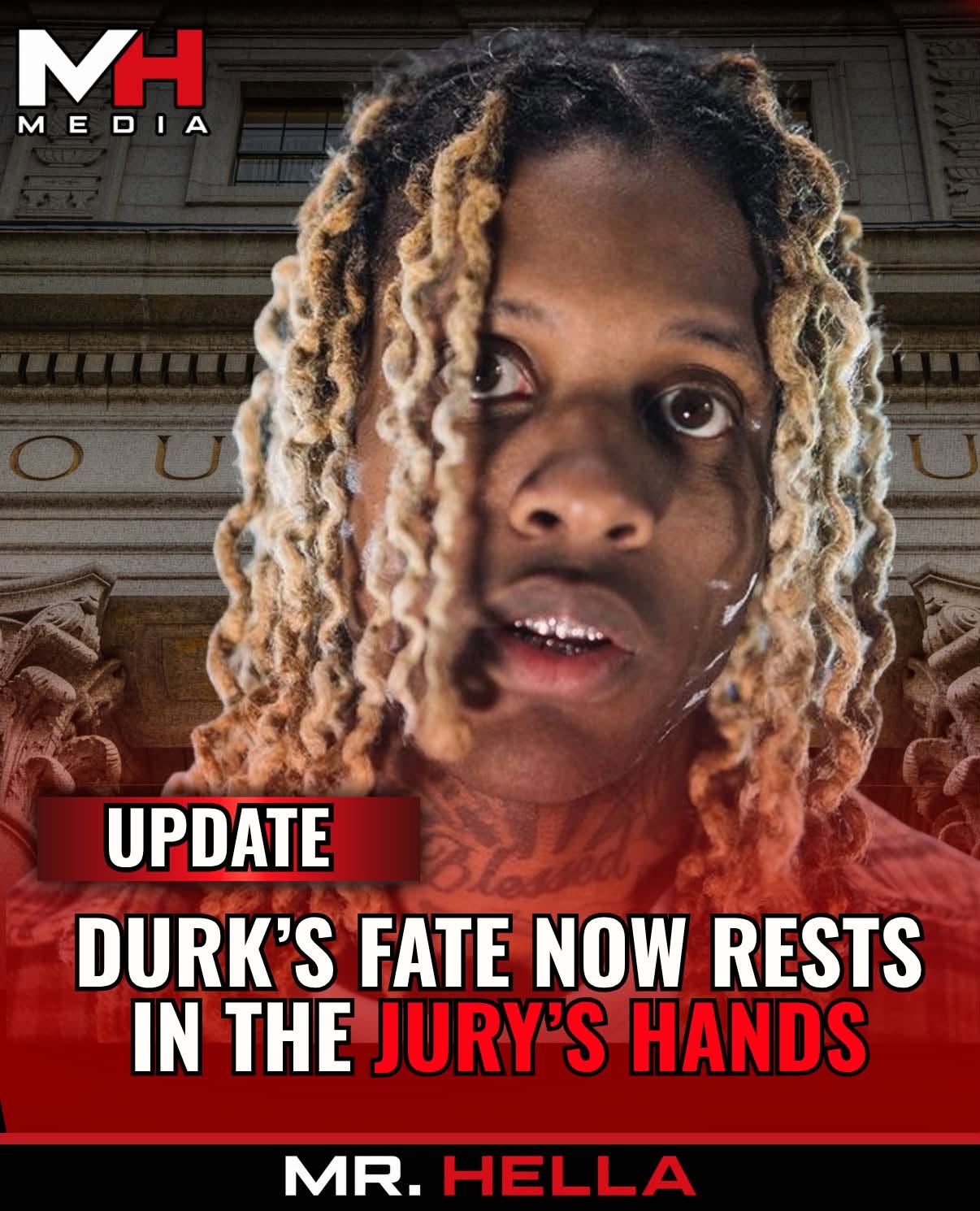
Lil Durk’s federal murder-for-hire trial is entering its final stage after prosecutors and defense attorneys rested their cases, clearing the way for closing arguments and putting the closely watched proceedings within days of reaching the jury.
The government concluded its case Thursday, Sept. 3, after nearly two weeks of testimony in federal court in Los Angeles. Durk’s defense immediately followed with a rapid presentation of nine witnesses, completing its entire case in a single day before resting as well.
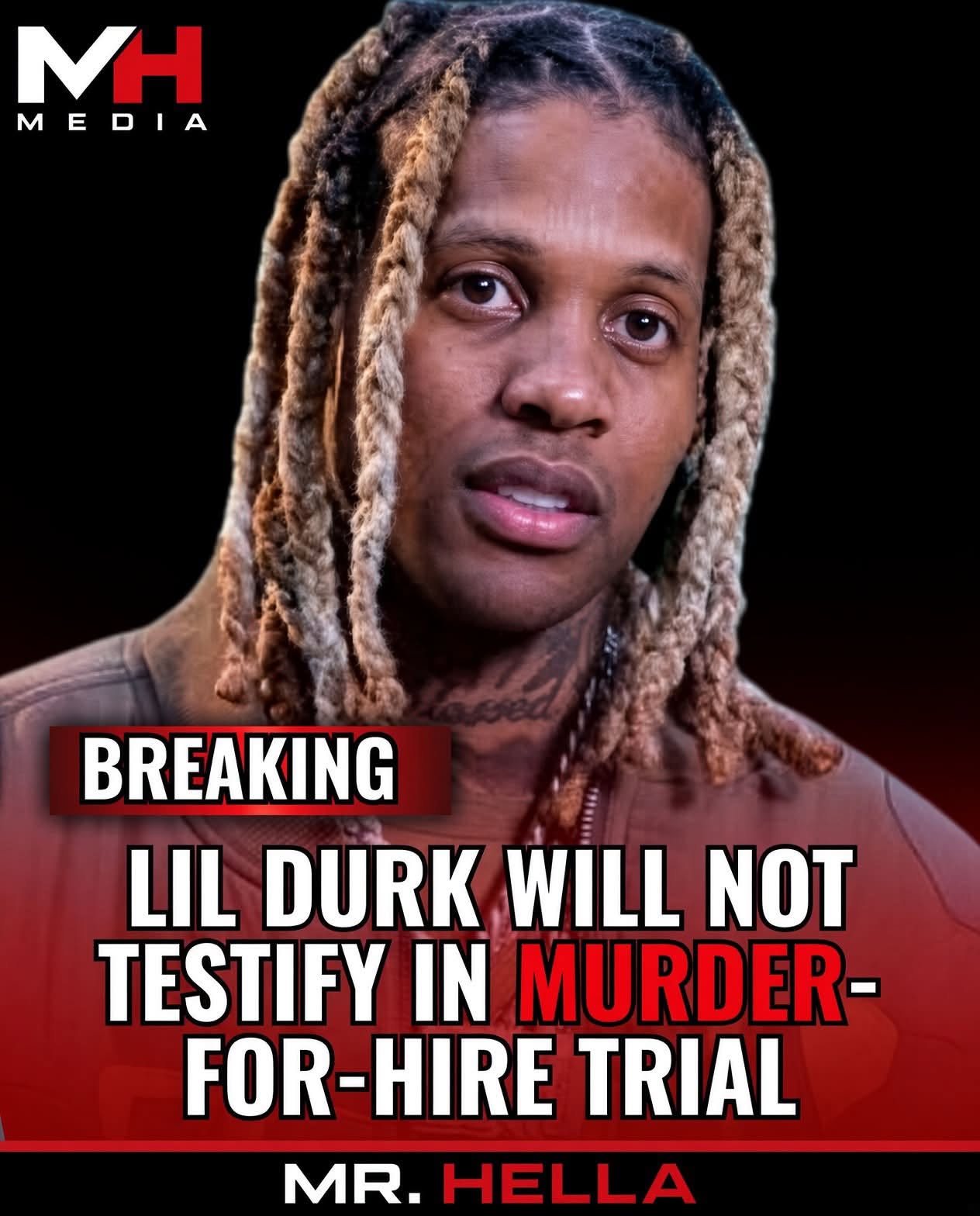
Durk, whose legal name is Durk Banks, will not testify in his own defense. His co-defendants Deandre “OTF Dede” Wilson and David “Browneyez” Lindsey also declined to take the witness stand.
U.S. District Judge Michael W. Fitzgerald has ordered jurors to return Tuesday, Sept. 8, for closing arguments. After attorneys make their final cases and the judge delivers his instructions, the trial is expected to move toward jury deliberations.
Durk has pleaded not guilty. If convicted on the most serious charges, the Grammy-winning Chicago rapper could face life in federal prison.
Defense Calls Nine Witnesses in One Day
The defense phase of the trial moved considerably faster than the prosecution’s case.
After federal prosecutors rested Thursday morning, Durk’s attorneys called nine witnesses in an effort to challenge portions of the government’s case, undermine the accounts of cooperating witnesses and offer alternative explanations for evidence jurors heard during the prosecution’s presentation.
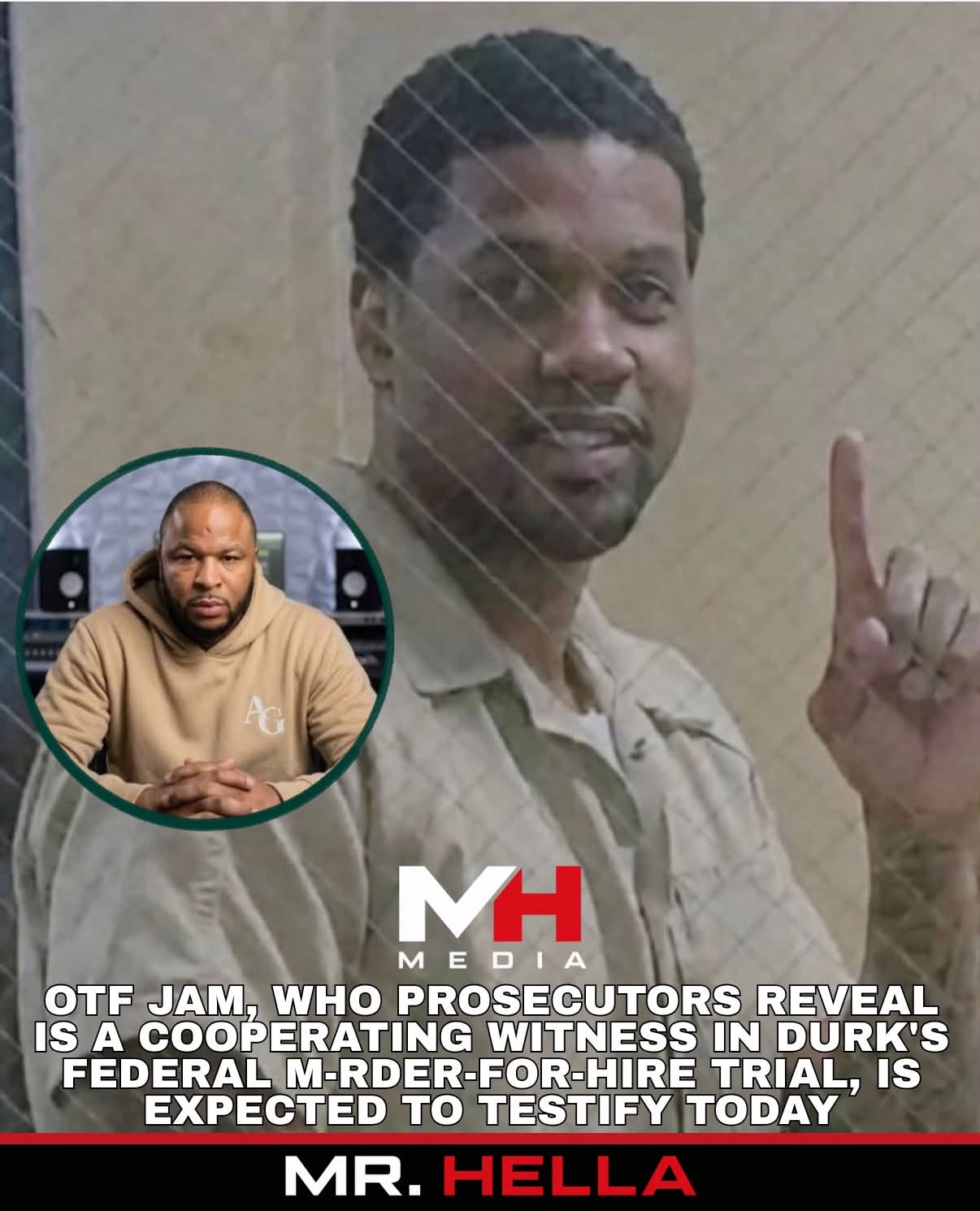
Among the witnesses were Tonya Johnican, the sister of Durk’s former security guard known as “Big Country”; Kevin Freeman, who worked with Durk through his Neighborhood Heroes organization; Shekema “Queen Kema” Springfield, the mother of one of King Von’s children; former Alamo Records executive Sanchay “Dharmic” Jain; and Lashawntay Hester, the wife of government witness Kacey “OTF Jam” Hester.
Hester’s testimony was particularly notable because her husband has emerged as one of the government’s cooperating witnesses against Durk.
The defense has sought throughout the trial to challenge the credibility of cooperators who admitted their own involvement in the alleged plot before testifying for prosecutors. Durk’s attorneys have argued that the government’s witnesses have reasons to shift responsibility toward the rapper as they face the consequences of their own conduct.
The defense has also pointed toward Kavon “OTF Vonni” Grant, another cooperating witness, as the person who orchestrated the operation rather than Durk.
Prosecutors Say Durk Was Behind a Revenge Plot
Federal prosecutors have presented a dramatically different account.
They allege Durk orchestrated and financed a murder-for-hire plot targeting rapper Quando Rondo, whose legal name is Tyquian Bowman, following the November 2020 killing of Durk’s close friend and fellow Chicago rapper King Von.
Von, whose legal name was Dayvon Bennett, was killed during a confrontation outside an Atlanta nightclub involving members of Bowman’s circle.
Prosecutors contend that Durk subsequently placed a bounty on Bowman and that associates connected to his Only The Family circle traveled to Los Angeles as part of an effort to kill him.
The alleged plot culminated in an Aug. 19, 2022 shooting at a gas station near the Beverly Center in Los Angeles.
Bowman survived, but his cousin Saviay’a “Lul Pab” Robinson was killed when gunmen opened fire on their vehicle.
Prosecutors have attempted to connect Durk to the operation through witness testimony, travel arrangements, communications and other evidence introduced during the trial.
Durk’s attorneys maintain that those pieces do not establish that he ordered or knowingly participated in the alleged murder plot.
Durk Will Not Take the Stand
One question surrounding the defense case was whether jurors would hear directly from Durk.
They will not.
Durk formally declined to testify before his attorneys rested, as did Wilson and Lindsey.
A defendant in a criminal case has a constitutional right not to testify, and jurors cannot treat the decision to remain silent as evidence of guilt.
Instead, Durk’s defense has attempted to make its case through its own witnesses, cross-examination of government witnesses and challenges to the prosecution’s interpretation of the evidence.
That means the next time attorneys directly address jurors, they will no longer be introducing new testimony. They will be explaining why the evidence already presented should—or should not—result in convictions.
Trial Now Moves to Closing Arguments
The transition marks a major turning point in a federal case that has drawn intense attention throughout the hip-hop world.
Closing arguments are scheduled to begin Tuesday following the long holiday weekend.
Prosecutors will have an opportunity to assemble weeks of testimony and evidence into their final argument that Durk was behind the alleged operation targeting Quando Rondo.
Durk’s attorneys will make the opposite case, arguing that the government has failed to prove beyond a reasonable doubt that the rapper ordered or knowingly participated in the alleged plot and that cooperating witnesses cannot be trusted to place responsibility on him.
After closing arguments, Judge Fitzgerald is expected to instruct jurors on the law governing the charges before deliberations begin.
At that point, the case will leave the hands of prosecutors and defense attorneys and move to the jury.
For Durk, the stakes could hardly be higher. After nearly two weeks of testimony, cooperating witnesses, competing accounts of what happened and nine final defense witnesses, the evidence phase of his murder-for-hire trial is officially over.
What remains is each side’s final argument—and then the jury’s decision.
Comments