

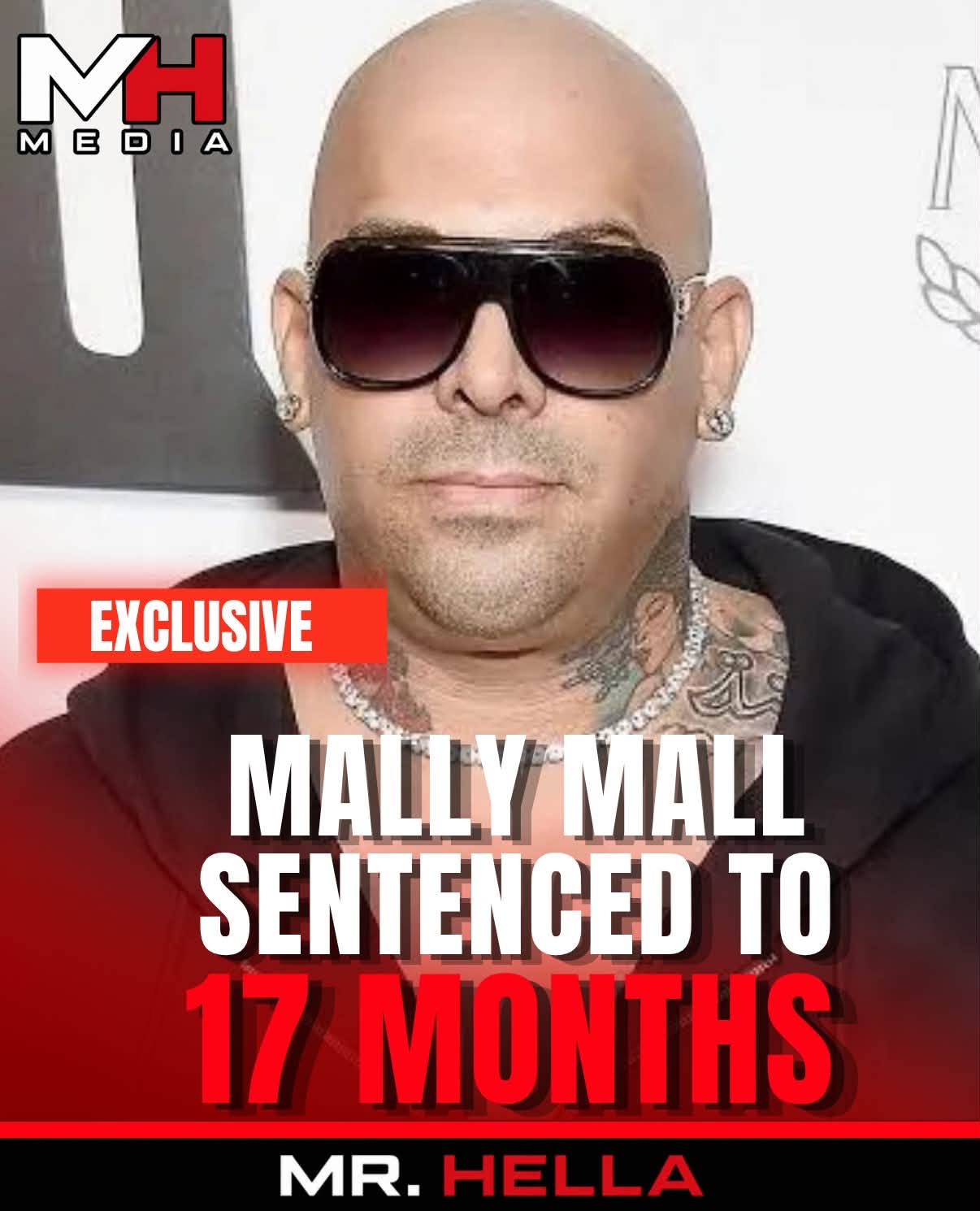
Hip-hop producer Mally Mall is heading back to federal prison after admitting to a series of violations committed while he was under federal supervision, including conduct involving a witness from his original criminal case.
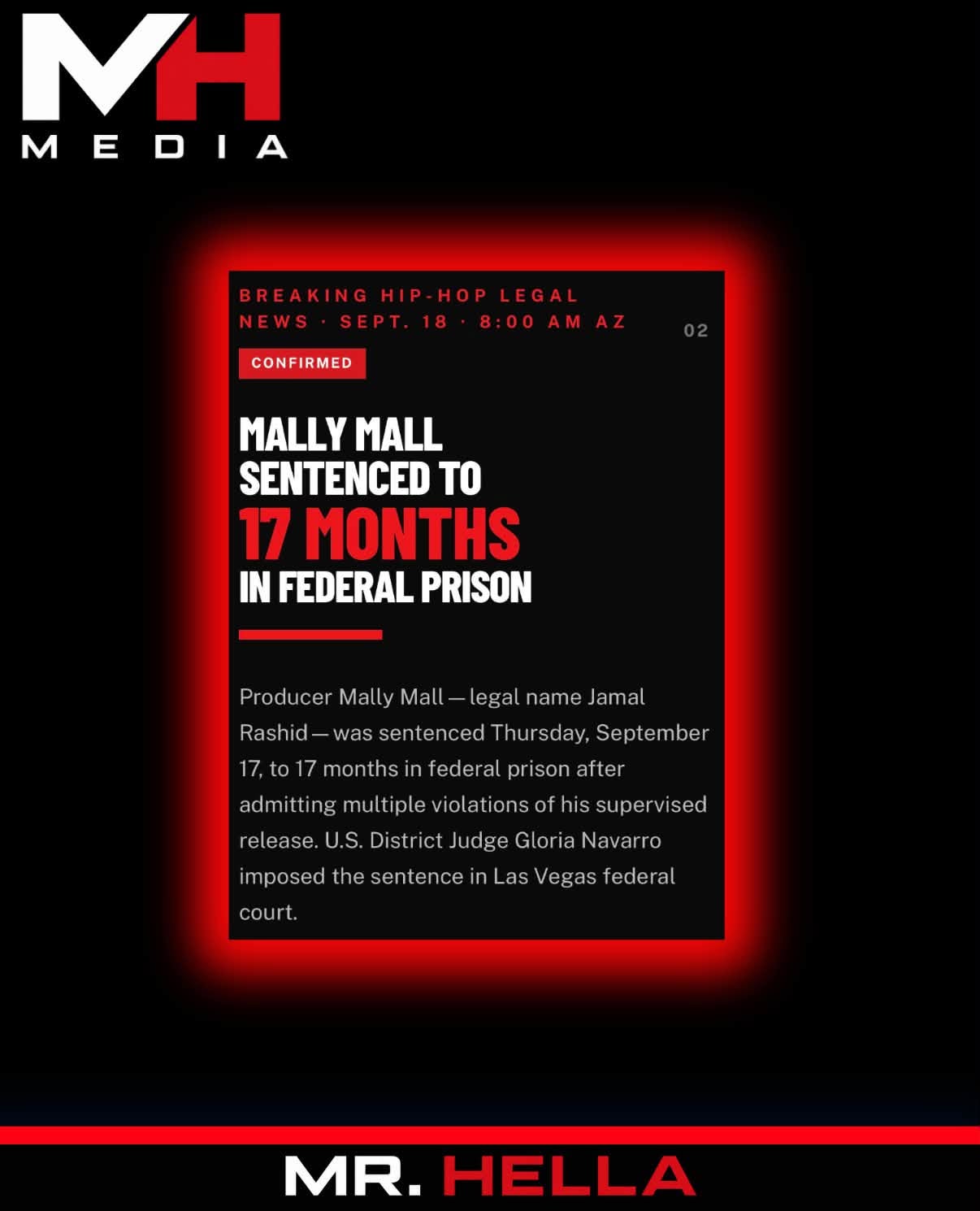
On September 17, U.S. District Judge Gloria M. Navarro sentenced Mally Mall, whose legal name is Jamal Rashid, to 17 months in federal prison after revoking his supervised release. Rashid had previously served a 33-month federal sentence and was completing a three-year period of supervision when authorities accused him of repeatedly violating the conditions imposed by the court.
The violations extended well beyond a single failed drug test.
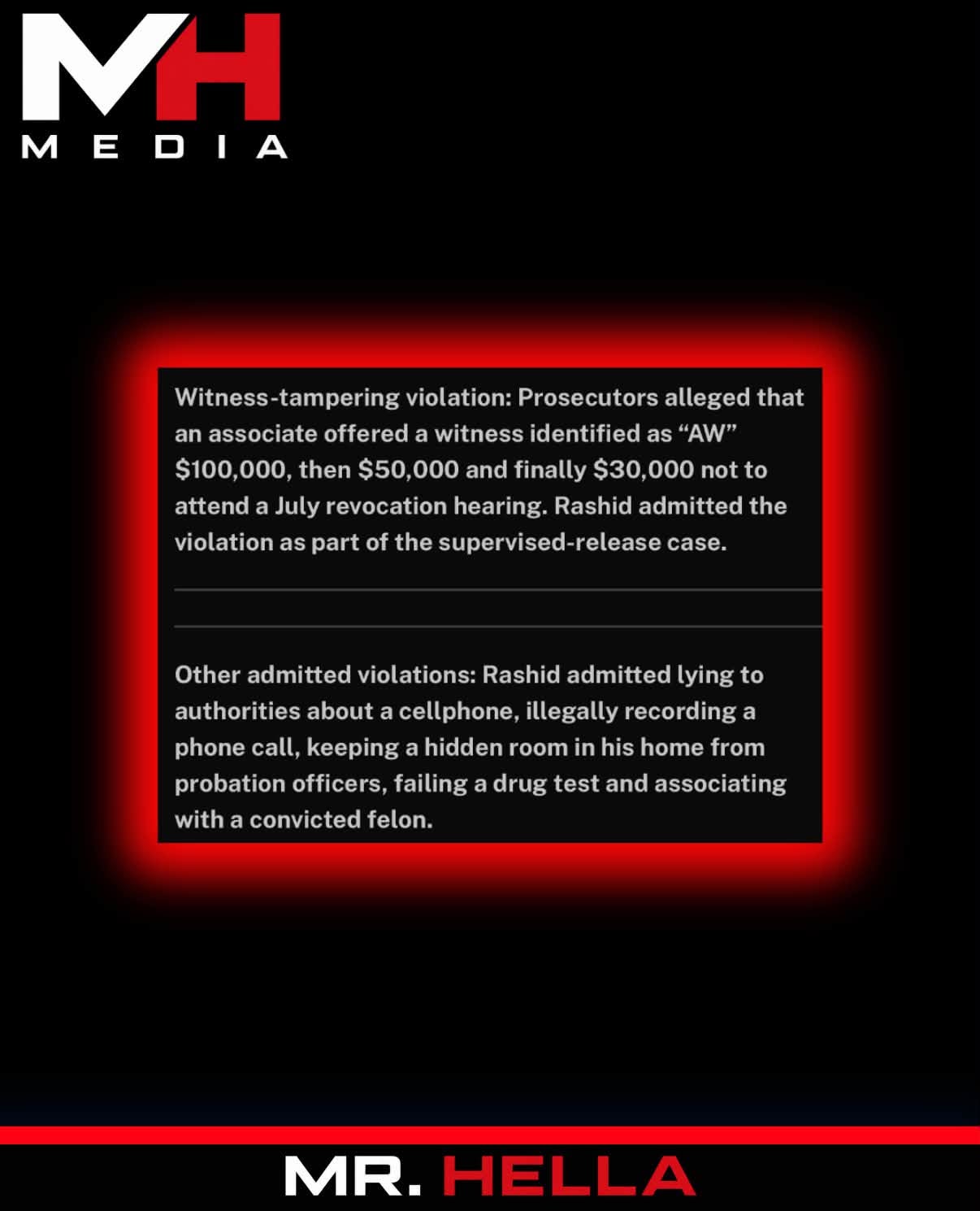
According to the U.S. Attorney’s Office for the District of Nevada, Rashid admitted that he unlawfully recorded telephone conversations with a victim from his underlying criminal case and attempted to influence her in connection with pending civil litigation. Authorities characterized that conduct as federal witness tampering.
He also admitted using controlled substances, including marijuana, cocaine and MDMA, providing false information to his probation officer, associating with a convicted felon without authorization and having prohibited contact with a victim connected to his original case.
Local reporting from inside the Las Vegas courtroom revealed additional details surrounding the violations. According to 8 News Now, Rashid admitted lying about a cellphone, illegally recording a telephone call and maintaining a room inside his Las Vegas home that had not been disclosed to probation officers.
The hidden room had previously attracted attention when allegations against Rashid surfaced earlier in the summer. A probation petition accused him of maintaining a concealed room at his residence while federal officers were responsible for monitoring his compliance with the conditions of supervised release.
Rashid appeared in federal court wearing jail clothing marked “detainee” as Judge Navarro questioned whether his behavior demonstrated that he had actually changed since his previous incarceration.
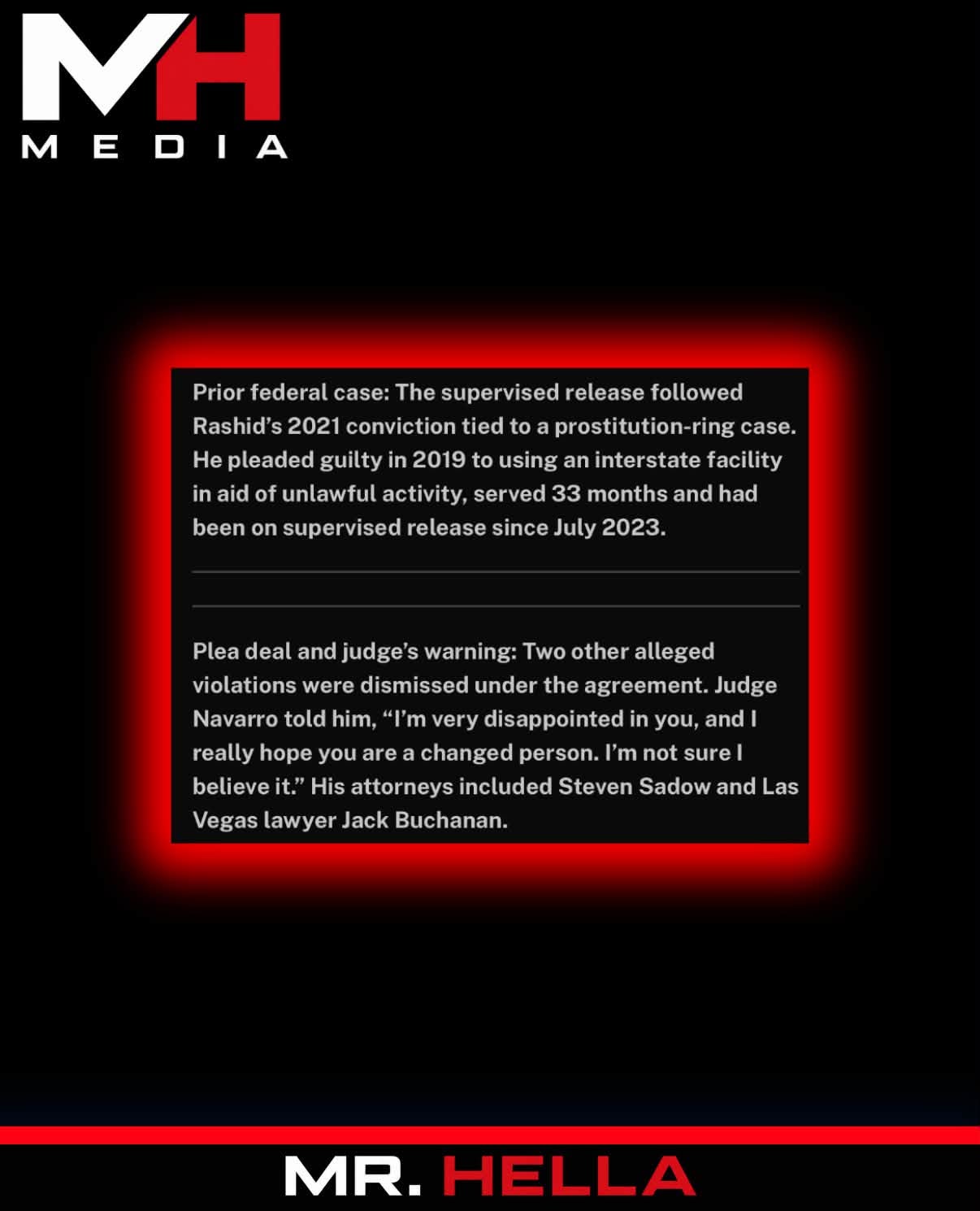
“I’m very disappointed in you,” Navarro told Rashid during the hearing, according to 8 News Now, before adding that she was not convinced by his claims of rehabilitation.
Why Mally Mall Was Already Under Federal Supervision
The new 17-month sentence is not a new prosecution of Rashid’s original criminal conduct. Instead, it stems from violations of the conditions imposed after he completed his previous prison sentence.
Rashid pleaded guilty in October 2019 to one count of using an interstate facility in aid of unlawful activity. In May 2021, Navarro sentenced him to two years and nine months in federal prison, followed by three years of supervised release.
The underlying case centered on escort businesses Rashid operated in Las Vegas between 2002 and 2014.
Federal prosecutors said those businesses were actually fronts for prostitution. According to the Justice Department, Rashid admitted operating a high-end prostitution operation in which women were divided into categories, including “independent contractors” who surrendered a portion of their earnings and “priority girls” who turned over nearly all of their prostitution proceeds to him.
Prosecutors said Rashid manipulated women, imposed rules and used threats to maintain control. Authorities also said he encouraged some victims to tattoo his name or image on their bodies as a demonstration of loyalty and led women to believe he could help advance their careers in entertainment.
After serving his prison term, Rashid began supervised release in July 2023. That meant he was permitted to live outside prison but remained subject to federal conditions governing matters such as drug use, contact with certain individuals and communication with probation officers.
Those restrictions eventually brought him back before the same federal judge who sentenced him in 2021.
Witness Tampering Became the Most Serious Issue
Among the violations, federal authorities placed particular emphasis on Rashid's conduct involving a victim from his original case.
The Justice Department said Rashid unlawfully recorded conversations with the woman and attempted to influence her in connection with pending civil litigation. The FBI described the conduct as part of a broader effort involving threats or intimidation of victims.
First Assistant U.S. Attorney Sigal Chattah said Rashid had treated the conditions of his supervised release with “absolute disregard” and singled out the witness-tampering conduct as particularly serious.
FBI Las Vegas Special Agent in Charge Christopher S. Delzotto similarly said that while a prison sentence may end, restrictions imposed after release remain legally binding. He pointed to Rashid's failed drug tests, unauthorized recording of conversations and associations with convicted felons as examples of conduct that violated those restrictions.
The allegations involving the witness were not entirely new by the time Rashid was sentenced.
In June, court records showed that he had returned to federal custody after probation officials accused him of repeatedly violating supervision. Those allegations included witness tampering and communicating with another woman he had been specifically prohibited from contacting.
By the September hearing, Rashid admitted to violations rather than forcing the government to prove each allegation through a contested revocation proceeding.
Drugs, False Information and Unauthorized Associations
The witness-related conduct was only part of the case.
Federal prosecutors said Rashid also violated supervision through his use of marijuana, cocaine and MDMA. He provided false information to his probation officer and associated with a convicted felon without receiving permission to do so.
Earlier court filings had painted a broader picture of probation officers scrutinizing Rashid's activities.
A probation petition reported by 8 News Now described an unauthorized stop at a Cheesecake Factory in Henderson and raised concerns about vehicles that had not previously been disclosed to probation officials, including a Mercedes-Maybach, Rolls-Royce and Bentley.
The petition also alleged that Rashid maintained contact with a woman who had been involved with the escort businesses connected to his original case despite restrictions on those associations.
Taken together, federal authorities argued that the conduct represented repeated failures to comply with the rules governing Rashid's release rather than an isolated mistake.
Back to Federal Prison
The outcome sends Mally Mall back into federal custody several years after he completed the prison portion of his original sentence.
The 17-month term represents a punishment for violating supervised release rather than another sentence for the prostitution operation itself. Rashid had already served his original 33-month term for that case.
His attorney, Jack Buchanan, said after the hearing that Rashid accepted responsibility and emphasized an important part of the resolution: after completing the new prison term, Rashid will not face another period of supervised release.
That means the September 17 sentence could ultimately close the federal supervision chapter that began after Rashid left prison in 2023.
For now, however, Mally Mall is headed back behind bars.
More than five years after Judge Navarro originally sentenced him to 33 months in federal prison, the producer found himself before the same judge again — this time receiving another 17 months in custody after admitting that he repeatedly violated the rules governing his release.

Comments