

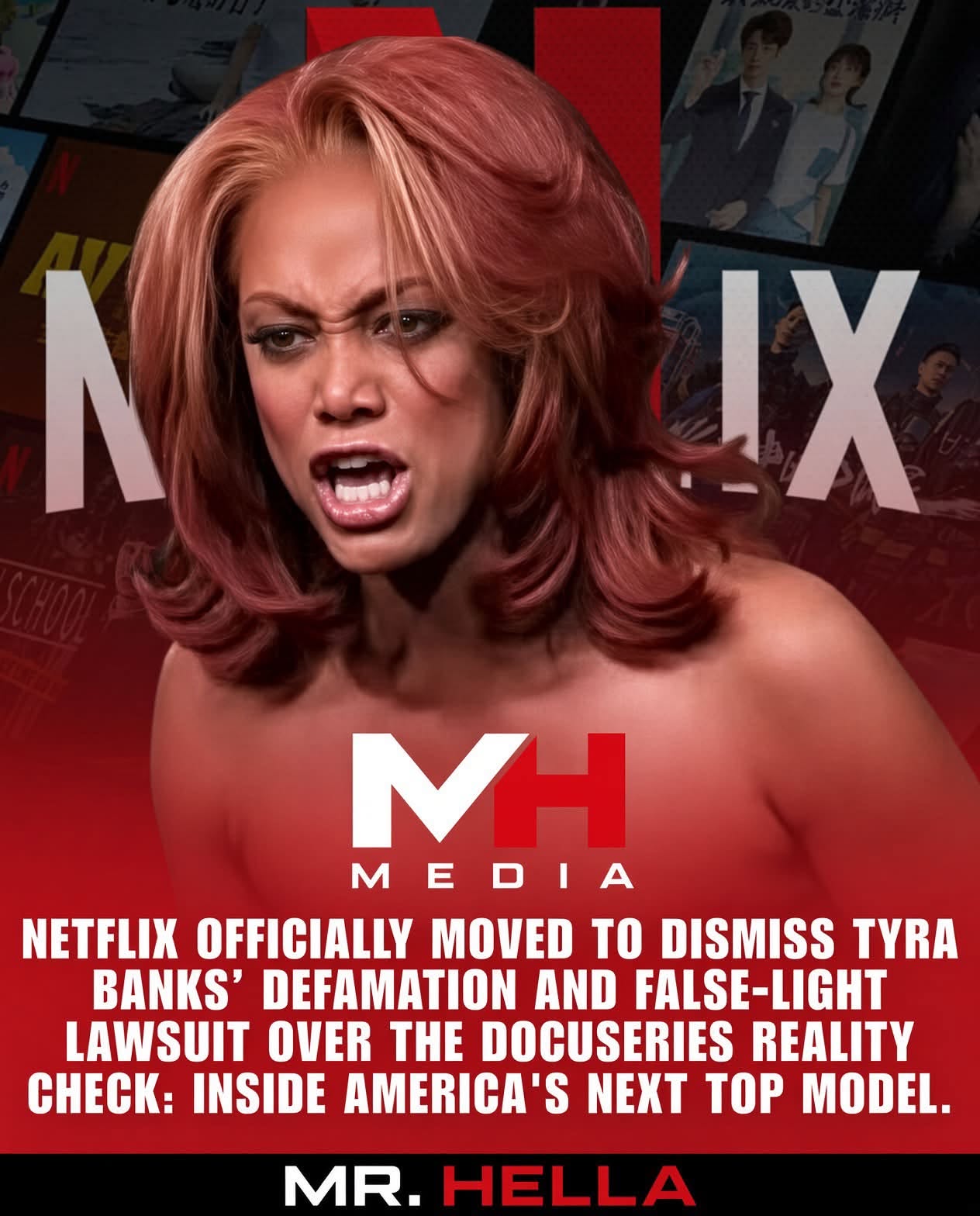
Netflix asked a Los Angeles federal judge in mid-August to throw out Tyra Banks’ lawsuit over Reality Check: Inside America’s Next Top Model. The 28-page motion, as Hollywood Reporter extracted it, says she is not suing over a false statement of fact. She is suing over an edit. Ordinary editorial decisions. A request for more airtime and a cut she likes better. Courts, the streamer argues, do not sit as a second director.
Banks sued in June in the Central District of California. Defendants: Netflix, directors Mor Loushy and Daniel Sivan, EverWonder Studio, related music and holding entities. Claims: defamation by implication, false light, breach of contract, false endorsement. The factual core of her complaint is arithmetic and implication. She sat for about three and a half hours. Viewers got about sixteen minutes. Accountability she says she offered hit the floor. What remained, her lawyers wrote, was a reconstruction: that she knew she was being asked about a sexual assault, evaded it, allowed harm on her set, mined trauma for ratings, and then could not remember the contestant when the question came. She says she saw the series the day before it dropped in February and could not fix, recut, or walk away.
The sequence the suit hates is specific. Cycle 2 contestant Shandi Sullivan describes, in the docuseries, a blackout sexual encounter from the original show that became plot. On camera Loushy asks Banks if she remembers the story with Shandi. Banks looks up, says um, cut to black. Deadline’s excerpt of the complaint: Banks says she had never heard the event framed as assault in those terms and was not told that framing in the interview; the edit, she argues, manufactures indifference. That is an allegation about cutting. It is not a finding that the underlying encounter did or did not happen. Sullivan’s account belongs to Sullivan. Banks’ claim is about what the sixteen minutes did to Banks.
Netflix’s answer
After the interview she signed a release, the motion says: filmmakers may edit; she has no approval; she released defamation and false-light claims arising from the finished film. She got an open chair. The documentary turned ANTM’s own editorial habits back on the franchise and its creator. Disliking the portrait is not the same as proving a lie. A spokesperson told ABC they will vigorously defend Loushy and Sivan as filmmakers who interviewed the room and put Banks next to every other participant.
That is the classic documentary defense: you signed the paper, we cut for theme, implication is not a fabricated quote. It is also the defense that fails when a plaintiff can show a speaker was made to say a thing they did not say. Sixteen minutes out of 210 is not automatically fraud. It is also not automatically fair. A judge has to pick which doctrine wins.
What the case is really about
Reality television spent twenty years turning women’s worst nights into episodes. A later documentary that interrogates that machine will always look, to the host, like a prosecution. Banks created, hosted, and executive-produced ANTM. She is allowed to hate the mirror. Netflix is allowed to say the mirror was the assignment. False light and defamation-by-implication are how California plaintiffs try to sue a vibe. Anti-SLAPP and editorial-discretion arguments are how defendants try to end the vibe at the motion stage.
Nobody should flatten a contestant’s account into a ratings stunt or into a gotcha against Banks without the record. The live question in this filing is narrower: did the cut create a false statement of fact about what she knew and when, or did it do what documentaries do — compress, juxtapose, and let the pause do work she now calls a smear?
The motion is not a verdict. The June complaint is not a verdict. Reality Check is still streaming. Banks wants damages and an injunction tied to a soundtrack that uses her image. Netflix wants the file closed as a taste fight dressed as tort. Until a judge writes, the only clean facts are the runtime she gave, the runtime they used, the release she signed according to them, and a question about Shandi that ends in a hard cut. That cut is the whole lawsuit.


Comments