

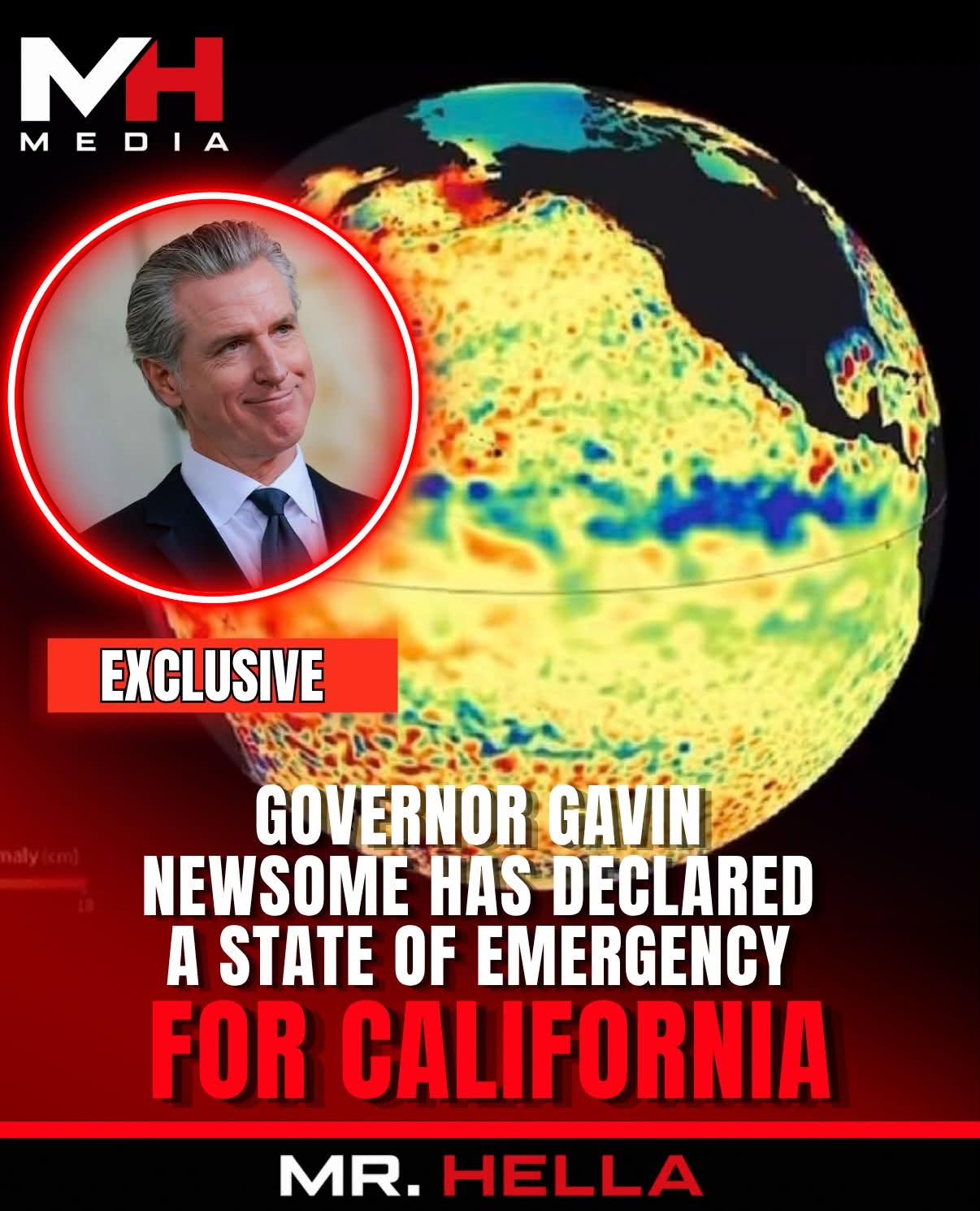
California is not waiting for the storms to arrive.
Gov. Gavin Newsom declared a statewide state of emergency Monday, September 21, as California prepares for an intensifying El Niño that federal forecasters now say has a significant chance of becoming the strongest such event measured in records dating to 1950.
Unlike many emergency declarations issued after wildfires, floods or earthquakes have already caused destruction, Newsom's latest proclamation is primarily about what could happen next.
The declaration gives California agencies additional flexibility to mobilize personnel, stage flood-fighting equipment, protect vulnerable infrastructure, accelerate emergency work and prepare local communities before potentially severe winter storms begin hitting the state.
“We are preparing for this El Niño early because every Californian deserves to be safe in their home, connected to their community, and protected when severe weather comes,” Newsom said in announcing the declaration.
The state is preparing for the possibility of repeated heavy rain, powerful winds, mountain snow, flooding, landslides, debris flows, damaging surf and coastal erosion during the coming months.
But officials are also emphasizing an important point: a powerful El Niño increases California's risk of severe weather. It does not guarantee that every part of the state will experience catastrophic storms.
California Is Declaring an Emergency Before the Disaster
The timing makes this declaration unusual.
California is not currently experiencing a single statewide El Niño disaster requiring an immediate mass response.
Instead, Newsom is using emergency powers before the expected peak of the weather pattern to make it easier for state and local agencies to prepare.
The proclamation directs agencies to protect roads and other critical infrastructure, stage emergency supplies and equipment, assist communities with flood preparation and accelerate work intended to reduce risks from landslides, debris flows and coastal flooding.
It also allows California to streamline procurement and permitting processes that could otherwise slow down emergency preparations.
“We are not waiting for this season’s storms to be on our doorstep,” California Office of Emergency Services Director Caroline Thomas Jacobs said.
Cal OES will coordinate state and local planning while attempting to identify equipment, personnel and other resources communities could need before storms develop.
That distinction matters.
The emergency declaration does not mean California is currently experiencing a statewide catastrophic flood. It means state officials believe the developing weather threat is serious enough to justify activating emergency authorities before the most dangerous part of the season arrives.
NOAA Now Says There Is a 75% Chance of Historic Strength
The numbers behind California's concern have continued to move upward.
Earlier federal guidance cited a 69% probability that the developing El Niño would reach historic strength during the October-through-December period.
NOAA's latest Climate Prediction Center assessment has increased that figure.
Federal forecasters now say there is a 75% chance that El Niño reaches a historic level during October through December, defined in the latest outlook as exceeding the strength of previous events dating back to 1950 using NOAA's Relative Oceanic Niño Index threshold.
NOAA also says there is a greater than 90% chance of a very strong El Niño during the Northern Hemisphere fall and winter of 2026-27.
The coupled ocean-atmosphere system is continuing to strengthen, and forecasters expect that strengthening to continue through the end of the year.
That does not translate directly into a 75% probability of catastrophic flooding in California.
The percentage refers to the projected strength of the El Niño climate event, not the probability that a particular California city will flood or experience a landslide.
Even NOAA cautions that while an event of this magnitude increases the likelihood of weather patterns typically associated with El Niño, specific impacts are not guaranteed.
What El Niño Actually Means for California
El Niño develops when surface waters across parts of the tropical Pacific become unusually warm, altering atmospheric circulation and weather patterns across large portions of the planet.
For California, powerful El Niño events can shift storm tracks and increase the possibility of wetter and more intense winters.
Some of the strongest historical El Niños have coincided with extremely wet California winters.
The 1982-83 and 1997-98 events were both associated with extreme wet conditions across California and Nevada.
But there is an important historical warning against assuming a strong El Niño automatically means a disastrous California winter.
The powerful 2015-16 El Niño produced much closer to normal precipitation across the region.
In other words, El Niño loads the dice. It doesn't determine the exact outcome.
This year's developing event has nevertheless attracted unusually close attention because of its projected strength and the location of the unusually warm Pacific waters.
Climate models are pointing toward increased precipitation potential during the winter, particularly across Southern California.
Flooding Is Only One Concern
Heavy rainfall may attract the most attention, but California is preparing for several interconnected hazards.
Repeated atmospheric storms could overwhelm drainage systems and waterways, flooding roads, homes and businesses.
Mountain regions could receive significant snowfall, creating both transportation problems during storms and additional runoff concerns when snow eventually melts.
Hillsides present another danger.
Areas recently burned by wildfires can be particularly vulnerable to debris flows because vegetation that normally helps stabilize soil has been destroyed. Intense rainfall can send mud, rocks and other debris rapidly downhill with little warning.
Other slopes can experience landslides or rockslides, potentially closing roads and isolating communities.
Then there is the coastline.
California's Coast Could Take a Major Hit
El Niño can elevate sea levels along California's coast while powerful Pacific storms generate large waves.
Combine those conditions with high tides, and normally manageable coastal events can become significantly more destructive.
The California Coastal Commission is already warning residents along the coast to prepare for heavy rainfall, flooding, large waves and erosion as the 2026-27 El Niño strengthens.
Low-lying coastal communities could face flooding farther inland than during ordinary high-tide events, while beaches, bluffs and oceanfront properties could experience accelerated erosion.
California has already seen a preview of those vulnerabilities this year, with powerful waves contributing to erosion and coastal damage in parts of Southern California.
The concern is that winter could repeatedly combine elevated ocean conditions with major storms.
Millions of Sandbags and Massive Rock Stockpiles
California's preparation isn't limited to government paperwork.
The state has been building and positioning physical resources that can be moved quickly when storms arrive.
According to the governor's office, agencies are preparing flood-fighting supplies including sandbags and pumps, while equipment is being positioned for emergency use.
Caltrans is preparing traffic-control, road-closure and snow-removal equipment along highways considered particularly vulnerable.
State preparations reportedly include millions of sandbags and hundreds of thousands of tons of rock that can be deployed for flood and erosion protection.
The goal is straightforward: move supplies closer to potential disaster zones before roads are flooded, blocked by debris or otherwise difficult to reach.
California National Guard Could Be Activated
Newsom's proclamation also prepares the California National Guard to assist if conditions deteriorate.
Guard personnel could support flood response, search-and-rescue operations, engineering work and logistics.
That doesn't mean Guard units are currently conducting statewide rescues.
It means California wants the administrative framework in place so resources can be activated quickly if communities are overwhelmed.
During major storms, timing can become critical.
A flooded highway, washed-out bridge or landslide can turn a community that was easily accessible hours earlier into one that requires specialized vehicles, aircraft or rescue teams to reach.
The state is attempting to prepare for those scenarios before they occur.
California Wants Residents Preparing Too
Newsom's emergency declaration is focused heavily on what government agencies can do, but officials are simultaneously telling residents that government preparation alone will not eliminate the risk.
Californians are being encouraged to determine whether their homes or workplaces are located in flood-prone areas, particularly if they live near waterways, coastal areas or below wildfire burn scars.
Residents are also being urged to clear gutters and drains before major rainfall begins, register for local emergency alerts and develop evacuation plans.
Emergency officials recommend keeping essential supplies available, including medications and necessities for pets.
One warning is particularly important during floods: do not attempt to drive through moving water.
Floodwater can conceal washed-out pavement, debris and other hazards, while relatively shallow moving water can make a vehicle difficult or impossible to control.
This Doesn't Mean Every Storm Will Be Historic
The language surrounding the developing El Niño is dramatic for a reason: the oceanic measurements and forecasts themselves are unusual.
But there is still substantial uncertainty surrounding exactly how the winter will unfold.
El Niño is a seasonal climate pattern, not an individual storm.
It cannot tell forecasters months in advance precisely where a storm will make landfall, how much rain Los Angeles will receive on a particular weekend or whether a specific neighborhood will flood.
Other atmospheric patterns will still influence individual storms and California's overall winter.
That is why officials are preparing for a potentially extreme season without claiming that catastrophic conditions are inevitable.
A historic-strength El Niño can dramatically increase the risk.
It cannot dictate every day's weather.
Why Newsom Is Acting Now
California has repeatedly experienced disasters in which preparation time disappeared quickly once conditions deteriorated.
Newsom's proclamation is designed to shift some of that work forward.
Instead of waiting until rivers are rising to locate pumps and sandbags, agencies can stage them beforehand.
Instead of beginning emergency procurement after roads begin washing out, departments can establish resources now.
Instead of waiting for dangerous debris-flow conditions to begin permitting mitigation work, state environmental and natural-resource agencies can accelerate preparation.
And instead of waiting until local governments become overwhelmed, state emergency managers can begin coordinating with them months before the winter storm season reaches its most dangerous period.
California officials describe the strategy as early mobilization rather than evidence that disaster has already struck.
The Winter Ahead
The developing 2026-27 El Niño is expected to strengthen through the end of the year and persist into the Northern Hemisphere spring of 2027.
NOAA's latest outlook puts the chance of a very strong event above 90% and the chance of reaching historic strength during October through December at 75%.
Those numbers have California preparing for a winter that could bring repeated bouts of extreme weather.
Whether those worst-case scenarios materialize remains uncertain.
But the state isn't waiting to find out.
Newsom's September 21 emergency declaration effectively gives California a head start — mobilizing resources, preparing the National Guard, positioning flood equipment and accelerating protective work before the storms that officials fear could define the coming winter ever reach the coast.


Comments