

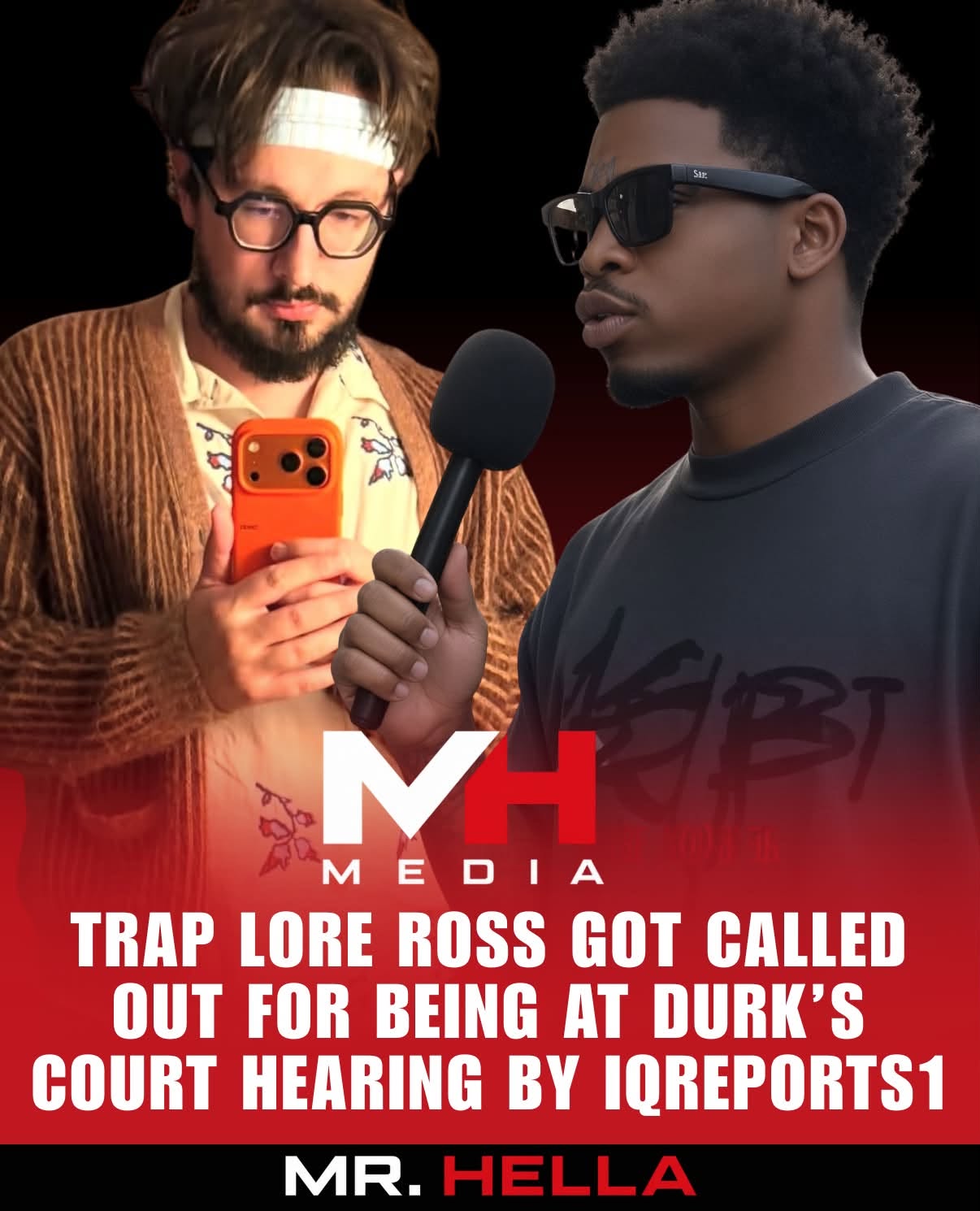
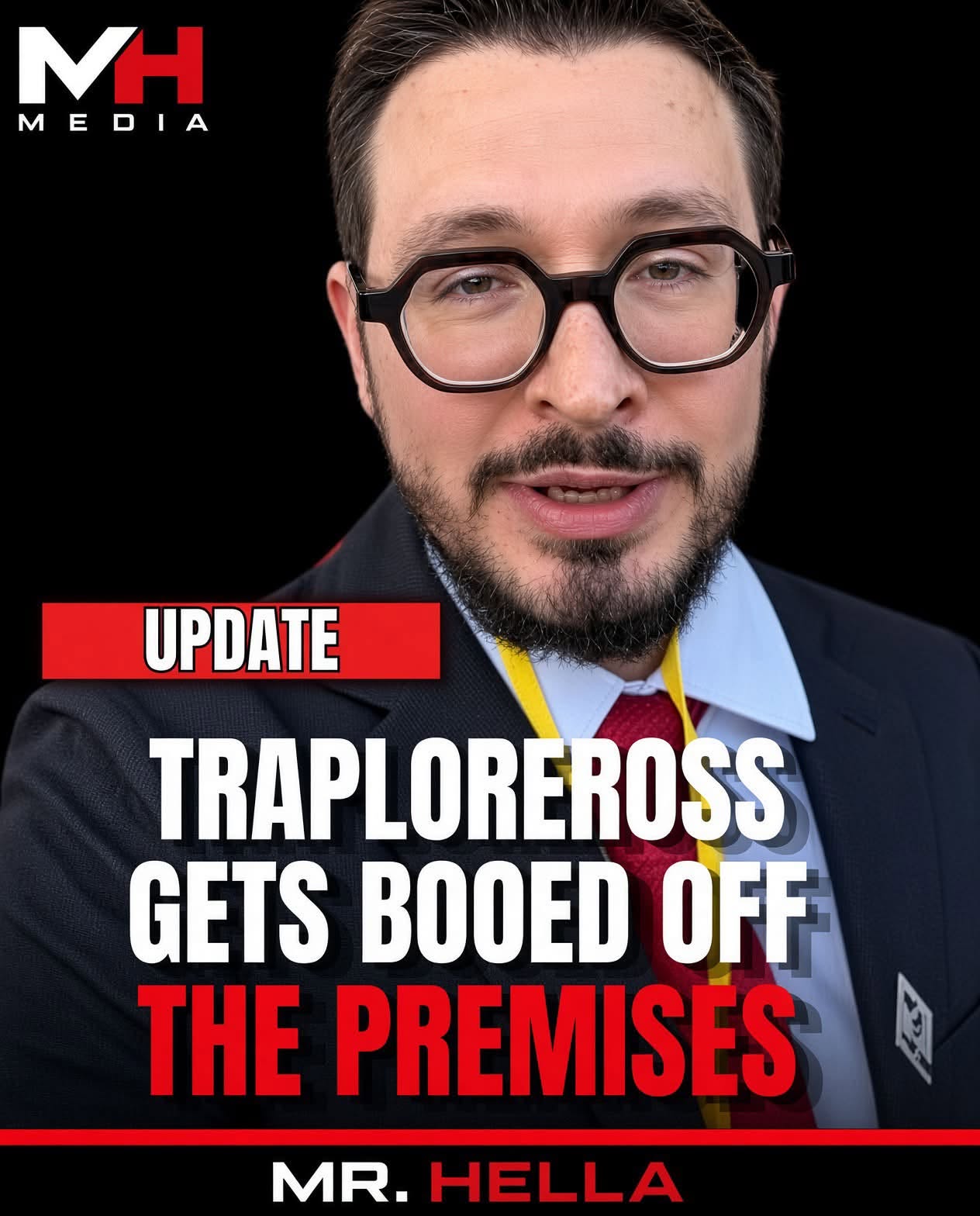
Trap Lore Ross became part of the story he was covering after a tense confrontation outside Lil Durk's federal trial reignited a long-running debate over his approach to documenting violence, criminal cases and street culture within hip-hop.
The British YouTuber had been attending Lil Durk's federal murder-for-hire trial in Los Angeles and providing followers with frequent updates about what was happening inside the courtroom.
But outside the courthouse, one Durk supporter decided to confront Ross directly.
Recording the interaction, the man approached Ross and accused him of essentially benefiting from the criminal cases and tragedies involving Black American rappers.
His criticism was direct.
“When are you going to stop doing the police's job?” the man asked.
The confrontation eventually reached a simple challenge.
The man wanted Ross to say:
“Free Smurk.”
Ross wouldn't do it.
The interaction quickly circulated across social media and became another flashpoint in a debate that has followed Trap Lore Ross for years:
Is he documenting hip-hop history and reporting publicly available information—or profiting from a culture and its tragedies while remaining disconnected from the communities at the center of his content?
Trap Lore Ross Attended Lil Durk's Trial in Person
Ross didn't cover Lil Durk's federal case entirely from behind a computer.
He went to Los Angeles.
He attended the proceedings.
And he provided extensive updates about what was happening inside the courtroom.
Ross ultimately attended every day of the trial, according to his subsequent interview discussing the experience.
His reporting made him one of the most visible independent content creators covering the proceedings.
That visibility also made him a target for criticism.
Ross wasn't simply summarizing court documents after the fact.
He was physically at the courthouse while Durk's family, supporters, attorneys, journalists and other observers were gathering around one of the biggest hip-hop trials of the year.
A Durk Supporter Confronts Ross
Video of one confrontation shows a man approaching Ross outside the courthouse.
The man immediately questioned Ross about his coverage.
“When are you going to stop doing the police's job?”
Ross initially laughed and gestured toward the courthouse behind him.
But the man continued.
He accused Ross of doing “police work” by extensively discussing people's murder cases and criticized the way he reports on criminal allegations involving rappers.
The criticism wasn't presented as a detached media critique.
It was confrontational.
The man clearly believed Ross had crossed a line.
Then Came the ‘Free Smurk’ Challenge
The interaction eventually shifted toward Lil Durk himself.
The man said “Free Smurk” and challenged Ross to say it too.
“Just say Free Smurk, bro,” he told him.
Ross didn't.
That refusal became one of the most discussed portions of the encounter.
To some Durk supporters, it reinforced their existing perception that Ross wasn't at the courthouse as a supporter of Durk or OTF.
But Ross had never presented himself as one.
He was there as a content creator documenting and commenting on the trial.
And saying “Free Smurk” would have been a declaration of support rather than simply reporting what was occurring.
Still, within the environment surrounding the courthouse, refusing to say it carried symbolic weight.
The Criticism Is Bigger Than One Interaction
The confrontation wasn't really just about Lil Durk.
It represented years of criticism surrounding Trap Lore Ross.
Ross has built a substantial online audience producing extremely detailed documentaries about hip-hop.
Many of those documentaries focus heavily on violence.
Murders.
Gang conflicts.
Street rivalries.
Criminal allegations.
Court cases.
Social-media threats.
Lyrics.
And the deaths of young rappers.
That approach has generated millions of views.
It has also made Ross one of the most controversial documentarians covering modern rap culture.
Ross Became Famous for Extremely Long Hip-Hop Documentaries
Trap Lore Ross developed a reputation for going considerably deeper than the average YouTube commentary channel.
Instead of producing a 10-minute recap of a rap beef, Ross might produce a documentary lasting several hours.
He compiles social-media posts.
Music lyrics.
Interviews.
News reports.
Court records.
Old videos.
Timelines.
Relationships between artists.
And publicly available information about alleged street conflicts.
That level of research attracted viewers who wanted to understand complicated stories they had previously encountered only through scattered social-media posts.
But it also created a problem.
The more successful Ross became documenting violent events, the more critics questioned whether the suffering surrounding those events had effectively become entertainment.
King Von Became Central to the Controversy
Perhaps no project shaped the debate around Ross more than his coverage of the late Chicago rapper King Von.
Ross produced the sprawling documentary King Von: Rap's First Serial Killer, examining alleged connections between Von, Chicago street conflicts and multiple killings.
The documentary became one of Ross' defining pieces of content.
It also generated enormous backlash.
Critics argued that Ross was turning real deaths involving predominantly young Black men into true-crime entertainment.
Others defended the documentary as an attempt to organize years of publicly available information into a coherent timeline.
That disagreement never really disappeared.
Instead, it followed Ross into his coverage of Lil Durk.
Why Lil Durk's Trial Intensified the Debate
Lil Durk wasn't simply another rapper Ross mentioned in a YouTube documentary.
Durk was sitting in federal court facing charges that could have resulted in life imprisonment.
Prosecutors accused him of involvement in a murder-for-hire plot targeting Quando Rondo following the 2020 killing of King Von.
Durk denied wrongdoing.
The trial eventually ended with a federal jury acquitting him of the charges in that case on September 11, 2026. He remains in custody while facing a separate federal case scheduled for trial in October.
During the trial, Ross wasn't simply watching from afar.
He was inside the courtroom.
Then he would communicate developments to an enormous online audience.
That gave his interpretation of courtroom events considerable reach.
His Live Commentary Created Additional Controversy
Some of Ross' courtroom commentary became controversial in its own right.
At one point, Ross posted that Durk's defense was essentially blaming another individual involved in the case.
That interpretation quickly spread online and contributed to accusations that Durk was “snitching.”
Ross later pushed back against the idea that he was intentionally spreading a snitching narrative.
The situation demonstrated the influence—and danger—of real-time courtroom commentary.
Trials are complicated.
Defense strategies are complicated.
A short social-media post summarizing hours of legal arguments can easily take on a meaning much larger than the underlying courtroom exchange.
And when the defendant is one of hip-hop's biggest artists, that interpretation can spread to millions of people before lawyers ever have an opportunity to clarify it.
Critics Began Calling Ross ‘The Feds’
The criticism eventually became a running joke and accusation among some Durk supporters.
Ross was labeled “the feds.”
Others accused him of helping law enforcement.
That allegation isn't supported by evidence simply because Ross reports publicly available information about criminal cases.
But it illustrates how some people within hip-hop culture view his work.
For those critics, Ross isn't simply reporting.
They believe he is collecting information about Black artists, street organizations and alleged crimes and packaging it for a predominantly online audience.
The supporter who confronted him outside court essentially made that criticism directly to his face.
“You be doing the police's job.”
The ‘Culture Vulture’ Debate
The confrontation also revived the “culture vulture” criticism that has followed certain journalists, executives and content creators covering hip-hop.
The term generally refers to someone perceived as benefiting financially or professionally from a culture without genuinely belonging to, respecting or contributing to the community that created it.
Critics of Ross argue that a white British creator building a successful media career around Chicago gang violence, murdered rappers and Black American street culture raises uncomfortable questions.
Ross and his supporters see things differently.
From that perspective, journalism and documentary work don't require someone to share the race, nationality or neighborhood of the people being documented.
The question becomes whether the reporting is accurate, responsible and fair.
That distinction is important.
Calling Ross a “culture vulture” is an opinion and criticism.
It isn't an objective fact established by the courthouse confrontation.
Ross Has Defended His Work
Ross has repeatedly defended what he does as documentary work.
He has argued that he's genuinely interested in hip-hop and spends enormous amounts of time researching the stories he covers.
In a recent profile examining his role in the Durk trial, Ross was described as having become an unexpected central figure surrounding the case because of the scale and immediacy of his coverage.
He has maintained that he is a documentarian rather than someone deliberately attempting to provoke artists or their supporters.
That hasn't stopped people from questioning his motivations.
The Courthouse Became Increasingly Tense
The confrontation wasn't the only uncomfortable interaction Ross experienced during the trial.
As his coverage continued, tensions surrounding him increased.
Ross later said he initially attended without security.
That changed.
Eventually, he said he had three bodyguards accompanying him because of concerns about confrontations with people outside the courthouse.
Ross described being surrounded by Durk supporters while covering the proceedings.
His security presence became noticeable enough that it became part of the conversation surrounding his coverage.
Ross Became a Story Inside the Story
That's perhaps the strangest part of what happened during the Durk trial.
Trap Lore Ross arrived to document the case.
Eventually, people were documenting him.
His tweets became news.
His interpretations became arguments.
Durk supporters confronted him.
Security surrounded him.
Other hip-hop commentators debated him.
And cameras followed him outside the courthouse.
The reporter had become part of the spectacle.
That creates its own journalistic problem.
The more Ross became personally involved in confrontations surrounding the case, the harder it became for audiences to separate discussion of the actual trial from discussion of the person reporting it.
Then Durk Was Acquitted
After weeks of testimony and intense online discussion, the federal jury returned its verdict.
Lil Durk was found not guilty in the murder-for-hire case.
The verdict arrived September 11.
Durk had faced five federal counts connected to the 2022 shooting targeting Quando Rondo that resulted in the death of Rondo's cousin, Saviay'a “Lul Pab” Robinson.
The government alleged Durk had helped orchestrate the retaliatory attack.
Durk's defense argued that others acted without his knowledge.
After three days of deliberations, jurors acquitted him.
The verdict didn't immediately result in Durk's release.
He remains in custody because he faces another federal prosecution.
Ross Accepted the Jury's Decision
One detail that complicates the narrative that Ross was simply at the courthouse hoping Durk would be convicted is his reaction to the verdict.
Ross later said he respected the jury's decision.
He discussed how Durk's defense attorneys attacked the government's case and created reasonable doubt.
Ross has continued analyzing evidence and allegations surrounding Durk, but his post-trial commentary has acknowledged the significance of the acquittal.
That doesn't erase criticism of his broader work.
But it does matter when assessing claims that his sole purpose at the trial was to see Durk convicted.
The Bigger Question Is About Hip-Hop Media
Ultimately, the confrontation outside the courthouse represents a much larger debate.
Who gets to tell hip-hop's stories?
Who gets to profit from them?
Does being an outsider automatically make someone incapable of documenting a culture?
At what point does true-crime reporting become exploitation?
Does compiling public records, lyrics and social-media posts constitute journalism?
And what responsibility does a creator have when their interpretation can influence how millions of people perceive someone facing life in prison?
Those questions don't have simple answers.
And they aren't unique to Trap Lore Ross.
Hip-hop media has changed dramatically.
Traditional magazines no longer control the conversation.
Independent YouTubers, streamers, bloggers and social-media accounts can now reach audiences larger than established publications.
That gives creators tremendous freedom.
It also gives them tremendous responsibility.
The Man Wanted One Simple Statement
For all of those complicated questions, the viral confrontation eventually came down to something incredibly simple.
The Durk supporter wanted Ross to say two words:
“Free Smurk.”
Ross wouldn't.
To the supporter, that appeared to confirm everything he already believed about the YouTuber.
To Ross, refusing to publicly pledge allegiance to the defendant he was covering may have been entirely consistent with his role as a commentator.
And to everyone watching online, the moment became another piece of content.
That's the irony surrounding the entire debate.
A man accused Trap Lore Ross of profiting from and turning hip-hop's most serious situations into content.
Someone recorded the confrontation.
The clip went viral.
Media pages reposted it.
People debated it.
And now the confrontation itself has become part of the same hip-hop content ecosystem the man was criticizing.
Whether viewers see Trap Lore Ross as a dedicated documentarian, an outsider exploiting Black trauma, an independent journalist, a true-crime entertainer—or some complicated combination of those things—depends largely on how they view his work.
But the confrontation outside Lil Durk's trial demonstrated one thing clearly:
The debate surrounding Trap Lore Ross is no longer happening only in YouTube comments.
People are confronting him about it in real life.

Comments