


A Trump–IRS Settlement Permanently Blocks the IRS From Auditing Tax Claims Made by President Trump, His Sons, and Their Business Investments
That is the May 2026 caption. It is not the last word.
What the May paper said
Trump, Donald Trump Jr., Eric Trump, and the Trump Organization had sued the IRS and Treasury for $10 billion over the leak and handling of tax-return information. To end that suit, acting Attorney General Todd Blanche signed a one-page addendum posted on the Justice Department site around May 19.
The language AP and the Wall Street Journal quoted: the United States is “FOREVER BARRED and PRECLUDED” from prosecuting or pursuing claims tied to tax returns already filed. The circle in that document included the president, the two oldest sons, the Organization, and — in Blanche’s phrasing — trusts, parents, sisters, related companies, affiliates, and subsidiaries. DOJ, answering questions at the time, said the bar was aimed at existing examinations, not a promise that no future year could ever be looked at. The public argument ignored that distinction.
The same package created a roughly $1.8 billion “anti-weaponization” fund. That fund, more than the audit clause, is what lit up senators in both parties and slowed Blanche’s path to a permanent confirmation. John Cornyn’s line was that the deal gave audit immunity no other taxpayer could get.
What the court did in July
U.S. District Judge Kathleen Williams, in Florida, did not treat the lawsuit as a normal fight between strangers. She called it improper: the president was, in her framing, on both sides of the caption. Non-adversarial. Collusive. No jurisdiction. She vacated the settlement, blocked the parties from citing its terms later, and sent Trump’s personal lawyer, Alejandro Brito, to the Florida Bar for a look at ethics rules.
BBC’s write-up of that order is blunt: voided, “improper,” and the practical effect — if the vacatur stands — is that the IRS is not locked out of future work on those files. The fund was already politically radioactive; Blanche had described it as dead even as the paperwork fought to stay alive.
What September added
DOJ noticed an appeal to the Eleventh Circuit. As of the second week of September 2026, the fight is not “the IRS can never look.” It is “does a dismissed, collusive suit still carry a forever bar while an appeals court reads the transcript.”
That is a live procedural question. It is not a completed shield.
How to read the two graphics
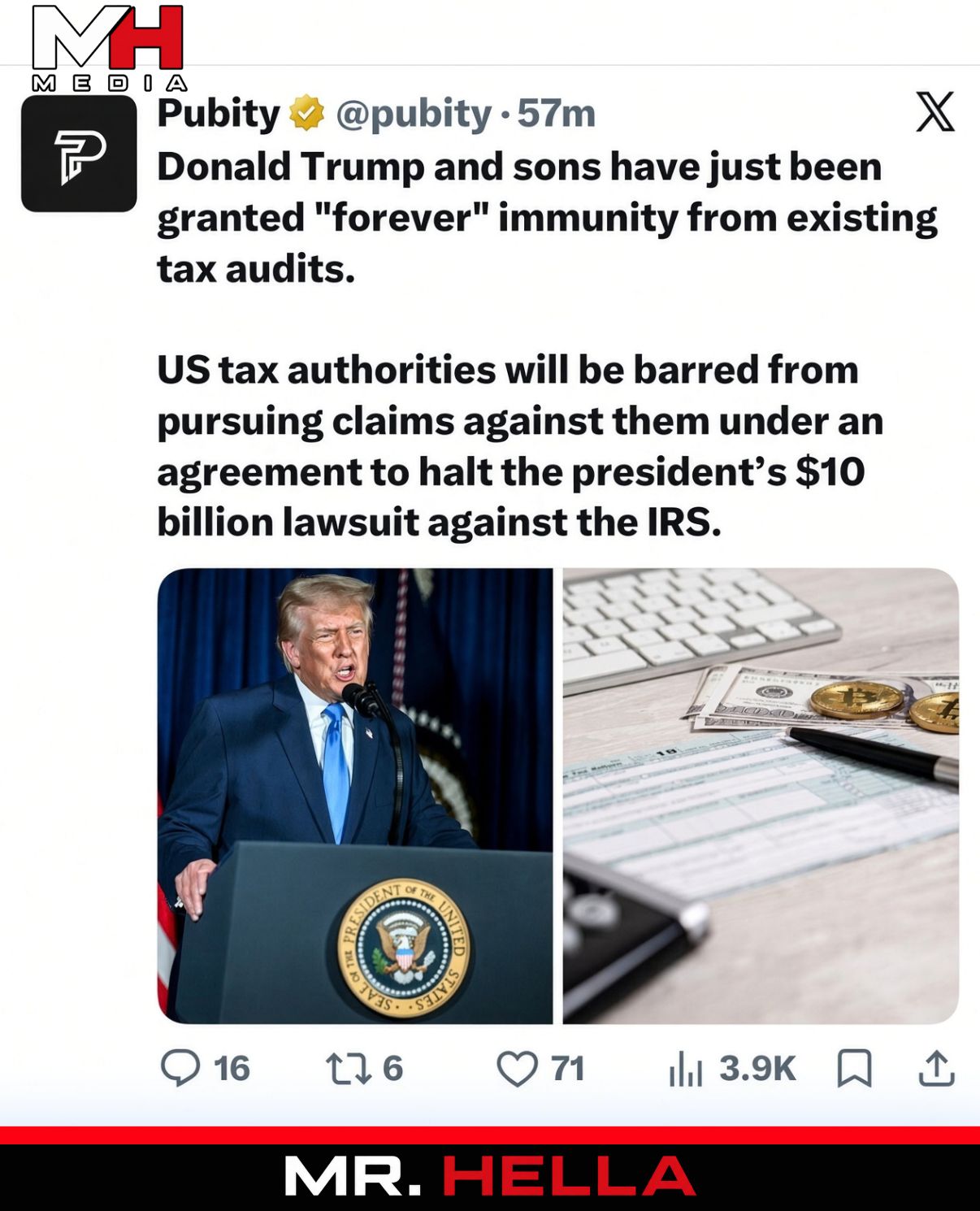
The split Trump/IRS-flags card and the Pubity post are accurate as May artifacts. “Forever immunity from existing tax audits” is how the addendum was sold and how a lot of accounts summarized Blanche’s all-caps verbs. They are incomplete as September artifacts. A district judge tore the paper up. The government asked a higher court to put it back.
No one in this article is entitled to a different Internal Revenue Code than the next filer. No one in this article is convicted of a tax crime by the existence of a settlement. Dropping a suit in exchange for a bar on old audits is either a lawful peace treaty or a self-deal. Williams picked the second description. The Eleventh Circuit has not spoken.
The leak case that started the $10 billion complaint is a separate story about return information leaving the building. This story is about whether the people who run the building can promise themselves that the building will not look again.
Until the appeal ends, “permanently blocks” is a quote from a page a judge has already called improper. Print the quote. Print the vacatur. Print the notice of appeal. Leave the victory lap to whoever wins the circuit.



Comments