

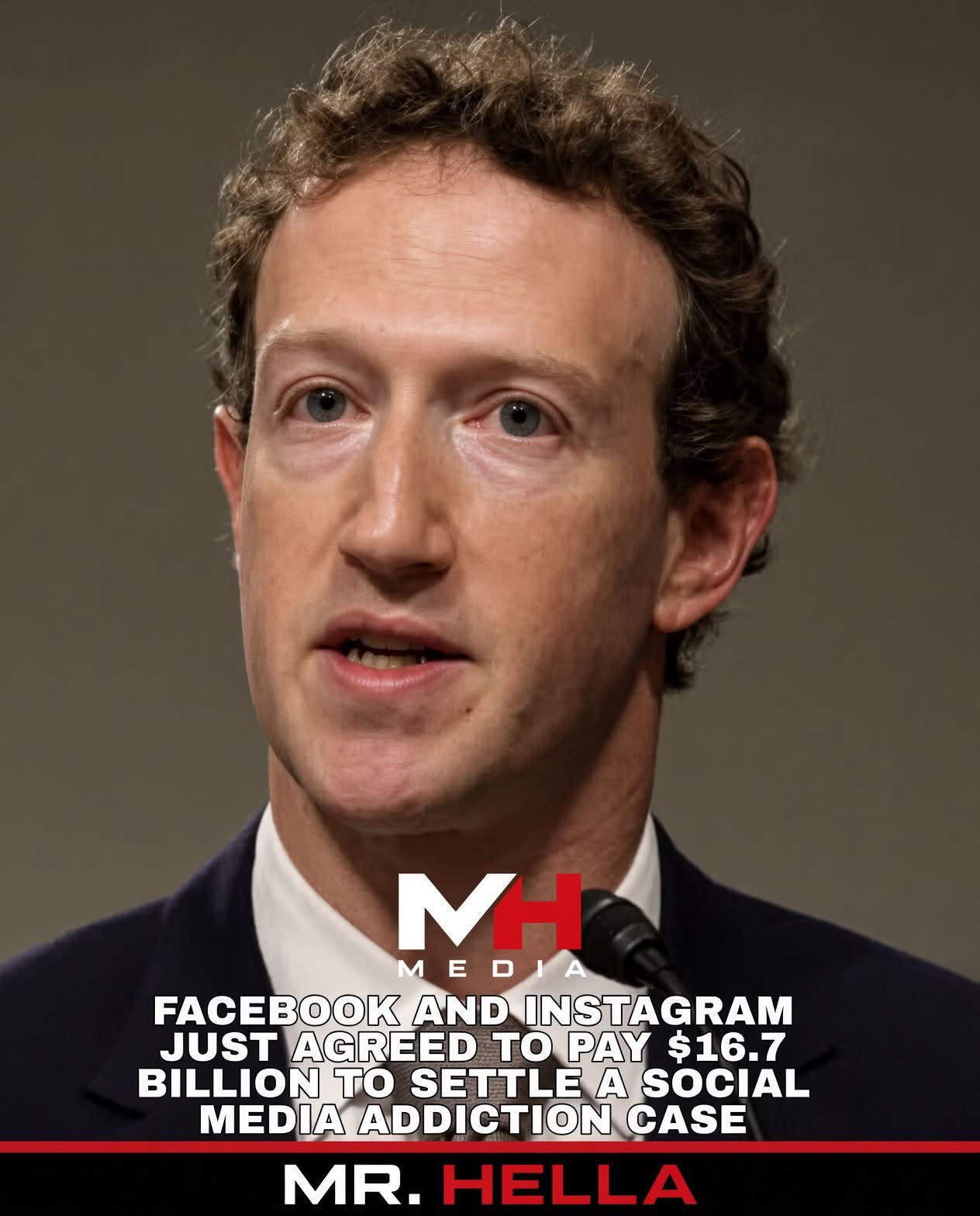
Meta Platforms has reached a potentially $16.68 billion settlement with 29 U.S. states over allegations that Facebook and Instagram were deliberately designed to keep children and teenagers hooked while the company minimized or misrepresented risks to young users’ mental health, bringing one of the most closely watched cases against the social-media industry to an abrupt end in the middle of trial.
The agreement was reached Wednesday, Aug. 26, while a bellwether trial was underway in Los Angeles. Rather than allowing jurors to determine whether Meta should be held liable for the states’ claims, the two sides reached a settlement that could ultimately require the Facebook and Instagram parent company to pay billions of dollars. The headline figure of $16.68 billion represents the potential maximum value of the agreement, however, and should not be treated as a guaranteed lump-sum payment that Meta has already agreed to hand over.
The settlement represents a major development in the sprawling legal battle over whether some of the largest social-media companies in the world knowingly built products around features that encourage compulsive use among minors. For years, state attorneys general, parents and school districts have argued that platforms including Instagram and Facebook were engineered to maximize engagement even when the companies knew that excessive or compulsive use could harm vulnerable young users. Meta has disputed allegations that its products were intentionally designed to harm children and has pointed to parental controls, teen-account restrictions and other safety measures introduced across its platforms.
The Settlement Came in the Middle of a Major Trial
The timing of the agreement made the announcement particularly significant. The case had already reached a courtroom, meaning the allegations were no longer confined to complaints, congressional hearings or arguments between regulators and technology companies. Attorneys were presenting evidence before a jury in Los Angeles when the settlement brought proceedings involving the states to a halt.
The trial was intended to serve as an important test case within much broader litigation targeting social-media companies over alleged youth addiction and mental-health harms. State governments have accused Meta of deploying design features that encourage young people to repeatedly return to its platforms, including recommendation systems, notifications and engagement mechanics intended to keep users scrolling and interacting.
At the center of the states’ case was the argument that these features should not simply be viewed as neutral tools through which users encounter content. The states alleged that the design of the platforms themselves could contribute to compulsive behavior, particularly among children and teenagers whose developing brains may make them more susceptible to reward-driven engagement systems.
Meta has challenged that characterization and has argued that it has invested heavily in protecting teenagers. The company has introduced Teen Accounts on Instagram, expanded parental supervision tools and placed restrictions on the types of content younger users can encounter. Meta has also repeatedly argued that the relationship between social-media use and youth mental health is complicated and cannot be reduced to the claim that its platforms directly cause particular mental-health conditions.
Why the $16.68 Billion Number Needs Context
The enormous dollar figure attached to the agreement is likely to dominate headlines, but the structure of the settlement matters.
Meta has agreed to a framework potentially valued at as much as $16.68 billion rather than writing a single $16.68 billion check to the states. The final financial cost will depend on the settlement’s claims process and how many eligible claims ultimately qualify under its terms. That means the amount actually paid could be lower than the maximum figure being widely reported.
The distinction is important because large class-action and multidistrict settlements are frequently announced using their maximum potential value. The headline number represents the outer limit of the company’s exposure under the agreement, while the final amount distributed can depend on participation rates, eligibility requirements and other conditions.
Even with that qualification, the agreement represents an extraordinary financial commitment in litigation centered on the treatment of children by social-media platforms. It also removes the immediate risk that Meta would receive an adverse jury verdict in the bellwether case, a result that could have influenced the enormous number of related lawsuits still moving through the courts.
Meta did not admit liability as part of the agreement. Settling a lawsuit does not establish that the allegations against the company were proven at trial.
The States Accused Meta of Building Addictive Products for Children
The litigation grew from a broader confrontation between state governments and social-media companies over how their platforms interact with young users. A bipartisan coalition of attorneys general had accused Meta of knowingly using psychologically powerful product features to encourage habitual use by children and teenagers while publicly presenting Facebook and Instagram as safer than internal information allegedly suggested.
Those claims have focused heavily on the mechanics underlying modern social media. Infinite scrolling removes the natural stopping point that once existed when users reached the end of a page. Algorithmic recommendation systems continuously supply new material based on previous behavior. Notifications bring users back into an app after they have left, while likes, comments and other forms of social feedback can provide recurring rewards that encourage additional engagement.
Critics argue that those systems can be particularly powerful for adolescents. The states’ case sought to establish that the problem was not simply that teenagers sometimes spend too much time online, but that technology companies had financial incentives to maximize the amount of attention users gave their products and allegedly built features around those incentives.
Meta has rejected the idea that its platforms can fairly be characterized as products intentionally designed to addict children. The company says it has spent years developing protections for teenagers and has increasingly restricted what younger users can see, who can contact them and how their accounts operate.
Internal Meta Documents Have Fueled Years of Scrutiny
Concerns surrounding Instagram and young users intensified dramatically in 2021 after former Meta employee Frances Haugen disclosed internal company documents to journalists and regulators. Those records generated extensive scrutiny of Meta’s internal research into how Instagram affected teenage users, particularly girls struggling with body-image issues.
The disclosures did not establish that Instagram harms every teenager who uses it, but they intensified questions about what Meta knew internally and how those findings compared with its public messaging. Congressional hearings followed, and lawmakers from both political parties increasingly focused on whether existing regulations were adequate for platforms used by millions of minors.
That controversy became part of a larger shift in how social media was viewed. For much of the previous decade, debates about Facebook and Instagram had centered primarily on privacy, misinformation and political influence. Youth mental health gradually emerged as another major regulatory and legal front.
The states’ lawsuits attempted to convert those concerns into legal liability by arguing that the design and marketing of the platforms violated consumer-protection laws.
Meta Has Changed Instagram for Teenagers
While fighting the lawsuits, Meta has also substantially changed the way Instagram works for younger users.
The company introduced Instagram Teen Accounts with built-in protections that automatically place younger users into more restrictive settings. Teen accounts are private by default, place limits on who can message users and impose tighter controls over sensitive content. Meta has also introduced reminders and time-management features intended to encourage teenagers to leave the app after extended use.
Those changes have become central to Meta’s response to criticism. The company argues that it has not ignored concerns surrounding youth safety and that its products today contain significantly more protections than earlier versions of Instagram.
Critics counter that safety features introduced after years of public pressure do not resolve allegations about how the platforms were previously designed or marketed. The legal cases consequently look backward at what Meta allegedly knew and did while the company simultaneously points toward newer safeguards as evidence that it takes the issue seriously.
The settlement avoids having a jury resolve many of those disputes in the states’ bellwether case.
The Broader Legal Battle Is Not Over
Perhaps the most important limitation of Wednesday’s agreement is that it does not make the entire social-media addiction litigation disappear.
The 29-state settlement resolves a major government component of the litigation, but Meta and other social-media companies continue to face claims brought by school districts, families and individual plaintiffs. Those cases contain overlapping allegations that social-media products contributed to compulsive use and mental-health problems among young people.
The litigation also extends beyond Meta. Other major platforms have faced similar claims concerning the design of products used heavily by teenagers, creating a legal fight that could eventually reshape the responsibilities technology companies have toward minors.
That means the Meta agreement could become influential even without a jury verdict. Other plaintiffs, defendants and courts will now examine how the settlement was structured, what claims it resolves and whether similar agreements become preferable to years of additional trials.
At the same time, because Meta did not admit wrongdoing, the settlement does not provide the definitive legal finding some critics of the company had sought.
A Potentially Historic Price for the Social-Media Era
For Meta, the settlement represents another enormous legal cost associated with products that transformed the way billions of people communicate. Facebook helped define the first major era of modern social networking, while Instagram became one of the most influential platforms in youth culture. The same scale that made those services extraordinarily profitable has also made questions about their effects unusually consequential.
The youth-addiction litigation asks a fundamental question about that business model: when does designing a product to maximize engagement cross the line into creating something unreasonably harmful for young users?
The states argued that Meta crossed that line. Meta disputed that allegation and maintained that it has built extensive protections for teenagers. Instead of allowing the Los Angeles jury to decide between those competing positions, the two sides reached an agreement that potentially puts billions of dollars behind the dispute.
The precise financial consequences will not be known until the settlement process plays out, making the $16.68 billion figure better understood as a ceiling than a final bill. Meta has also made no admission that it intentionally addicted children or deceived families about the mental-health effects of its products.
Still, the significance extends beyond the eventual dollar amount. Twenty-nine states took one of the world’s largest technology companies to trial over allegations concerning how its products were designed for children, and the case ended only after Meta agreed to a settlement carrying a potential value measured in the tens of billions.
The trial may be over.
The larger fight over what social-media companies owe the generation that grew up on their platforms is not.



Comments