

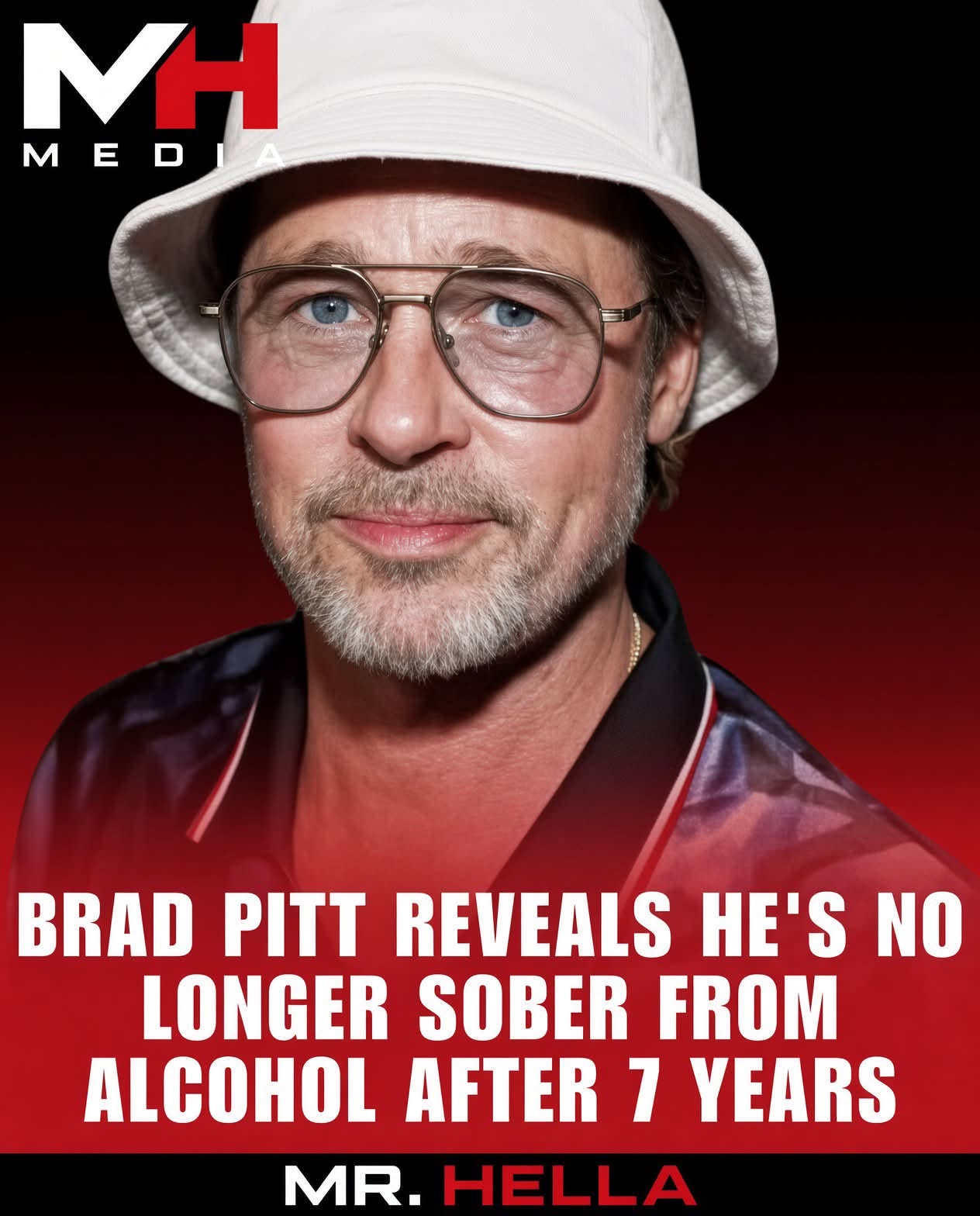
Brad Pitt Tells Esquire He Was Sober Seven Years, Then Got “Back Off the Wagon.” He Says He Can Have a Few — Not a Lot.
The interview is the September 2026 Esquire cover, published around August 10. Ryan D’Agostino is in Pitt’s Los Angeles house. Pitt offers wine. The writer asks if the bottle is for guests only.
“No, I got — I was sober for seven years. And then I got back off the wagon.”
He laughs it in. Then he draws the line he wants on the record: he drinks in a more restrained manner. He got overconfident a couple of times, felt it, pulled back. “Yep, nope, not good for me.” Not in big quantities. People and USA Today have the extra clause from the same tape: “I can have a few, but I can’t have a lot. I have to be professional about it.”
That is his account of 2026. It is not a treatment plan.
The seven years he is counting
He has dated the stop to 2016, the year the marriage to Angelina Jolie came apart. He has said he spent about a year and a half in Alcoholics Anonymous. To the New York Times in 2019: he had taken things as far as he could take them, so he removed his drinking privileges. At the National Board of Review the following cycle he publicly thanked Bradley Cooper for help getting sober. On Armchair Expert with Dax Shepard in 2025 he described being on his knees, open to anything, needing a reboot.
Those quotes are the spine. “Family stuff” in the new Esquire sit-down is the same weather system he has talked around for a decade — grief, a legal war over children, a stretch he has described as heavier than the résumé. Fox’s write-up of the piece noted he also spoke about a brief period of suicidal thinking. He is 62. He is promoting F1. He is not presenting a how-to.
The argument the interview walked into
The Times followed the profile with addiction-medicine voices saying a return to drinking after a dangerous history is not automatically unsafe and is not a template. That is the oldest split in the room: lifetime abstinence versus moderated return. Pitt is describing the second for himself after testing the first for seven years. AA’s public-facing tradition is generally the first. He is allowed to leave a program and still talk about what it did. Readers who need a rule should get it from a clinician, not a cover story.
Page Six’s source language — personal decision, unique to his circumstances, discipline, self-awareness — is anonymous color around what he already said on tape. Treat it as color.
What he is not doing
He is not announcing a relapse spiral. He is not announcing a clean bill. He is saying the wagon was real, the climb-off was real, the overconfidence was real, and the current cap is “a few.” Whether that cap holds is a private ledger. The professional clause is the closest he comes to tying it to work.
Jolie is the other parent in the family-stuff sentence. This article does not retry that case. Cooper is the friend he already thanked. This article does not make Cooper a sponsor on the record beyond that speech.
A movie star offered a reporter a glass and answered the follow-up. Seven years on, a few now, not a lot, overconfident once or twice and corrected. That is the interview. The culture will turn it into a referendum on sobriety. He turned it into a sentence about quantity. Those are different jobs.



Comments