

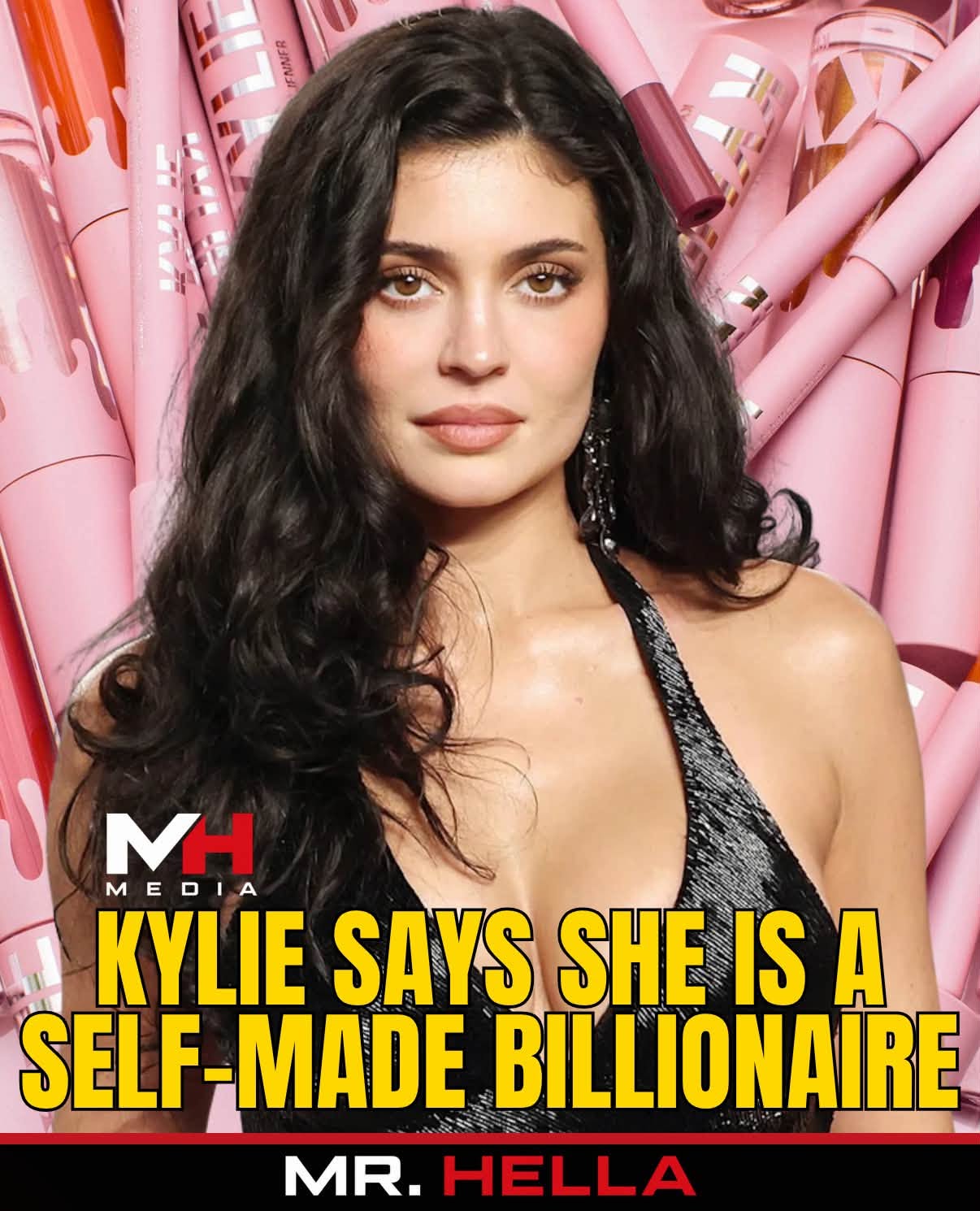
Kylie Jenner is standing behind one of the most controversial labels attached to her career: “self-made.”
Seven years after the beauty mogul was famously described as the world's youngest self-made billionaire, Jenner has revisited the debate over whether someone raised inside one of America's most famous and financially successful families can reasonably claim to have built her fortune herself.
“None of the money I’ve ever made is inherited, so it’s technically true,” Jenner told Who What Wear in an interview published Aug. 27. But she also acknowledged the central argument made by critics of the label, adding that people believe “the privilege I’ve had was a major stepping stone.”
That distinction is important. Jenner isn't claiming that she entered business without fame, connections or advantages. Her argument is narrower: the money she earned through her businesses was not an inheritance handed down by her parents.
It is an argument she has made before, but one that continues to generate debate because Kylie's rise as an entrepreneur cannot easily be separated from the enormous platform she already possessed when Kylie Cosmetics began.
The ‘Self-Made’ Debate Started Years Ago
The controversy dates back to 2018, when Forbes placed a then-20-year-old Jenner on its cover and estimated her fortune at approximately $900 million, describing her as being on track to become the youngest-ever self-made billionaire.
By March 2019, Forbes declared that she had reached the billion-dollar threshold at 21, making her, according to the publication's methodology at the time, the youngest self-made billionaire in the world.
The word “self-made” immediately became almost as big a story as the money itself.
Critics argued that Jenner's circumstances bore little resemblance to the traditional image of an entrepreneur building a company without substantial advantages. By the time she launched her first Kylie Lip Kits in 2015, she had already spent years appearing on Keeping Up With the Kardashians, had amassed an enormous social-media following and belonged to a family whose celebrity had become a global business operation.
Jenner has never denied that her existing audience mattered.
Her position has instead been that she used those advantages to create something independently valuable rather than simply inheriting her fortune.
“None of the money I’ve ever made is inherited,” she now says.
Kylie Previously Said She Used Her Own Money to Launch the Company
Jenner made an even more detailed version of the argument in 2019.
Speaking to Interview Germany, she said that her parents had stopped financially supporting her after she was 15 and maintained that she used her own money to launch Kylie Cosmetics. At the same time, she openly acknowledged that she began the company with something most entrepreneurs could never buy: an enormous audience.
“I am a special case because before I started Kylie Cosmetics, I had a huge platform and lots of fans,” she said at the time.
She nevertheless maintained that the money used to start the business belonged to her, saying she used “100 percent” of her own funds and that the money in her bank account had not been inherited.
That remains the foundation of her argument today.
Kylie isn't disputing that being Kylie Jenner helped make Kylie Cosmetics possible. She is drawing a line between privilege and inheritance, arguing that receiving extraordinary opportunities because of her family is different from being handed the fortune that her businesses ultimately generated.
Whether that distinction satisfies critics is another question.
Kylie Cosmetics Turned Her Existing Fame Into a Business Empire
When Jenner introduced Kylie Lip Kits in 2015, she already had tens of millions of followers watching what she wore, how she did her makeup and, particularly, what she did with her lips.
The initial products sold rapidly, and the business evolved into Kylie Cosmetics. Instead of relying primarily on conventional advertising, Jenner could promote products directly to an audience she had accumulated through television and social media.
That model became enormously valuable.
The business eventually attracted cosmetics giant Coty, which agreed in 2019 to acquire a 51% stake in Kylie's beauty operation for $600 million, valuing the business at roughly $1.2 billion at the time of the transaction.
It was the kind of deal that appeared to validate the scale of what Jenner had built.
But it also eventually complicated the billionaire story.
Forbes Later Reversed Course on Kylie's Billionaire Status
In 2020, Forbes published a dramatic reassessment of the fortune it had previously celebrated.
The magazine said newly available information surrounding the Coty transaction led it to conclude that Kylie's business was significantly smaller and less profitable than figures it had previously been given suggested. Forbes subsequently estimated that Jenner was worth just under $900 million rather than more than $1 billion and accused Jenner's camp of presenting misleading financial information.
Jenner strongly disputed the article.
At the time, she criticized what she described as inaccurate statements and unproven assumptions, questioning why the dispute over her billionaire status had become such a significant issue.
That history makes the current discussion slightly more complicated than simply asking whether Kylie is “self-made.”
The original billionaire designation itself was later challenged by the same publication that awarded it. What Kylie is defending in 2026 is the underlying principle behind the label: that the fortune she created through her businesses was earned rather than inherited.
Privilege and Inheritance Aren't the Same Thing
Jenner's latest answer is notable because she doesn't completely dismiss the criticism.
Instead, she acknowledges it.
“People just feel like the privilege I’ve had was a major stepping stone,” she told Who What Wear.
That is essentially the heart of a debate that has followed her for years.
Kylie Jenner did not begin as an unknown teenager attempting to persuade customers to notice a new cosmetics company. She was already internationally famous, had access to the Kardashian-Jenner family's entertainment and business infrastructure, and possessed a social-media following large enough to reach millions of potential customers instantly.
Those advantages had tremendous economic value even if they were not a direct cash inheritance.
At the same time, an advantage is not identical to ownership of a successful company. Jenner still turned her personal brand into products, built Kylie Cosmetics into a business valuable enough to attract a $600 million investment from Coty and expanded her name into other ventures.
Her latest comments suggest she sees room for both things to be true.
She was privileged.
She also says the money she made wasn't inherited.
Kylie Is Still Building Businesses Beyond Cosmetics
The discussion comes as Jenner increasingly focuses on Khy, the fashion brand she launched in 2023.
In the same Who What Wear interview, Jenner discussed plans to move Khy away from relying as heavily on collaborations and toward establishing a clearer long-term identity. She said she wants to create “timeless forever pieces” and eventually sees physical retail as important to building a complete world around the brand.
That gives the renewed self-made discussion a different context than it had in 2019.
At 21, Kylie was being presented as a young cosmetics entrepreneur whose fortune had seemingly crossed $1 billion. At 29, she has already experienced the backlash to that title, the subsequent Forbes reversal and years of debate about the role her family played in her success.
She isn't pretending that family background didn't matter.
But she is still drawing a distinction between being born into privilege and being handed the money her businesses generated.
“None of the money I’ve ever made is inherited,” Jenner said.
For Kylie, that's enough to keep defending the “self-made” description—even if the debate over what those words actually mean is unlikely to disappear.
Comments