

MR. HELLA MEDIA | UPDATES | OCTOBER 26, 2026
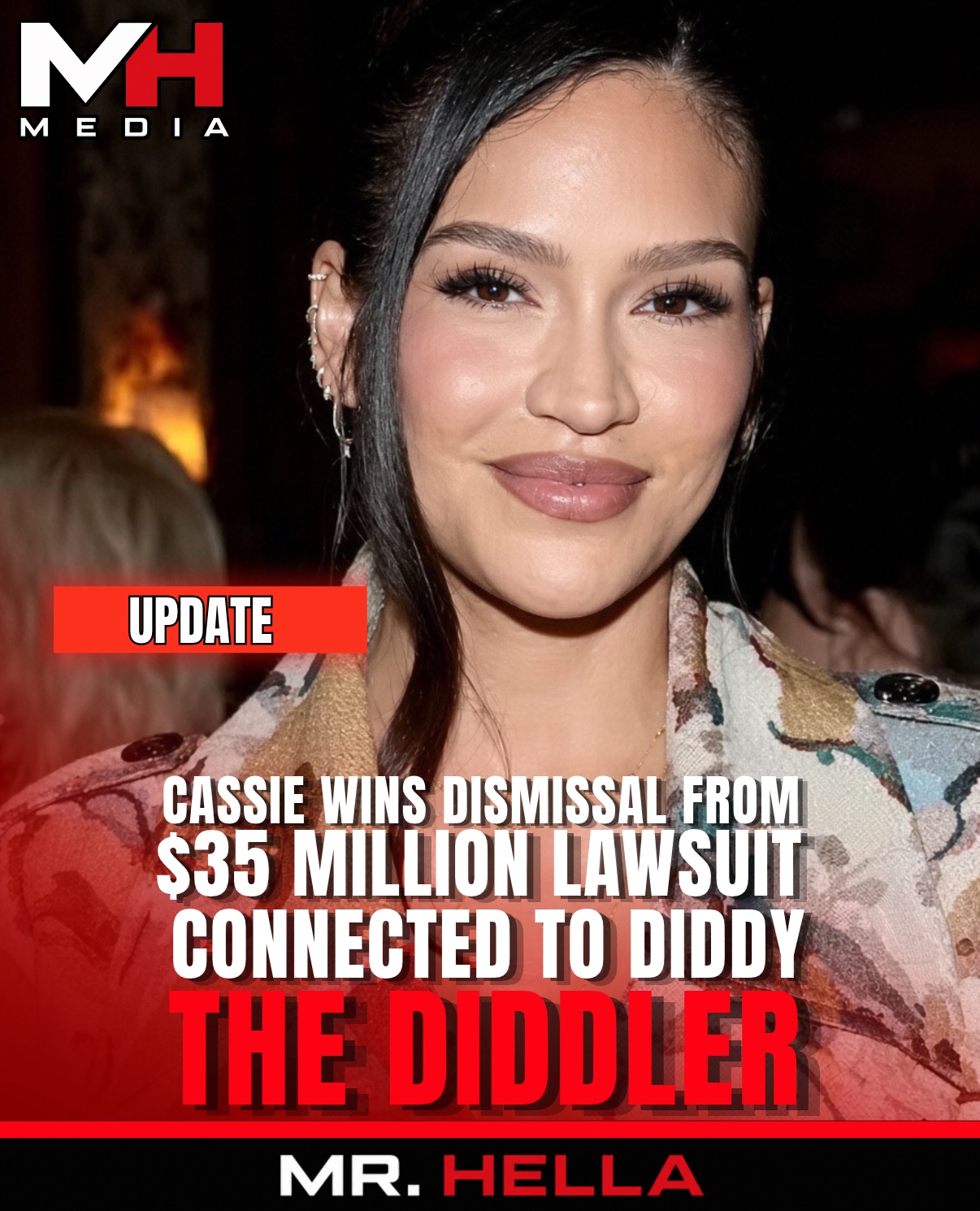
Cassie Ventura Wins Dismissal From $35 Million Lawsuit Connected to Diddy as Judge Allows Case Against Rap Mogul to Continue
Cassie Ventura has secured another significant legal victory after a federal judge dismissed claims against the singer in a $35 million lawsuit filed by former male escort Clayton Howard, who accused her and Sean “Diddy” Combs of participating in years of alleged sexual exploitation.
U.S. District Judge Anne Hwang granted Ventura’s motion to dismiss during an October 21 hearing in Los Angeles, according to newly published reporting from AllHipHop. The ruling removes the singer from the latest version of Howard’s civil complaint while allowing litigation involving Combs and his associated companies to continue.
The decision marks an important development in a case that has undergone several revisions since Howard initially filed suit in June 2025. Howard has alleged that he suffered psychological and physical harm while participating in paid sexual encounters involving Combs and Ventura, including encounters he claims were arranged under coercive circumstances.
Ventura’s attorneys have consistently rejected the accusations against their client, arguing that Howard failed to establish that she trafficked, threatened or forced him into sexual activity. They have also emphasized that Howard’s own allegations described Combs as the person exercising control over the encounters.
The court’s latest decision represents a victory for Ventura, although it does not resolve every allegation in the broader lawsuit or determine the ultimate liability of the remaining defendants.
Federal Judge Grants Cassie’s Request to Dismiss the Claims
According to the October 26 report, Judge Hwang granted Ventura’s dismissal request following arguments over whether Howard’s revised complaint contained sufficient factual allegations to support his claims against the singer.
The court’s October 21 minutes state:
“Defendant Ventura’s motion to dismiss is hereby granted.”
The ruling followed months of litigation in which Ventura’s legal team repeatedly challenged Howard’s attempts to hold her responsible for the alleged encounters.
In July, the court had dismissed earlier claims against Ventura while permitting Howard another opportunity to amend portions of his lawsuit. He subsequently filed a fifth amended complaint on August 3, attempting to address the deficiencies identified in the earlier proceedings.
Ventura’s attorneys maintained that the revised allegations still did not establish a legally sufficient case against her.
The newly reported ruling grants her latest request, though the available reporting does not establish whether every dismissed claim is barred from being brought again. That distinction matters because a dismissal with prejudice ordinarily prevents a plaintiff from refiling the same claim, while a dismissal without prejudice can leave room for further amendments.
For now, Ventura has been removed from the claims addressed by the October 21 decision.
Clayton Howard Claims He Was Exploited During Paid Encounters
Howard, who previously worked as an escort under the name “Dave,” alleges that his involvement with Combs and Ventura began around 2009 and continued for several years.
According to his complaint, Ventura initially contacted him after he advertised escort services online. He claims she helped arrange meetings in hotels and other locations, including New York, Miami and Los Angeles.
Howard alleges that Combs supervised and directed some of the encounters and that he was subjected to coercion, drug use and restrictions on his freedom. He further claims that the experiences caused lasting psychological harm and contributed to financial difficulties.
His allegations include claims that security personnel sometimes controlled his belongings and that Combs determined when certain encounters would end.
Howard also accused Ventura of helping coordinate the arrangements and encouraging his continued participation through payments, travel and other benefits.
The lawsuit seeks a reported $35 million in damages, along with additional compensation for medical expenses, psychological treatment and other alleged losses.
These are allegations made in a civil complaint, not findings of fact. Neither the October ruling nor the earlier court proceedings established that Ventura committed the misconduct alleged by Howard.
Cassie’s Lawyers Argued That She Was a Victim, Not a Trafficker
Ventura’s defense focused heavily on the distinction between arranging encounters and exercising coercive control over another person.
Her attorneys argued that Howard’s own descriptions portrayed Combs as the individual directing the activities, controlling security personnel and deciding when the encounters ended.
They also pointed to allegations within Howard’s complaint describing violence and intimidation directed at Ventura herself.
Those details, her legal team argued, undermined the attempt to characterize her as an independent participant in a trafficking operation.
The defense further challenged whether Howard had sufficiently alleged that Ventura used force, fraud or coercion against him. Her attorneys cited his descriptions of repeated paid encounters and return visits as part of their argument that the complaint did not establish the required elements of the claims.
Those arguments did not require the court to determine that every encounter was consensual or that Howard suffered no harm. Rather, they challenged whether the facts alleged were legally sufficient to impose liability on Ventura.
In an August filing, Ventura’s attorney Douglas Wigdor also warned that lawsuits he characterized as baseless could discourage survivors of sexual abuse from coming forward or cooperating with investigators.
The defense maintained that Ventura should not face liability merely because she was present during events allegedly controlled by Combs.
Judge Rejects Another Attempt to Rewrite the Complaint
The October 21 proceedings also addressed Howard’s efforts to revise his allegations again.
After filing his fifth amended complaint in August, Howard sought permission to substitute another proposed version. That revision would have removed an allegation that he had been confined for approximately 12 hours during a December 2016 encounter in Miami.
Judge Hwang denied the request to substitute the proposed sixth amended complaint.
The court separately indicated that it would consider Howard’s request to submit an additional response to arguments raised by Combs and the corporate defendants.
The procedural history is significant because Howard has already received multiple opportunities to revise his lawsuit. Each amended complaint has required the court to evaluate whether the allegations satisfy the legal standards applicable to the claims.
For Ventura, the latest ruling follows an earlier dismissal in July and a renewed defense against the revised allegations filed in August.
Diddy’s Legal Battle Continues Despite Cassie’s Dismissal
Although Ventura secured dismissal, Combs has not been removed from the lawsuit.
The October 21 court minutes show that Judge Hwang granted in part and denied in part the dismissal motion filed by Bad Boy Entertainment LLC and CeOpco LLC, with permission for Howard to amend certain claims within 14 days.
The judge also ordered Combs to file an answer within 14 days, establishing a November 4 deadline.
That means the litigation continues, with further proceedings expected to address the remaining allegations and the defenses raised by Combs and his companies.
Combs has disputed Howard’s claims. In October court filings reported by TMZ, his attorneys argued that Howard’s history of working as a professional escort undermined parts of his allegations about the paid encounters.
However, the fact that someone received payment for sexual activity does not automatically resolve whether coercion, trafficking or other unlawful conduct occurred. Those issues depend on the applicable law and the evidence presented.
The remaining claims have not been finally adjudicated, and no civil judgment has established that Combs is liable to Howard.
The Lawsuit Adds Another Chapter to Cassie and Diddy’s Legal History
The case comes against the backdrop of Ventura’s highly publicized legal dispute with Combs, which began in November 2023 when she filed a federal lawsuit accusing him of rape, physical abuse and years of coercive behavior.
That lawsuit was settled shortly after it was filed. During Combs’ federal criminal trial in 2025, Ventura testified extensively about their relationship and the sexual encounters Combs allegedly directed.
A federal jury subsequently acquitted Combs of racketeering conspiracy and sex-trafficking charges but convicted him on two counts of transportation to engage in prostitution.
The distinction between those verdicts is important. The criminal trial did not establish that every person involved in the encounters was a trafficking victim, nor did it decide the allegations later raised by Howard in his separate civil case.
Howard’s lawsuit therefore required its own factual and legal analysis, independent of the outcome of Combs’ criminal prosecution.
Ventura’s attorneys have repeatedly argued that she should not be held responsible for conduct allegedly orchestrated by Combs, particularly given the documented history of abuse within their relationship.
What Happens Next in the $35 Million Lawsuit?
The next stage of the litigation will focus on the remaining defendants and any amendments permitted by the court.
Under the October 21 order, Combs must file an answer by November 4, while Howard has 14 days from the ruling to amend claims covered by the court’s partial dismissal of the corporate defendants’ motion.
Ventura, meanwhile, has obtained the dismissal she sought from the latest complaint.
The publicly available written minutes confirm that her motion was granted, but they refer to an oral ruling delivered in court. The one-page record does not independently spell out every aspect of the judge’s reasoning or whether the dismissal permanently bars all further claims against her.
That limitation does not diminish the immediate significance of the decision: Howard’s latest attempt to maintain his claims against Ventura has failed.
The $35 million figure represents damages sought in the lawsuit, not money awarded by a court. No judgment has ordered Ventura or the remaining defendants to pay Howard that amount.
For Cassie, the ruling provides a substantial legal victory in a case that sought to portray her as responsible for alleged exploitation during her relationship with Combs.
For Howard, the broader litigation remains active, but the case against Ventura has encountered another major setback.
And for Combs, the decision means he continues facing a separate civil legal battle even after the singer’s successful effort to secure dismissal.
As of October 26, 2026, Ventura’s motion to dismiss has been granted, while the lawsuit continues against Combs and the remaining defendants.



Comments