

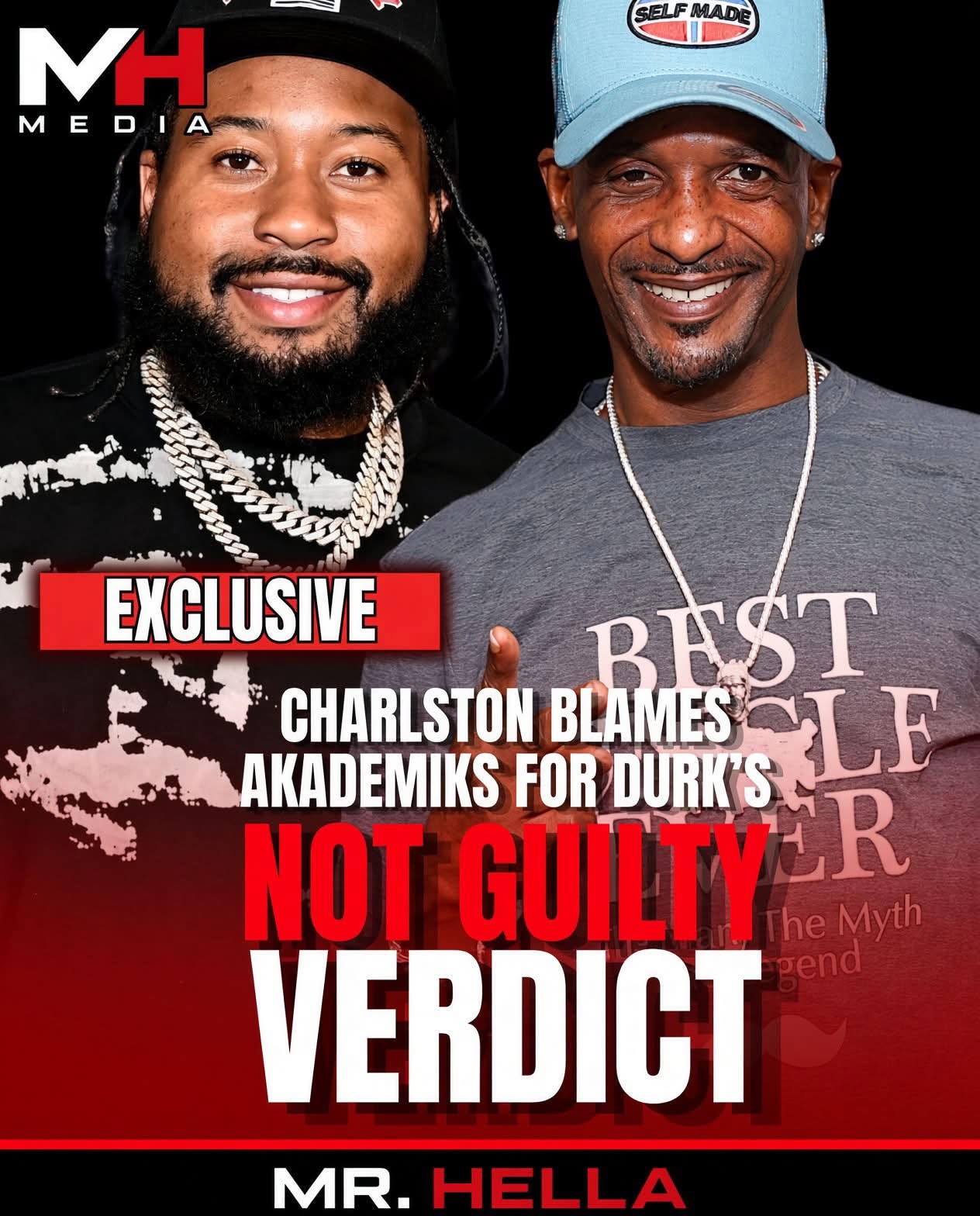
Charleston White was furious after Lil Durk walked away from his federal murder-for-hire trial without a single conviction—and he decided to place part of the blame on DJ Akademiks.
White called into Akademiks' livestream following Durk's sweeping acquittal, launching into an emotional argument in which he accused the media personality of helping create circumstances that benefited the Chicago rapper during the closely watched federal trial.
“You the reason he got away,” White told Akademiks during the heated exchange.
Akademiks immediately pushed back.
“Charleston, they did not have enough evidence to convict him,” he responded.
The exchange quickly became another viral moment surrounding a trial that had already blurred the lines between a federal courtroom proceeding and the sprawling online media ecosystem covering it.
Charleston White Blames Akademiks
White's accusation centered on Akademiks' involvement in one of the more unusual disputes that emerged during Durk's trial.
Akademiks had publicly discussed video evidence connected to the case and said material at issue was scripted. White argued that Akademiks' public comments ultimately became relevant enough to the courtroom dispute that they affected the government's case.
White went considerably further, claiming Akademiks had effectively “saved” Durk and telling him he should be ashamed because families affected by gun violence were still grieving.
“You gave justice a black eye,” White told him during the call.
Those statements represent White's interpretation of what happened—not an established explanation for the jury's decision.
There is no evidence that Akademiks was responsible for Durk's acquittal, and the jury did not publicly provide a detailed explanation identifying a single piece of evidence or outside media statement as the reason for its verdict.
Akademiks rejected White's argument and repeatedly returned to a much simpler explanation: in his view, federal prosecutors failed to present enough evidence to establish Durk's guilt beyond a reasonable doubt.
White Expected Durk to Be Convicted
Part of the intensity of White's reaction appeared to come from how strongly he had expected the case to end differently.
After the verdict, White openly said he was angry that Durk had not received a life sentence and disputed the idea that the acquittal should be treated as vindication of everything surrounding the case.
Durk, whose legal name is Durk Banks, had faced five federal counts stemming from prosecutors' allegations that he orchestrated and financed a retaliatory murder-for-hire plot targeting Atlanta rapper Quando Rondo.
The August 2022 shooting near the Beverly Center in Los Angeles left Rondo's cousin, Saviay’a “Lul Pab” Robinson, dead.
Prosecutors alleged Durk wanted revenge following the 2020 killing of his close friend and collaborator King Von. Durk's defense maintained that the shooting plot was carried out without his knowledge and aggressively challenged the cooperating witnesses prosecutors used to connect him to it.
After three days of deliberations, jurors acquitted Durk on all five charges.
Akademiks Had Become Part of the Trial Story
White's criticism also reflects how unusually intertwined Akademiks became with the public narrative surrounding the case.
The longtime hip-hop commentator covered the proceedings extensively and had previously interviewed Durk. Portions of that 2023 interview became part of the prosecution's closing argument, with prosecutors pointing to Durk's response when Akademiks asked about people online telling him to “slide for Von.”
That made Akademiks more than an outside commentator in the public conversation surrounding the trial: material originating from his interview with Durk was actually discussed inside the courtroom.
But that does not establish that Akademiks determined the outcome.
The jury heard weeks of testimony and evidence, including testimony from cooperating witnesses who admitted their own involvement in the alleged plot. Durk's attorneys attacked those witnesses' credibility and argued prosecutors had failed to prove that their client personally ordered the shooting.
The verdict ultimately showed that the jury was not persuaded beyond a reasonable doubt on any of the five charges against Durk.
White, however, was clearly not persuaded by the verdict.
His phone call with Akademiks became an argument over something larger than Durk himself: whether the enormous online ecosystem surrounding high-profile hip-hop criminal cases can influence how those cases unfold.
White believes Akademiks crossed that line.
Akademiks says the explanation is much simpler.
The government had its opportunity to prove its case against Lil Durk, and the jury found him not guilty.
Comments