

MR. HELLA MEDIA | UPDATES | OCTOBER 26, 2026
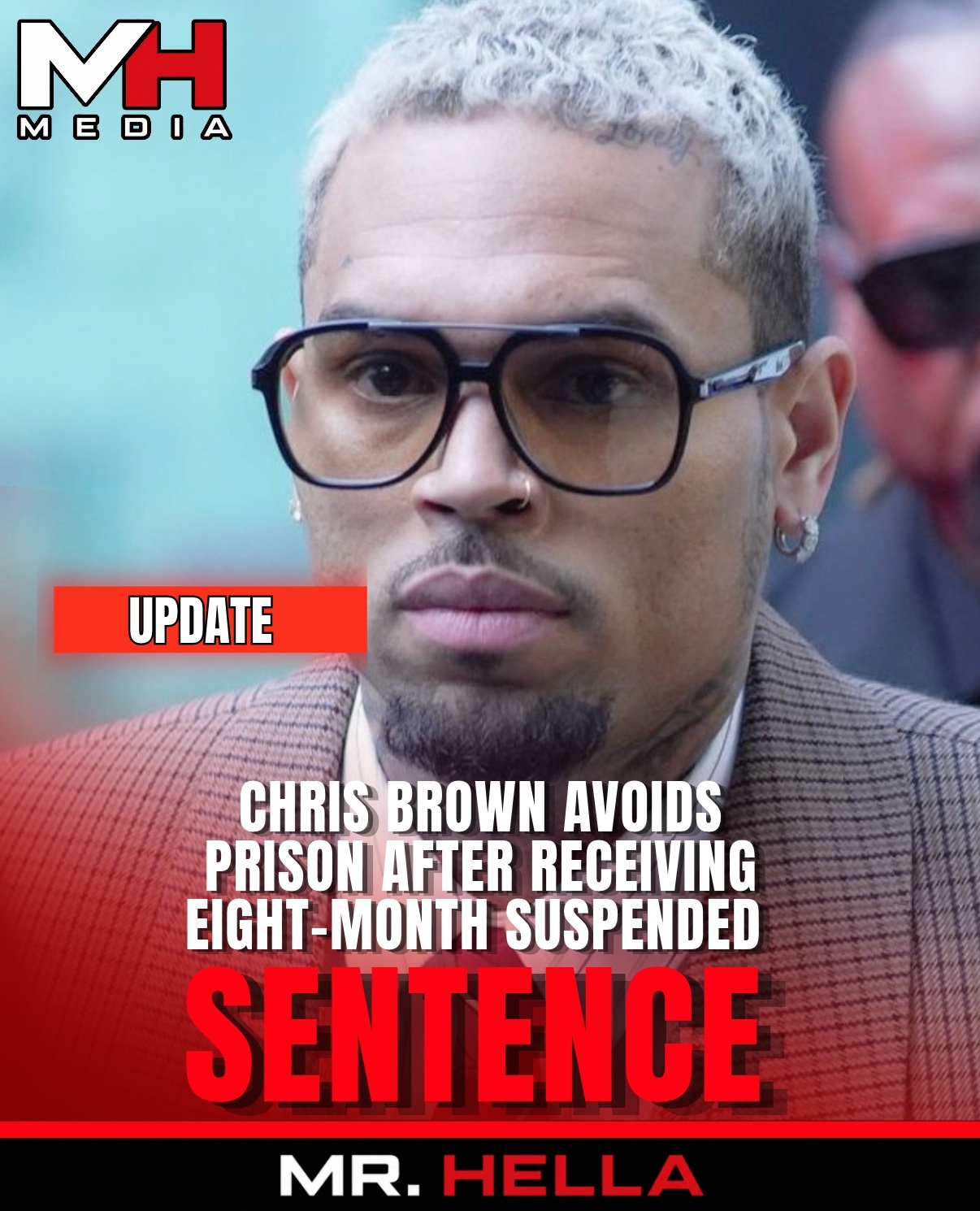
Chris Brown Avoids Prison After Receiving Eight-Month Suspended Sentence for London Nightclub Attack
Chris Brown will not serve immediate prison time after a London court sentenced the Grammy-winning R&B singer to eight months in jail, suspended for 12 months, in connection with a violent confrontation at a nightclub more than three years ago.
The 37-year-old singer appeared at Southwark Crown Court on Monday, October 26, where Judge Tony Baumgartner delivered the sentence following Brown’s guilty plea to affray in July. The conviction stems from a February 2023 incident at Tape, an exclusive nightclub in London’s Mayfair district, where Brown struck music producer Abraham Diaw with a tequila bottle during an altercation captured on surveillance cameras.
The suspended sentence means Brown will remain out of prison for now, although the court can activate the jail term if he breaches the conditions of the sentence during the next year.
Brown’s vocal coach and longtime associate, Omololu Akinlolu, also known professionally as Hoody Baby, received a four-month prison sentence suspended for 12 months after pleading guilty to the same offense. Both men were ordered to pay £1,500 in court costs.
The decision brings a significant stage of the criminal proceedings to a close, more than three years after the nightclub incident and approximately 17 months after Brown was arrested upon returning to the United Kingdom.
Surveillance Footage Showed Brown Striking Music Producer With Tequila Bottle
The criminal case centered on an encounter during the early morning hours of February 19, 2023, inside Tape nightclub, a private venue frequented by celebrities and entertainment-industry figures.
According to prosecutors, Brown approached Diaw, a music producer and former acquaintance, on the club’s dance floor at approximately 3 a.m. What followed was a violent confrontation lasting around 20 seconds.
Surveillance footage presented in court showed Brown repeatedly swinging a heavy, square-shaped tequila bottle toward Diaw. Prosecutors said the bottle connected with Diaw’s head twice before Brown delivered additional blows as the producer attempted to move away.
The footage also showed Akinlolu becoming involved in the confrontation, restraining Diaw while Brown continued the attack.
Diaw eventually fell to the floor, where the altercation continued before others intervened.
The producer sustained injuries to his head and knee and subsequently received treatment at St Mary’s Hospital in London.
During sentencing, Judge Baumgartner emphasized the seriousness of using a glass bottle as a weapon, particularly when directed toward someone’s head. The judge said the conduct created a substantial risk of injuries more severe than those ultimately sustained.
Although the incident lasted less than a minute, the court treated the violence as a serious offense rather than a minor nightclub disagreement.
Judge Warns Chris Brown That Fame Does Not Mean Special Treatment
One of the most significant moments during Monday’s hearing came when Judge Baumgartner addressed Brown’s celebrity status and professional success.
The judge acknowledged the singer’s established music career but emphasized that his fame did not place him above the law.
“Commercial success does not attract preferential treatment,” Baumgartner said.
The judge also described the bottle attack as “plainly dangerous,” explaining that striking someone in the head with a glass object carried an obvious risk of serious injury.
Despite those findings, Baumgartner concluded that an immediate custodial sentence was not necessary after considering several mitigating circumstances.
Those included Brown’s guilty plea, his established employment, charitable activities and the absence of recent convictions. The judge acknowledged Brown’s previous criminal history but considered his conduct in more recent years when determining the sentence.
The ruling therefore did not dismiss the seriousness of the attack. Instead, the court imposed a prison sentence while suspending its immediate enforcement.
For Brown, the outcome allows him to avoid incarceration as long as he complies with the legal requirements imposed during the 12-month suspension period.
Chris Brown Pleaded Guilty in July After Initially Facing More Serious Charges
Brown’s sentencing follows a lengthy legal process that began after British authorities investigated the February 2023 attack.
Police said Brown and Akinlolu left the United Kingdom following the incident. Investigators subsequently sought to question both men, but their efforts to arrange voluntary interviews were unsuccessful.
When Brown returned to Britain in May 2025 for a scheduled concert in Manchester, police arrested him in connection with the outstanding investigation.
He was initially held in custody before securing release on bail. The arrangements included a £5 million financial security requirement, allowing him to continue international touring while the criminal proceedings remained active.
Brown initially faced several charges, including allegations of attempting to cause grievous bodily harm and possessing an offensive weapon. Those additional charges were later dropped after he pleaded guilty to affray on July 24, 2026.
Under British law, affray involves using or threatening unlawful violence in circumstances that would cause a reasonable person to fear for their safety. Brown faced a maximum sentence of three years in prison on that charge.
His guilty plea established criminal responsibility for the public-order offense, allowing the case to proceed to sentencing without a full trial on the original allegations.
Chris Brown Offers Apology as Defense Highlights His Career and Charity Work
During Monday’s proceedings, Brown’s defense attorney, Sallie Bennett-Jenkins KC, acknowledged the seriousness of the nightclub confrontation while asking the court to consider its short duration and the circumstances surrounding the incident.
The defense described the altercation as an ugly episode but argued that it lasted approximately 17 to 20 seconds. Brown’s attorneys also disputed the severity of some of Diaw’s injuries and suggested that Brown believed the producer posed a threat.
The court heard that Diaw had withdrawn his support for the prosecution at some point after the incident. Nevertheless, the case proceeded, supported in part by surveillance footage and other evidence gathered during the investigation.
Through his attorney, Brown offered a profound apology to those present at the nightclub during the confrontation.
The judge ultimately considered Brown’s guilty plea and mitigating circumstances when deciding against immediate imprisonment. The suspended sentence nevertheless leaves the singer subject to potential incarceration if the sentence is activated during the next 12 months.
Chris Brown and Hoody Baby Leave Court Without Being Taken Into Custody
Following the sentencing decision, Brown and Akinlolu stood together and shook hands before leaving the courtroom.
Outside Southwark Crown Court, supporters greeted Brown with cheers as the singer exited the building. According to reporters at the scene, he acknowledged fans and appeared to stop briefly for an autograph.
The reaction underscored the continued loyalty of Brown’s fan base, which has supported the singer throughout his legal troubles and international touring career.
However, the Metropolitan Police emphasized that the case represented an important result for investigators and the victim.
Detective Chief Superintendent Christina Jessah described the incident as an inexcusable attack that resulted in hospitalization, noting that investigators continued pursuing the case despite the suspects having left Britain.
The Crown Prosecution Service also stressed that violence in crowded public venues carries serious consequences regardless of an individual’s public profile.
What the Suspended Sentence Means for Chris Brown’s Future
Monday’s decision allows Brown to continue his career without serving an immediate jail term, but it does not erase his conviction.
For the next 12 months, the eight-month sentence remains suspended. If Brown commits another offense or breaches applicable requirements during that period, he could face imprisonment.
The outcome also resolves the immediate question of whether the singer would be taken into custody following his guilty plea, an issue that had attracted considerable attention because of his touring commitments and international career.
Brown has continued releasing music and performing for large audiences throughout the legal proceedings, including during the period when he was permitted to travel under bail conditions.
The sentencing represents a major development in a case that began with a nightclub confrontation in February 2023, continued through his arrest in May 2025 and ultimately resulted in a guilty plea and suspended prison term in 2026.
While Brown has avoided immediate incarceration, the court’s findings establish that the attack was serious and that his celebrity status did not exempt him from criminal accountability.
As of October 26, 2026, Chris Brown remains out of prison following the sentencing, with his eight-month jail term suspended for one year.

Comments