

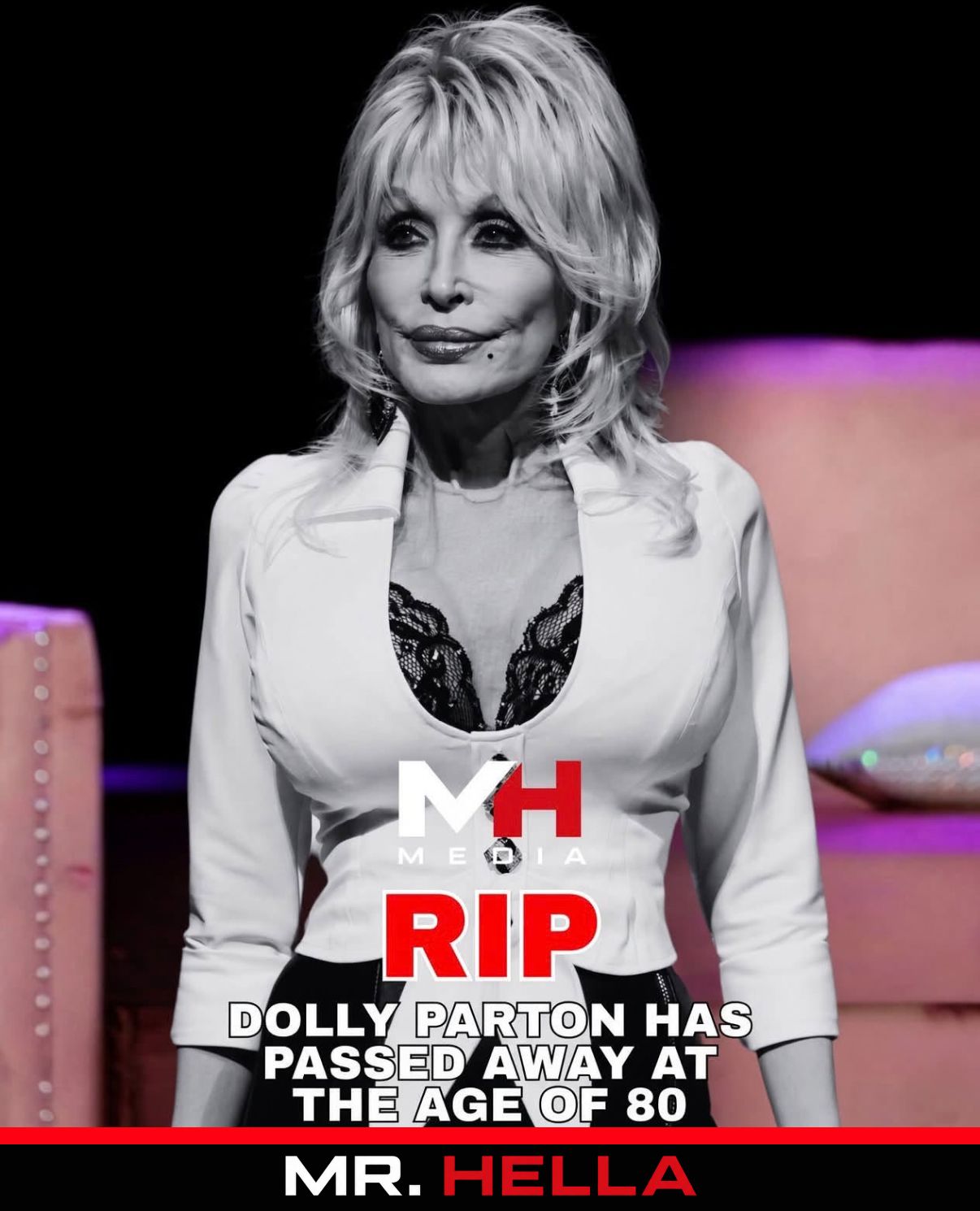
Dolly Parton, the legendary singer-songwriter who rose from poverty in the mountains of East Tennessee to become one of the most recognizable and beloved entertainers in American history, died Tuesday, August 25, in Nashville. She was 80.
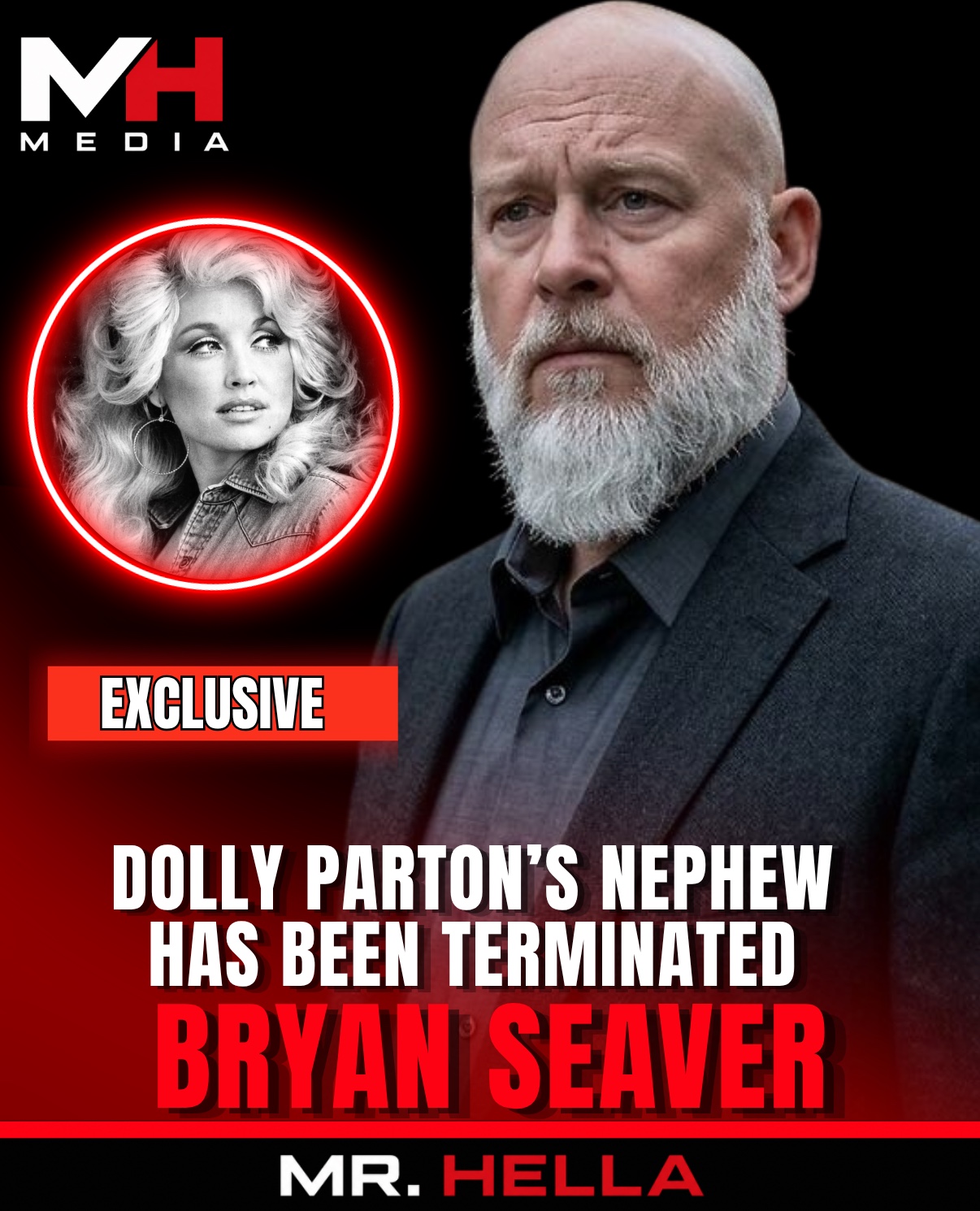
Parton's family announced her death through an official statement and an emotional video delivered by her nephew Bryan Seaver, who represented the Parton and Owens families in sharing the news with millions of fans around the world. Seaver, who also served as his aunt's longtime head of security, said Parton had personally asked him years earlier to make the announcement when the time eventually came.
Parton died peacefully after a brief battle with cancer, according to her representatives. CBS News reported that she died at Vanderbilt-Ingram Cancer Center surrounded by loved ones.
Her death brings to a close an extraordinary seven-decade career that stretched far beyond country music. Parton was a songwriter, singer, actress, author, businesswoman and philanthropist whose songs became American standards, whose personality made her recognizable across generations and whose charitable work reached millions of children around the world.
Her family's official announcement described her life as one that “shone bright enough for the world to see,” while emphasizing not only her music but the warmth, humor and generosity that helped make her an unusually universal celebrity.
At Parton's request, her funeral service was to remain small and private, limited to immediate family. Her family asked fans wishing to honor her to support Dolly Parton's Imagination Library, the children's literacy program that became one of the most important pieces of her legacy.
Her Nephew Delivered the Announcement Dolly Had Planned Herself
The responsibility of announcing Parton's death fell to Bryan Seaver, the son of Parton's sister Cassie.
It was not a role he unexpectedly assumed after she died.
According to Seaver, Parton had discussed the moment with him years earlier and specifically asked him to deliver the message when the time came. Seaver had served as Parton's head of security for more than two decades, following his father Larry in the position, giving him an unusually close personal and professional relationship with his aunt.
In the prerecorded video posted through Parton's official channels, Seaver identified himself as representing the Parton and Owens families and announced the death of “my Aunt Dolly Rebecca Parton Dean.”
The family's announcement also carried one final message from Parton herself.
“I will always love you.”
It was an unmistakable reference to the song Parton wrote decades earlier that became one of the defining compositions of her career and, through Whitney Houston's later recording, one of the most famous love songs ever recorded.
Parton's Health Had Become a Growing Concern
The announcement followed a period in which Parton's health had increasingly become a subject of public concern.
In September 2025, Parton revealed that she was dealing with a kidney stone that had caused an infection, forcing her to miss an appearance at Dollywood. She later postponed a planned Las Vegas residency while undergoing medical procedures and eventually canceled the residency in May 2026 as she continued addressing her health.
Parton continued reassuring fans throughout that period that she remained active and intended to keep working.
On August 14, less than two weeks before her death, she missed the grand opening of Dollywood's NightFlight Expedition attraction. Appearing by video from Nashville, Parton explained that she had been experiencing dizziness and dehydration and that her doctor had advised against making the roughly 200-mile trip to Pigeon Forge. She joked that her doctor had “clipped my wings,” while telling fans she was improving with treatment.
Then, only days before her death, Parton publicly discussed the health problems she had neglected while caring for her husband, Carl Dean, during the final period of his life.
Parton told People on August 21 that she had put some of her own medical needs aside while caring for Dean and had subsequently been working to address them. She remained characteristically optimistic, emphasizing that she was still working despite everything she had been through.
Four days later, her family announced that she was gone.
Her representatives subsequently disclosed that Parton had been privately fighting cancer.
Carl Dean's Death Marked an Emotional Final Chapter
Parton's death came approximately 17 months after the death of Carl Dean, her husband of nearly six decades.
Dean died March 3, 2025, at 82.
Their marriage was one of entertainment's longest-lasting and most unusual relationships. Parton spent much of her adult life as an internationally famous performer, while Dean deliberately avoided the spotlight and rarely appeared at public events with his wife.
They married in 1966 and remained together until his death.
Parton later acknowledged how deeply losing him affected her. She also revealed that caring for Dean had contributed to her putting her own health concerns aside.
Her official death announcement specifically recognized Dean among the loved ones who preceded her in death, along with her parents, Avie Lee Caroline Owens and Robert Lee Parton Sr.
For Parton, the loss of Dean represented more than the death of a spouse. He had been present before the fame, before Dollywood, before the movies and before her transformation into an international icon.
From the Mountains of Tennessee to Country Music History
Dolly Rebecca Parton was born January 19, 1946, in rural East Tennessee and grew up as one of 12 children in a family with little money.
The poverty of her childhood would eventually become one of the richest sources of her songwriting.
Rather than hiding where she came from after becoming successful, Parton repeatedly turned her upbringing into music. “Coat of Many Colors,” one of her most enduring compositions, transformed a childhood experience involving a coat handmade by her mother into a song about poverty, dignity and love.
After moving to Nashville, Parton established herself as a songwriter before becoming nationally known through her partnership with Porter Wagoner. Her appearances on The Porter Wagoner Show introduced her to a large country audience, but Parton eventually decided she needed to build a career independent of Wagoner.
Her decision to leave inspired “I Will Always Love You.”
Parton's own recording became a country hit. Nearly two decades later, Whitney Houston recorded the song for The Bodyguard, transforming it into a worldwide phenomenon and introducing Parton's songwriting to another generation.
Parton retained ownership of the composition—a decision that became emblematic of the business instincts she demonstrated throughout her career.
‘Jolene,’ ‘9 to 5’ and a Catalog That Outlived Generations
Parton's songwriting became the foundation of her career.
“Jolene,” released in the 1970s, became one of the most recognizable country songs ever recorded. Its simple plea to another woman not to take the narrator's partner crossed genres and generations, eventually being covered and reinterpreted by artists from vastly different musical backgrounds.
“9 to 5” became another signature record, combining Parton's musical career with her growing presence in Hollywood.
She wrote thousands of songs over the course of her life, with Reuters reporting that Parton estimated her catalog at nearly 3,000 compositions.
For all of the costumes, rhinestones, wigs and jokes that made her a larger-than-life personality, Parton repeatedly described herself first and foremost as a songwriter.
That body of work became one of her most enduring contributions to American music.
Hollywood Made Dolly Bigger Than Country Music
Parton's ambitions were never confined to Nashville.
Her performance in the 1980 comedy 9 to 5, alongside Jane Fonda and Lily Tomlin, helped establish her as a legitimate movie star. She subsequently appeared in films including The Best Little Whorehouse in Texas and Steel Magnolias, demonstrating that the personality audiences loved on stage could translate naturally to film.
Her entertainment career eventually encompassed television specials, books, stage productions and numerous other projects.
Parton's ability to move between those worlds was crucial to her longevity.
She could perform for a country audience that had followed her since the Porter Wagoner era while remaining recognizable to younger listeners who knew her through movies, collaborations, viral clips or newer interpretations of her songs.
That cross-generational appeal became one of the defining characteristics of her career.
Dollywood Turned Her Hometown Roots Into an Empire
Parton's business career became almost as recognizable as her music.
In 1986, she became involved with the Tennessee theme park that would become Dollywood. Located in Pigeon Forge near the Great Smoky Mountains where she grew up, the park developed into one of Tennessee's major tourist attractions and eventually expanded into a broader hospitality and entertainment operation.
Yet Parton's relationship with Dollywood was never simply commercial.
She consistently tied the park to the region that raised her and used its success to support employment and tourism in East Tennessee.
After her death, Dollywood announced that the park would remain open, saying that was what Parton wanted. Dollywood Parks & Resorts President Eugene Naughton said her wish was for the park to remain a place of joy, music and togetherness rather than becoming a place of silence after she was gone.
The park referred to her by the title that had become synonymous with her role there: “Dreamer-in-Chief.”
The Imagination Library Became One of Her Greatest Legacies
For all of Parton's commercial success, one of her most consequential projects had nothing to do with selling records.
She founded Dolly Parton's Imagination Library in 1995 to provide free books to young children. What began as a local program in Tennessee expanded dramatically over the following decades, eventually reaching children internationally.
The program was inspired in part by Parton's father, who could not read or write.
Literacy became one of Parton's defining philanthropic causes, and the Imagination Library ultimately distributed hundreds of millions of books.
That is why her family specifically directed people toward the program after her death.
Instead of flowers, they asked supporters to donate to the Imagination Library.
It ensured that one of the first actions taken in Parton's memory would support the work she had spent decades building.
She Became Something Rarer Than a Music Superstar
Parton's longevity cannot be explained solely by record sales.
She became one of those increasingly rare public figures who seemed capable of being admired by people with little else in common.
Country traditionalists embraced her.
Pop audiences knew her.
Rock musicians celebrated her songwriting.
Actors worked alongside her.
Younger generations turned her interviews and one-liners into social-media clips.
Her philanthropy reached families who may never have purchased one of her albums.
Parton frequently used humor to disarm people, particularly when discussing her exaggerated appearance. She openly joked about wigs, cosmetic procedures and the deliberately glamorous image she constructed for herself.
Behind that image was an unusually disciplined songwriter and businesswoman who maintained ownership and control over crucial parts of her career.
Her influence stretched far enough beyond country music that she was eventually inducted into the Rock & Roll Hall of Fame, initially expressing hesitation because she did not consider herself a rock artist before ultimately accepting the honor and embracing the challenge.
Her career became difficult to place inside any single category.
The Music Industry Mourns an Irreplaceable Figure
Parton's death immediately produced tributes across music and entertainment.
The scale of the reaction reflected a career that had lasted long enough for Parton to influence multiple generations of performers. Artists who grew up listening to her eventually became stars themselves, collaborated with her and then watched another generation discover the same songs.
The response also extended beyond entertainment.
Parton's charitable work, business investments in Tennessee and ability to maintain broad public affection made her a cultural figure whose influence was considerably larger than the country charts.
She sold more than 100 million records worldwide and accumulated a career filled with Grammy Awards, major industry honors and hall-of-fame inductions.
But the numbers only explain part of why her death resonated.
Dolly Parton had spent decades cultivating something harder to measure: affection.
‘I Will Always Love You’
There is an unusual finality to the message Parton's family shared after announcing her death.
She had already written the words decades earlier.
“I will always love you.”
The phrase had been a song lyric, a farewell to Porter Wagoner, a country standard and eventually the foundation of one of the biggest recordings in pop history.
By August 25, 2026, it had become something else.
A final message.
Parton died at 80 after a career that began with a girl growing up poor in the Smoky Mountains and ended with that girl's songs known around the world. She became a country legend, movie star, entrepreneur and philanthropist without abandoning the Tennessee identity that shaped her.
Her husband Carl Dean was gone. Her own health had deteriorated. And even during her final weeks, she continued talking publicly about work, future projects and getting better.
Then, on Tuesday, the announcement she had prepared for years finally arrived.
Dolly Parton was gone.
The songs, the stories, Dollywood, the millions of books placed into children's hands and the generations of artists she influenced remain.
Just as she planned, her final words to the people who loved her needed no new song.
She had already written them.
Comments