

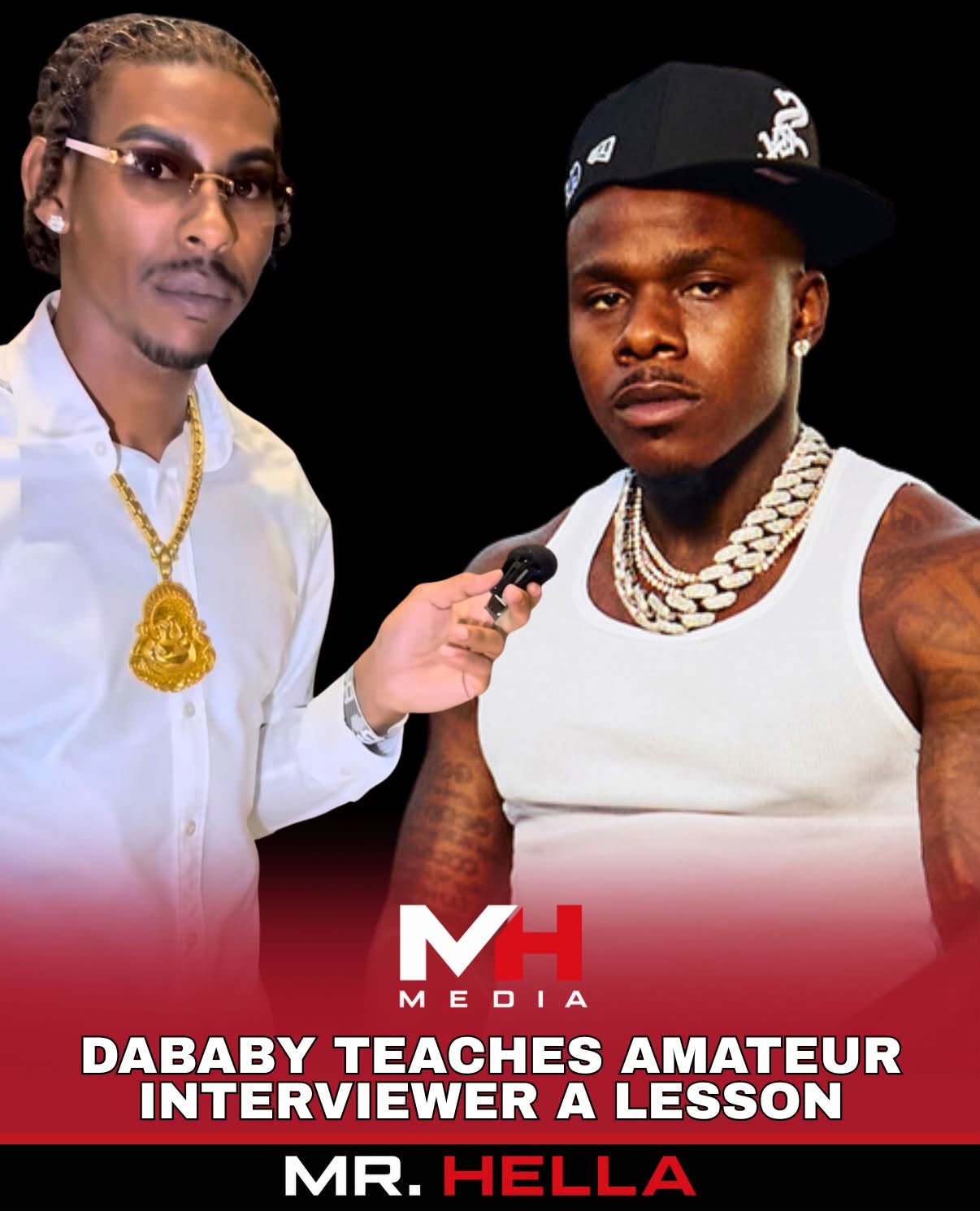
DaBaby made it clear he wasn't interested in participating in a street interview after a content creator approached his vehicle and attempted to fire off a series of unusual questions.
In a clip circulating online, the Charlotte rapper could be seen inside a vehicle as the creator approached and began questioning him. What initially appeared to be an opportunity for a quick celebrity interview lasted only seconds before DaBaby decided he had heard enough.
The creator first asked DaBaby what moment had humbled him the most during his music career. Rather than diving into a story about fame, controversy or one of the difficult periods he has experienced publicly, DaBaby offered a brief response centered on his faith.
“God is great,” he replied.
The creator immediately followed with another question, asking DaBaby about the wildest place where he had ever been in a fight.
That was apparently where the rapper's willingness to participate ended.
“I ain't fought nowhere,” DaBaby responded before objecting to the direction of the questions and telling those around the vehicle to move away.
DaBaby Wasn't Interested in Turning the Moment Into an Interview
The interaction stood out largely because of how quickly it deteriorated.
The first question could have potentially produced a serious conversation. DaBaby has experienced an unusually turbulent career since becoming one of hip-hop's biggest breakout stars in 2019, giving him no shortage of material if he had chosen to discuss a humbling moment.
Instead, his answer—“God is great”—kept the interaction brief.
When the conversation immediately shifted to fighting, DaBaby appeared to conclude that the creator wasn't approaching him for the kind of discussion he wanted to have. He dismissed the premise, complained about the questioning and instructed the group to get away from the vehicle.
The creator attempted to continue anyway, moving on to another question about DaBaby's favorite “struggle meal,” but by that point the impromptu interview had effectively ended.
It became less of an interview than a viral example of what can happen when the increasingly common world of street content collides with a celebrity who has no interest in playing along.
The First Question Actually Touched on Something DaBaby Has Discussed Seriously
Ironically, the creator's opening question wasn't far removed from subjects DaBaby has discussed in more formal interviews.
During a February 2026 appearance on The Breakfast Club, DaBaby spoke extensively about gratitude, trauma, personal growth and the difficult period that followed the height of his commercial success. He described having to rediscover who he was outside of his career and acknowledged reaching a point where he had lost some of his enthusiasm for making music.
DaBaby also spoke about his relationship with God while reflecting on the changes in his life, saying he came to believe his purpose was bigger than simply the circumstances surrounding his career.
That context makes his short response to the street interviewer—“God is great”—more meaningful than it might initially appear.
DaBaby could have listed a particular controversy or career setback as the moment that humbled him. Instead, he immediately redirected the answer toward God, consistent with themes he has been discussing publicly during this stage of his career.
The problem for the creator was that the conversation didn't remain there.
Within seconds, the questioning had gone from personal growth to asking DaBaby about fighting.
DaBaby's History Made the Fighting Question Particularly Loaded
Asking DaBaby about the “wildest” place he has fought also carried additional baggage because physical confrontations have repeatedly followed the rapper throughout his public career.
DaBaby, born Jonathan Kirk, has faced extensive media attention surrounding altercations and legal incidents over the years. Those situations have ranged from widely circulated confrontation videos to serious legal cases, making questions about fighting potentially more sensitive than they might be for another artist.
That history also makes precision important. A casual question inviting DaBaby to recount his “wildest” fight could easily push an interview toward incidents involving disputed circumstances, legal proceedings or events the rapper may have no interest in revisiting while sitting in a vehicle.
DaBaby chose not to entertain it.
His response—“I ain't fought nowhere”—effectively rejected the entire premise before he moved to end the conversation.
Whether the creator intended the question as comedy, an attempt to produce a viral answer or simply part of a rapid-fire interview format isn't established by the available clip. DaBaby's reaction, however, left little ambiguity about how interested he was in continuing.
He wasn't.
The Moment Reflects the New Reality of Celebrity Street Content
The exchange also highlights a larger change in celebrity media.
Traditional entertainment interviews generally involve some level of arrangement beforehand. The artist knows an interview is happening, the interviewer has time to research the subject, and both sides enter the conversation understanding what is expected.
Social-media street content operates differently.
Creators can approach athletes, musicians and celebrities with a phone or microphone and attempt to generate a viral interaction within seconds. The questions are frequently designed to produce immediate reactions rather than lengthy answers because the finished clip may eventually be consumed as a 15- or 30-second video on TikTok, Instagram Reels, YouTube Shorts or X.
When it works, the format can create unusually candid celebrity moments.
When it doesn't, the rejection can become the content.
That appears to be what happened with DaBaby.
The creator did not walk away with a story about the moment that humbled DaBaby or an anecdote about a memorable fight. Instead, the most shareable part of the exchange became DaBaby deciding he was finished answering the questions.
DaBaby Has Been Speaking More Seriously About His Life in 2026
The tone of the interaction also contrasts with the way DaBaby has been presenting himself in longer conversations this year.
His February Breakfast Club interview was built around gratitude, processing trauma and rebuilding his relationship with music. DaBaby acknowledged periods when he didn't want to continue making music and described eventually rediscovering his motivation. His children were among the influences he credited with helping him regain perspective.
He also reflected on responsibility and how his perspective had changed after experiencing the highs and lows of celebrity.
Those comments came from a rapper who experienced one of hip-hop's fastest rises at the end of the 2010s. DaBaby went from a regional North Carolina artist to a mainstream star through projects including Baby on Baby, Kirk and Blame It on Baby, while records such as “Suge,” “BOP” and “Rockstar” became major commercial successes.
His career subsequently encountered significant turbulence, including controversies that affected festival appearances, endorsements and his broader public image.
By 2026, DaBaby's interviews increasingly reflected someone looking backward at that entire experience rather than simply discussing the next hit.
That means there potentially was a substantial answer available when the creator asked what had humbled him.
DaBaby simply wasn't interested in giving it in that setting.
A Failed Interview Still Became Successful Content
In the attention economy surrounding social media, the irony is that an unsuccessful celebrity interview can sometimes perform better than a successful one.
Had DaBaby calmly answered every question, the exchange might have produced a handful of interesting responses.
Instead, the abrupt ending gave the clip a beginning, escalation and punchline within seconds.
A creator approached DaBaby.
DaBaby gave one brief answer.
The creator asked about fighting.
DaBaby rejected the premise and told the group to move away.
That sequence was enough for the interaction to circulate as entertainment in its own right. Commentary surrounding reposts framed it as an example of a rapper becoming frustrated with unusual street-interview questions.
For DaBaby, however, his message in the moment was considerably simpler.
He wasn't interested in the interview—and once the questions went in a direction he didn't like, he made sure everyone around the vehicle knew it.


Comments