

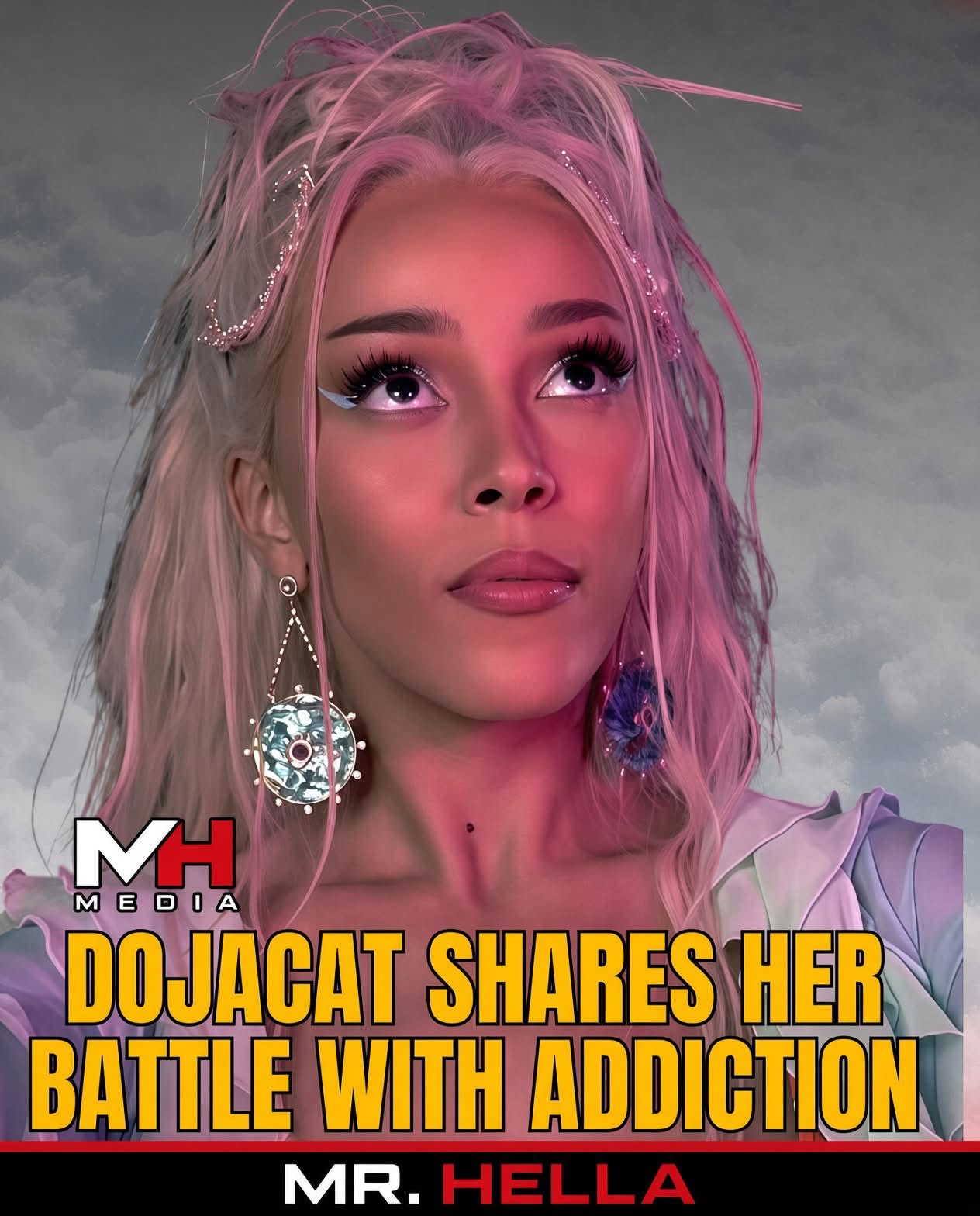
Doja Cat is speaking candidly about a difficult period in her life, revealing that she previously struggled with cocaine and experienced problems with alcohol while reflecting on the relationship between substance use, mental health and social media.
The Grammy-winning rapper and singer made the disclosures in a series of self-recorded TikTok videos posted Aug. 31, telling her followers that she was nervous about discussing some of the experiences publicly.
“Man, I really don’t want to make this TikTok because I have fear in my heart,” Doja said as she began one of the videos, explaining that she had been taught to do things that scare her as part of her journey toward healing.
Doja, whose real name is Amala Ratna Zandile Dlamini, then addressed her history with substance use.
In a follow-up video, the 30-year-old offered what she called a “disclaimer” before revealing that she had struggled with cocaine years earlier.
“I have struggled with cocaine,” she said, estimating that the period was roughly eight years ago. She quickly made clear that she considers that chapter of her life behind her, adding that she is “well past that” and thanking God.
Doja did not say that she currently uses cocaine, nor did she describe herself as having been addicted to it.
Doja Says Alcohol Became a Problem
Her discussion of alcohol was more extensive.
Doja described a period in which drinking and spending time online could reinforce negative thoughts she already had about herself. She said she had used the internet as a source of validation for those thoughts while drinking.
She also carefully distinguished having problems with alcohol from identifying herself as an alcoholic.
“I was never an alcoholic, but I definitely had problems,” she said.
Doja said that, aside from marijuana, she did not consider herself to have had what she characterized as a serious problem with drugs. Still, she acknowledged her past cocaine struggle separately and warned about the potentially destructive combination of substance use, untreated or unaddressed mental-health issues and social media.
Her comments were less a standalone confession about drugs than part of a wider message about how people deal with their own insecurities while living publicly online.
A Broader Conversation About Mental Health and Social Media
Doja also addressed years of criticism surrounding her public image.
She spoke about people online who have characterized her imagery as “demonic” or “evil,” using those accusations as a starting point for a broader conversation about destructive behavior and mental health. She argued that social media can become especially harmful when negative comments reinforce thoughts someone already has about themselves.
The singer encouraged people dealing with those feelings to seek help rather than relying on strangers online for validation.
She also turned the discussion inward, addressing accusations that she hates herself and reflecting on struggles with identity earlier in her life. Doja described growing up biracial and moving into a predominantly white neighborhood when she was young, saying that getting older helped her develop greater appreciation for herself and her appearance.
By the end of the videos, Doja said she felt that speaking publicly was something she needed to do.
“I needed to get this shit off of my chest,” she said.
The disclosures offer a more personal look at experiences that Doja says occurred years before her current level of global fame. Her comments about cocaine were explicitly retrospective, while her discussion of alcohol focused on recognizing problematic behavior without labeling herself an alcoholic.
Most importantly, Doja framed the conversation around what she says she has learned from those experiences: that substance use, negative thoughts and constant online validation can become a damaging combination—and that her struggle with cocaine is now a chapter she considers firmly in her past.

Comments