

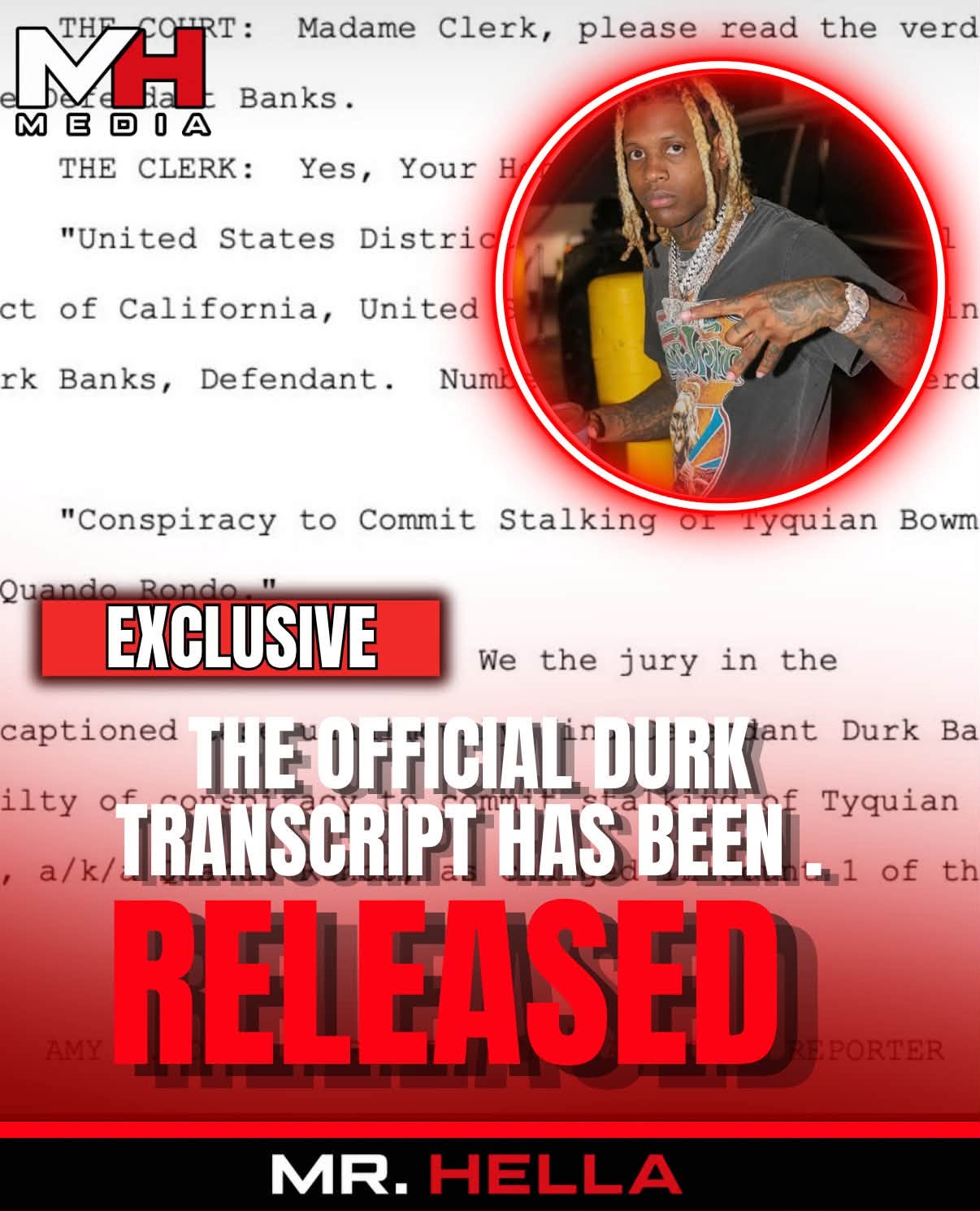
Lil Durk walked into his federal murder-for-hire trial facing an extraordinary allegation: prosecutors claimed the Grammy-winning rapper had put a financial bounty on rival rapper Quando Rondo and used people around him to carry out a deadly act of revenge.
Weeks later, Durk walked away from that case acquitted of every charge.
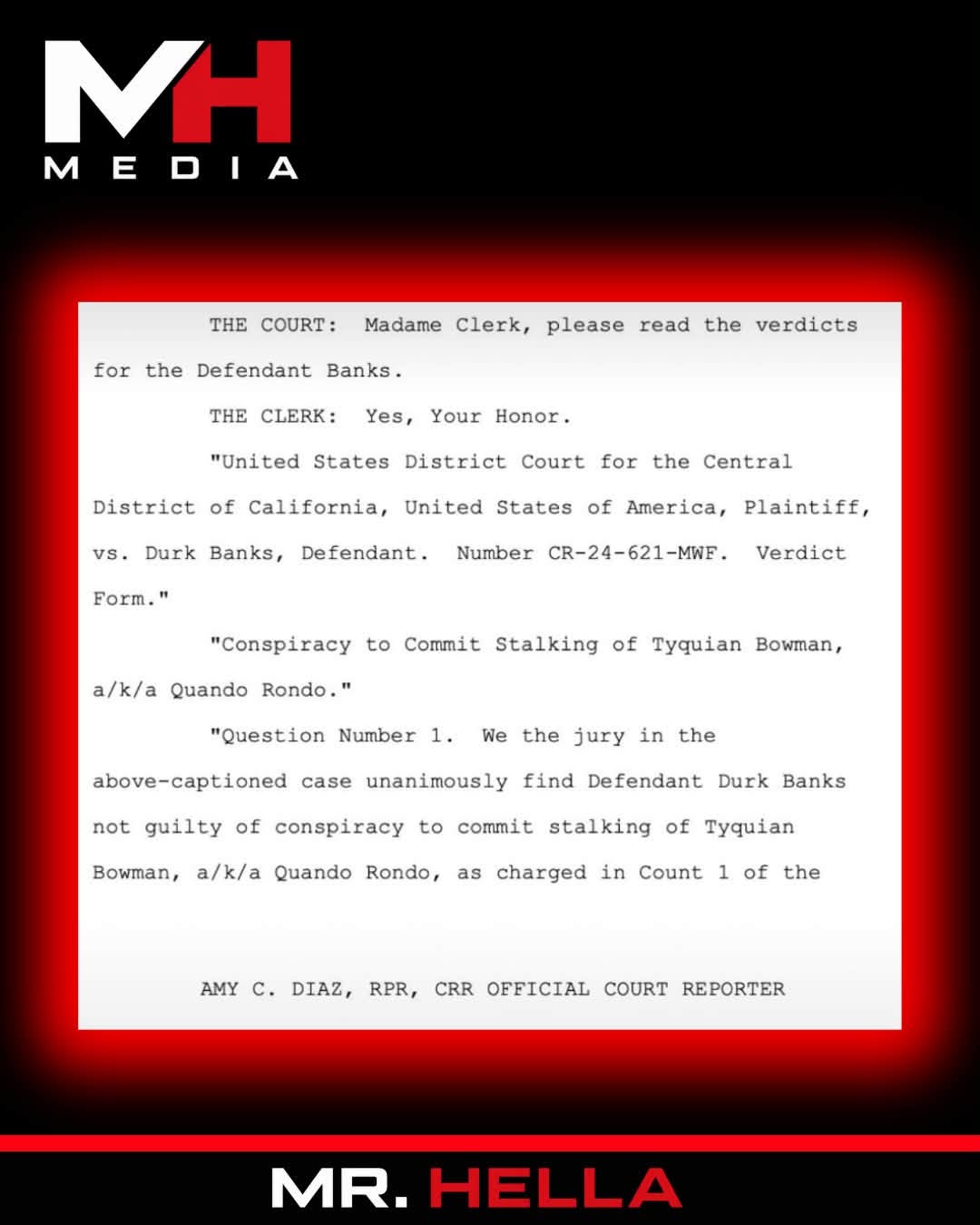
The federal jury's Sept. 11 verdict represented a sweeping victory for Durk, whose legal name is Durk Banks, after his attorneys spent the trial attacking the government's central theory and challenging the credibility of cooperating witnesses who attempted to connect him to the August 2022 shooting that killed Saviay’a “Lul Pab” Robinson.
The defense never needed to prove who was responsible for organizing the attack. Its job was to convince jurors that prosecutors had not proved beyond a reasonable doubt that Durk was the man behind it.
On all five counts, the jury found him not guilty.
Prosecutors Said Durk Wanted Revenge for King Von
The government's theory began with the November 2020 killing of King Von, whose legal name was Dayvon Bennett.
Von, one of Durk's closest friends and musical collaborators, was fatally shot following a confrontation outside an Atlanta nightclub involving people associated with Quando Rondo, whose legal name is Tyquian Bowman.
Prosecutors alleged that Durk wanted revenge.
According to the government's case, Durk eventually offered a financial reward for Bowman's killing and used members of his Only The Family circle and his financial resources to facilitate a plot against the Atlanta rapper.
That alleged plan culminated on Aug. 19, 2022, when gunmen opened fire near the Beverly Center in Los Angeles.
Bowman survived.
His cousin, Saviay’a Robinson, was killed.
The prosecution did not accuse Durk of being one of the gunmen. Instead, its case depended on proving that Durk was responsible for setting the operation in motion and providing the incentive and resources behind it.
That distinction became one of the central battlegrounds of the trial.
Durk's Lawyers Said He Never Ordered the Hit
Durk's attorneys maintained that their client neither ordered the shooting nor knowingly participated in the alleged plot.
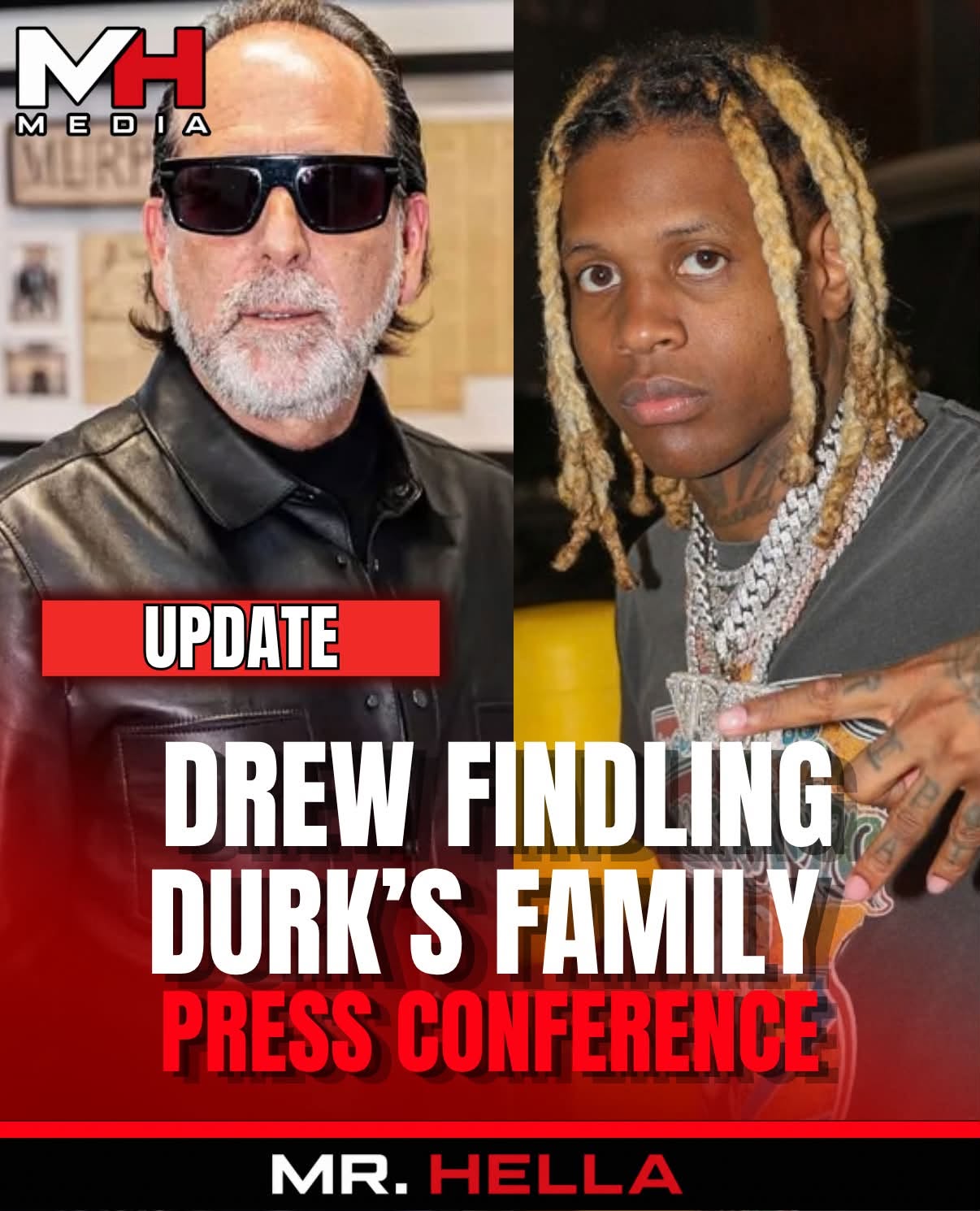
Defense lawyers Drew Findling, Brian Steel and Marissa Goldberg argued that prosecutors were attempting to transform Durk's fame, money and relationships with people involved in the shooting into proof that he had authorized their actions.
The defense pointed instead toward Durk's former personal assistant, Kavon Grant.
Goldberg argued during opening statements that Grant had the ability to arrange travel and use resources connected to Durk while acting independently. The defense highlighted evidence that Grant booked hotels, obtained vehicles and purchased ski masks ahead of the shooting.
Their argument was not that nothing happened.
It was that prosecutors had failed to prove Durk ordered it.
That approach allowed Durk's attorneys to acknowledge evidence surrounding the actions of other people while drawing a sharp line between those actions and their client.
The Cooperating Witnesses Became a Major Target
The government's case also depended heavily on insiders.
Kacey “OTF Jam” Hester and Keith Jones, who admitted involvement in the shooting, testified for prosecutors. Grant also took the stand against his former boss.
Durk's attorneys repeatedly questioned whether jurors should trust witnesses who had their own serious legal exposure and potential reasons to cooperate with the federal government.
Hester acknowledged during testimony that he hoped his cooperation could eventually help reduce his punishment, while insisting prosecutors had not promised him a particular sentence.
That distinction became important.
The defense attempted to show jurors that even without an explicit guarantee, cooperating defendants facing lengthy prison sentences could still have powerful incentives to provide testimony useful to prosecutors.
Prosecutors argued the witnesses were telling the truth and that their accounts were corroborated by other evidence.
The defense urged jurors not to take their word for it.
Drew Findling Turned the Spotlight on Kavon Grant
Grant became one of the most important witnesses in the entire trial—and one of the defense's biggest targets.
During closing arguments, Findling described Durk's former assistant as a “master of deception” and argued that Grant had manipulated the people around him as well as investigators.
The defense portrayed Grant as someone with access, authority and knowledge that allowed him to arrange elements of the Los Angeles trip without Durk personally directing the operation.
That argument struck at the heart of the government's case.
Prosecutors could show that people connected to Durk traveled to California. They could introduce evidence concerning transportation, lodging, communications and the eventual shooting.
But to convict Durk, the government still had to prove his own criminal responsibility beyond a reasonable doubt.
The defense repeatedly returned to that gap.
Prosecutors Said Durk's Money Connected Everything
Federal prosecutors rejected the idea that Durk was an innocent celebrity whose employees and associates secretly carried out a revenge operation around him.
During closing arguments, Assistant U.S. Attorney Ian Yanniello argued that Durk had his “shooters on speed dial,” while prosecutors maintained that the alleged operation made sense only when Durk's money and position were taken into account.
The government also pointed to evidence it believed demonstrated Durk's knowledge and intent, including communications, travel arrangements and testimony from cooperating witnesses.
Prosecutors even used a clip from Durk's previous interview with DJ Akademiks during closing arguments.
In the interview, Akademiks asked Durk about people online telling him to “slide for Von.”
“For some odd reason, I don't see those comments anymore,” Durk responded.
Prosecutors characterized the remark as an “incredible statement of responsibility.”
The defense strongly disputed that interpretation, arguing that the government had removed the statement from its broader context and attempted to transform an ambiguous interview remark into evidence of murder.
The jury was left to decide which interpretation of the evidence had been proved.
The Jury's Answer Was Not Guilty
After weeks of testimony, closing arguments and three days of deliberations, the jury returned its decision.
Durk was acquitted on all five counts.
The verdict does not establish that every prosecution witness lied, nor does it tell the public precisely which arguments individual jurors accepted or rejected.
What it establishes is narrower—and legally decisive.
The government did not convince the jury beyond a reasonable doubt that Durk was guilty of the federal charges against him.
That distinction is particularly clear because Durk's co-defendants did not receive identical verdicts.
David Lindsey and Deandre Wilson were acquitted of the murder-for-hire charges but convicted of stalking-related offenses connected to the case.
The jury therefore did not simply reject the entire prosecution wholesale.
It evaluated the defendants and charges separately and acquitted Durk on every count he personally faced.
For Durk's defense team, that was the result it had sought from the beginning.
Prosecutors presented a case alleging that the rapper's desire for revenge, money and influence ultimately fueled a deadly plot against Quando Rondo.
Durk's lawyers countered that association was not proof, access to his money was not proof that he authorized its use, and testimony from cooperating witnesses should not substitute for evidence establishing his guilt beyond a reasonable doubt.
After three days of deliberations, the jury returned five answers.
All five were the same.
Not guilty.
Comments