


Lil Durk’s legal battle is not over.
Days after a Los Angeles federal jury acquitted the Chicago rapper on every charge in his highly publicized murder-for-hire trial, Durk’s attorneys are turning their attention to the separate federal case that has kept him behind bars — and they are making clear that they want it resolved quickly.
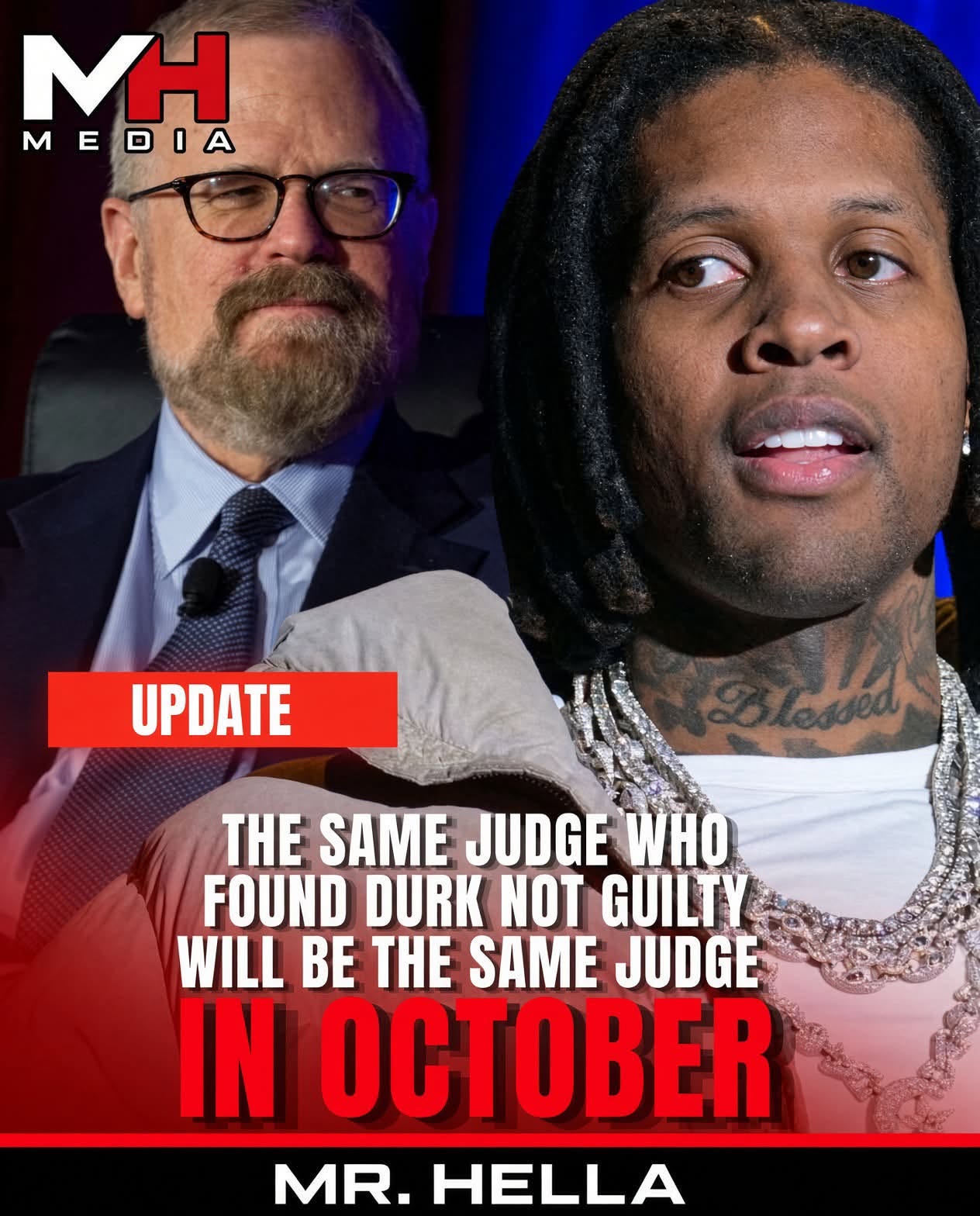
Durk, whose legal name is Durk Banks, remains in federal custody despite his September 11 acquittal because prosecutors are still pursuing separate allegations involving Violent Crimes in Aid of Racketeering, commonly known as VICAR, along with firearms-related charges. His next trial is currently scheduled to begin October 5.
His legal team has now formally invoked his constitutional right to a speedy trial, pushing back against the possibility of another significant delay.
The move comes at a pivotal moment for Durk. After spending nearly two years in federal custody and defeating the government's first case at trial, the rapper remains incarcerated because the second set of charges was previously separated from the murder-for-hire case.
Durk Was Acquitted on Every Count in the First Trial
On September 11, jurors delivered a sweeping victory for Durk in the first case.
The Los Angeles jury found him not guilty on all five counts, including conspiracy to commit stalking, stalking using a dangerous weapon, stalking resulting in death, conspiracy to use interstate facilities to commit murder-for-hire resulting in death, and using interstate facilities to commit murder-for-hire resulting in death.
Prosecutors had accused Durk of orchestrating and financing an August 2022 attack targeting rapper Quando Rondo, whose legal name is Tyquian Bowman.
The government alleged the plot was retaliation for the November 2020 killing of Durk's close friend and fellow Chicago rapper King Von. Bowman survived the Los Angeles attack, but his cousin, Saviay’a Robinson, was fatally shot.
Durk denied organizing the attack.
During the trial, prosecutors relied heavily on testimony from former associates who had reached plea agreements with the government. Durk's defense attacked the credibility of those witnesses and argued that former assistant Kavon Grant was responsible for organizing the shooting without Durk's knowledge.
After three days of deliberations, jurors rejected the government's case against Durk.
Two men tried alongside him, Deandre Wilson and David Lindsey, received mixed verdicts. Both were acquitted of the murder-for-hire charges but convicted on stalking-related counts.
Durk became emotional as his not-guilty verdicts were read, but there was one major difference between his acquittal and the outcome normally expected after a defendant beats every charge:
He wasn't released.
Why Durk Is Still in Federal Custody
Durk's continued detention comes down to another federal case that had been separated from the trial jurors just decided.
Before the murder-for-hire trial began, prosecutors added racketeering-related allegations accusing Durk of involvement in a separate killing connected to Chicago. Durk's attorneys fought to prevent those new allegations from being tried alongside the Los Angeles case, arguing that combining the matters shortly before trial would unfairly prejudice the defense.
U.S. District Judge Michael Fitzgerald ultimately agreed to sever the new racketeering-related charges, allowing the Los Angeles murder-for-hire case to proceed separately.
That ruling proved enormously consequential.
It meant the jury deciding whether Durk orchestrated the Quando Rondo attack did not simultaneously have to decide the government's separate racketeering allegations.
But severing the charges also meant Durk could not simply walk out of federal custody if he won the first case.
When jurors acquitted him September 11, the second prosecution was still waiting.
The Second Case Centers on VICAR Allegations
The upcoming prosecution involves VICAR — Violent Crimes in Aid of Racketeering.
Unlike the murder-for-hire case Durk just defeated, the government’s remaining case relies on racketeering law. Prosecutors allege Durk was connected to an enterprise through his Only the Family organization and that violent criminal activity was committed in connection with that enterprise.
The remaining case includes murder-related racketeering and firearms allegations, according to federal prosecutors and reporting following Durk's acquittal.
Those allegations remain unproven.
Durk has pleaded not guilty, and the acquittal in his first trial does not determine the outcome of the separate VICAR prosecution. At the same time, the government cannot treat the first case as though Durk was convicted: a federal jury has now formally rejected the murder-for-hire charges arising from the 2022 Los Angeles shooting.
Why the Speedy-Trial Demand Matters
Durk's decision to invoke his speedy-trial rights puts additional pressure on the timeline of the second prosecution.
The Sixth Amendment guarantees criminal defendants the right to a speedy and public trial. Federal law also contains statutory deadlines governing how quickly criminal cases generally must move, although numerous circumstances can stop or extend the clock.
Invoking that right does not automatically mean the second case will be dismissed, nor does it guarantee Durk will immediately go to trial on whatever date his lawyers prefer.
It does, however, establish that Durk is objecting to unnecessary delay and wants the remaining charges adjudicated without another prolonged postponement.
That is particularly significant considering how long he has already been incarcerated.
Durk has remained in federal custody since his 2024 arrest. His first case went through repeated delays before finally reaching a jury in 2026, and his attorneys previously raised speedy-trial concerns when prosecutors added the racketeering allegations shortly before the original trial.
The defense argued at the time that the government had dramatically expanded the case after Durk's attorneys had spent nearly two years preparing for the Los Angeles prosecution.
The court's eventual decision to separate the allegations solved one problem — it allowed Durk's murder-for-hire trial to proceed — but created the current situation in which Durk faces a second trial almost immediately after completing the first.
October 5 Is the Date to Watch
As things currently stand, Durk's second federal trial is scheduled for October 5, 2026.
That date comes less than a month after his acquittal.
The timeline could still become the subject of additional litigation as prosecutors and defense attorneys prepare for another complicated federal proceeding. But Durk's speedy-trial position signals that his lawyers do not want the remaining case pushed far into the future.
For Durk, the stakes are substantial.
His September 11 verdict eliminated the possibility of a conviction in the Los Angeles murder-for-hire prosecution and represented a major legal victory after years of detention and preparation.
But it did not give him his freedom.
Instead, Durk walked away from the first case with five not-guilty verdicts while remaining in federal custody for the next one.
Now his attorneys are effectively telling the government and the court that if prosecutors intend to continue pursuing the separate VICAR case, Durk wants his day in court without unnecessary delay.
The next major date on the calendar is October 5 — when, barring another change to the schedule, Lil Durk is expected to face a federal jury for the second time in less than a month.

Comments