


More than four decades after Michael Jordan's signature sneaker line began reshaping the relationship between basketball, fashion and celebrity culture, Jordan Brand is introducing its next chapter.
The company officially unveiled the Air Jordan 41 on Aug. 27, presenting the latest numbered Jordan not as another exercise in nostalgia but as a deliberate move toward the future. The new basketball shoe abandons some of the materials traditionally associated with the Air Jordan line and introduces a lighter construction packed with Nike's latest cushioning technology, with input coming from Michael Jordan himself and athletes competing at multiple levels of basketball.
“The Air Jordan 41 is a statement about where Jordan Brand is headed,” Jordan Brand President Sarah Mensah said in announcing the shoe. The company described the model as the beginning of a new chapter for its performance-basketball business, attempting to preserve the significance of the Jordan name while designing specifically for the speed and movement of today's game.
Jordan Is Moving Beyond Nostalgia
That approach marks an intentional change following the Air Jordan 40. The 40th model represented an obvious opportunity for Jordan Brand to celebrate four decades of signature footwear, but designers approached the 41 differently.
Senior Creative Director Leo Chang said the team wanted to move forward after using the previous model to recognize the line's history. Instead of allowing classic Jordan silhouettes to dictate the appearance of the new shoe, the designers concentrated more heavily on what contemporary basketball players actually needed on the court.
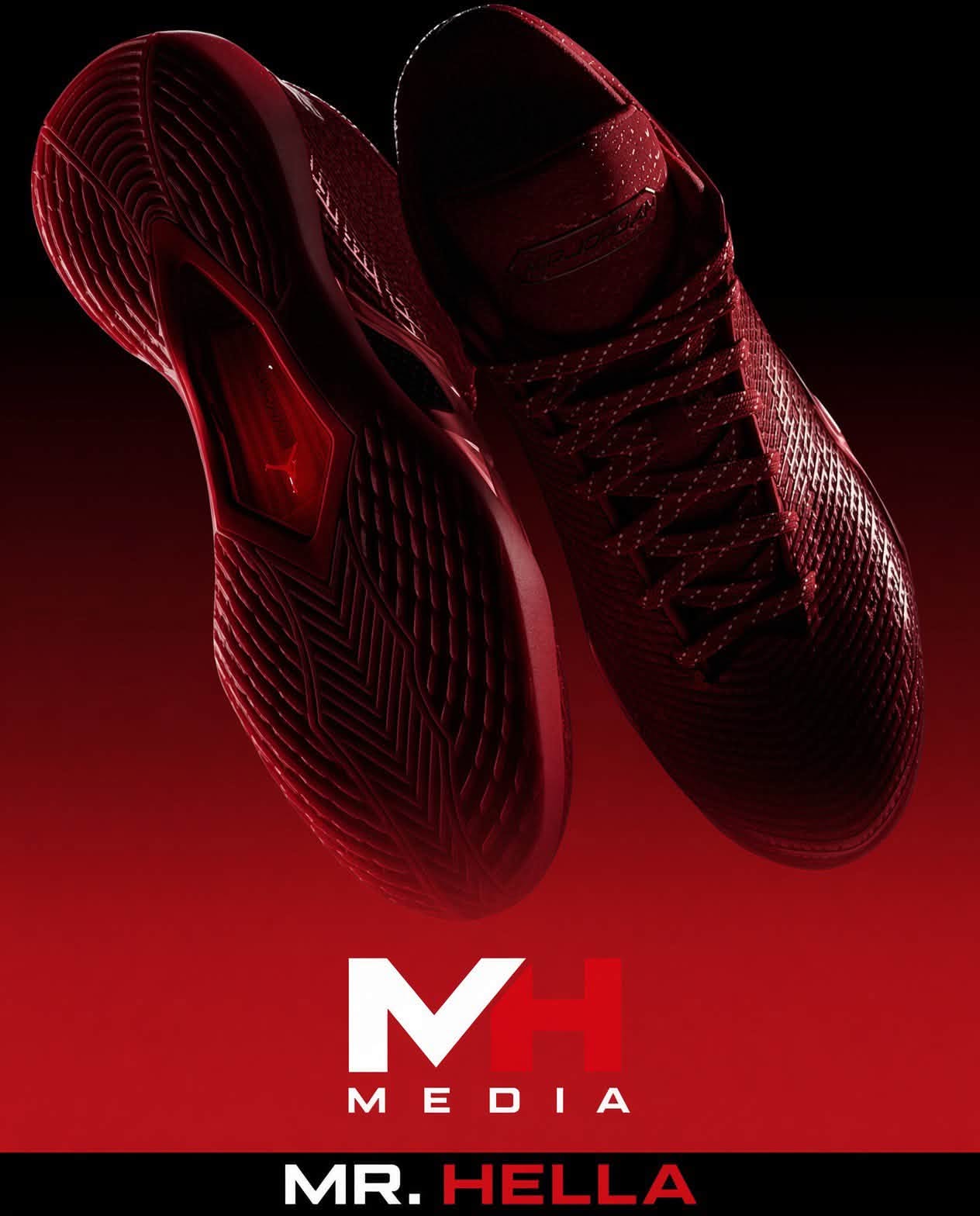
The result is immediately noticeable in the upper. Jordan Brand has traditionally relied heavily on leather throughout its signature line, but the Air Jordan 41 replaces that familiar construction with thin textiles and a new nano-print mesh. The material is engineered to reduce weight while providing targeted structure and containment around the foot.
That mesh also gives Jordan's designers considerably more freedom with graphics. The cross-hatched material can receive contrasting colors in different directions, allowing future versions of the shoe to change appearance through different combinations of prints and colors.
The futuristic direction extends to a TPU window that exposes some of the shoe's internal technology, a detail Jordan Brand compares to the way components can be displayed on a high-performance automobile. An asymmetrical collar and metallic Jumpman hardware complete a silhouette that intentionally avoids looking like a simple remake of a Jordan from the 1980s or 1990s.
Michael Jordan Helped Shape the Performance
Michael Jordan may have retired from professional basketball more than two decades ago, but the 63-year-old icon remains involved in the signature line carrying his name.
Jordan Brand says feedback from MJ helped influence the Air Jordan 41 alongside input from its professional and collegiate athletes and players from Nike's Elite Youth Basketball League. One area influenced by Jordan was the shoe's approach to defense and maintaining a position that allows a player to react quickly.
That feedback contributed to an Air Zoom unit being added in the heel for additional impact protection and responsiveness.
The rest of the cushioning system is unusually aggressive. The Air Jordan 41 combines a full-length Zoom Strobel unit with lightweight ZoomX foam, then adds the Air Zoom heel unit. Together, those technologies are intended to produce a shoe that feels responsive without becoming excessively heavy.
A carbon-fiber and TPU shank provides stability underneath the foot, while a full-length HART rubber herringbone traction pattern is designed for rapid changes of direction.
For Jordan Brand, those details are important because the numbered Air Jordan line began as an actual performance basketball shoe. Decades of sneaker collecting and retro releases have sometimes made the Air Jordan name feel inseparable from lifestyle fashion, but the company is positioning the 41 first and foremost as equipment designed to be played in.
WNBA star Napheesa Collier, Orlando Magic forward Paolo Banchero and San Antonio Spurs guard Stephon Castle are among the Jordan Brand athletes promoting the performance characteristics of the new model.
The Colorways Tell Michael Jordan's Story Differently
Although the physical design moves away from overt nostalgia, Michael Jordan's history has not disappeared from the shoe.
Instead, Jordan Brand is using gemstones to connect individual colorways with different parts of his life and career.
The introductory “Ruby” version references Jordan's championship three-peats with the Chicago Bulls. An upcoming Amethyst colorway draws from Jordan's February birthstone, while an Opal version pays tribute to his connection to the University of North Carolina.
That allows Jordan Brand to reference MJ without simply recreating the Chicago Bulls-inspired black, red and white combinations that have defined countless previous releases.
The strategy also gives the Air Jordan 41 its own visual identity. For a company with more than 40 years of design archives, that is becoming increasingly important. Every new numbered Jordan exists alongside retro versions of some of the most famous sneakers ever produced, including the Air Jordan 1, 3, 4 and 11.
The Air Jordan 41 therefore has to compete not only against sneakers from other brands but against Jordan Brand's own past.
Its designers appear determined not to let that past dictate the future.
The Air Jordan Line Is Now More Than 40 Years Old
The original Air Jordan 1 arrived in 1985, when Michael Jordan was still at the beginning of an NBA career that would eventually produce six championships, five regular-season MVP awards and a global cultural legacy extending far beyond basketball.
What followed became one of the most influential sneaker franchises ever created.
Individual models evolved alongside Jordan's career, while designers including Peter Moore and Tinker Hatfield created shoes that eventually became cultural objects in their own right. Even decades after their original releases, classic Jordans remain fixtures of sneaker culture through constant retro releases and collaborations.
That history creates an unusual challenge for every modern Air Jordan.
Michael Jordan has not played an NBA game since 2003, meaning many of the teenagers and young athletes buying new Jordans today were born years after his final season. Jordan Brand must simultaneously preserve its connection to one of the most famous athletes in history while creating products relevant to players who know Jordan as a legend rather than a contemporary superstar.
The Air Jordan 41 is one of the clearest attempts yet to bridge those two eras.
The Air Jordan 41 Begins Its Rollout
Jordan Brand launched the Air Jordan 41 first through a limited release in China beginning Aug. 28, with a wider global rollout to follow. The company has not treated the debut as a single-color release; the gemstone concept is designed to continue across the shoe's seasonal lineup.
The launch arrives at a time when Jordan Brand is also investing heavily in the signature lines of its current athletes. Jayson Tatum, Luka Dončić, Zion Williamson and other Jordan athletes have helped broaden the company's modern basketball identity beyond Michael Jordan himself.
But the numbered Air Jordan remains different.
It is the direct continuation of the sneaker series that began with MJ, making every new model part performance product and part chapter in one of the longest-running signature franchises in sports.
With the Air Jordan 41, Jordan Brand is making it clear that the next chapter isn't supposed to look like the old ones.
The leather-heavy construction has given way to nano-printed mesh and lightweight textiles. Modern ZoomX and Zoom Air technology sit beneath the foot. Carbon fiber reinforces the structure, while gemstone-themed colorways reference Jordan's history without recreating classic designs.
Forty-one models into the series, Jordan Brand is betting that honoring Michael Jordan's legacy doesn't require standing still.



Comments