

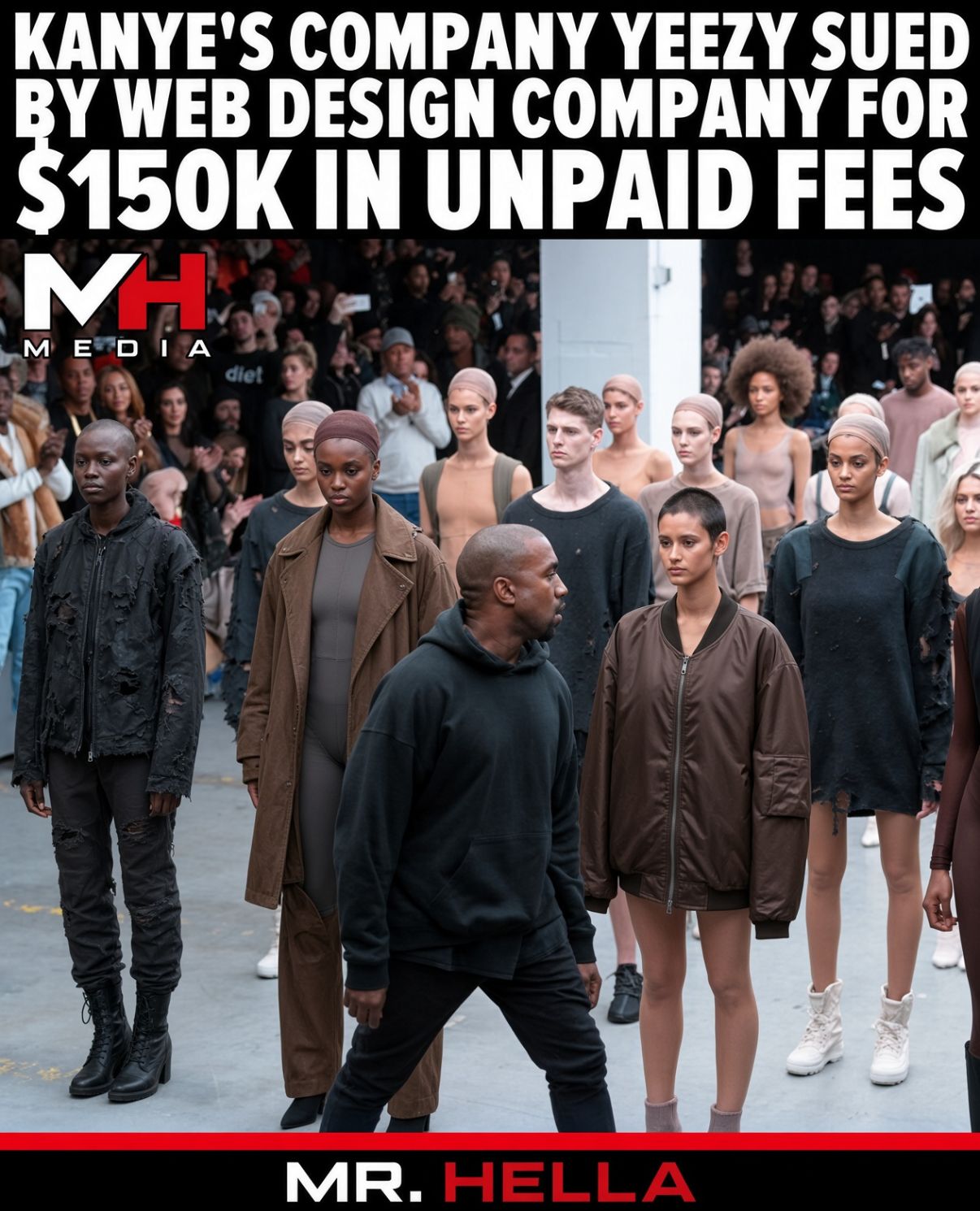
Kanye’s Company Yeezy Sued by Web Design Firm Ryanso for $150K in Unpaid Fees
A Brooklyn web shop put a number on a year of quiet invoices.
On May 19, 2026, Ryanso, LLC filed a diversity breach-of-contract case against Yeezy LLC in the U.S. District Court for the Eastern District of New York. Case 1:26-cv-02976. Judge Pamela K. Chen. Magistrate Judge Marcia M. Henry later on the referral line. Nature of suit: other contract. The ask in the coverage and in the court’s own arbitration-threshold note: $150,000, exclusive of interest and costs — the exact cap that dumps a money-only civil case into EDNY’s compulsory arbitration program.
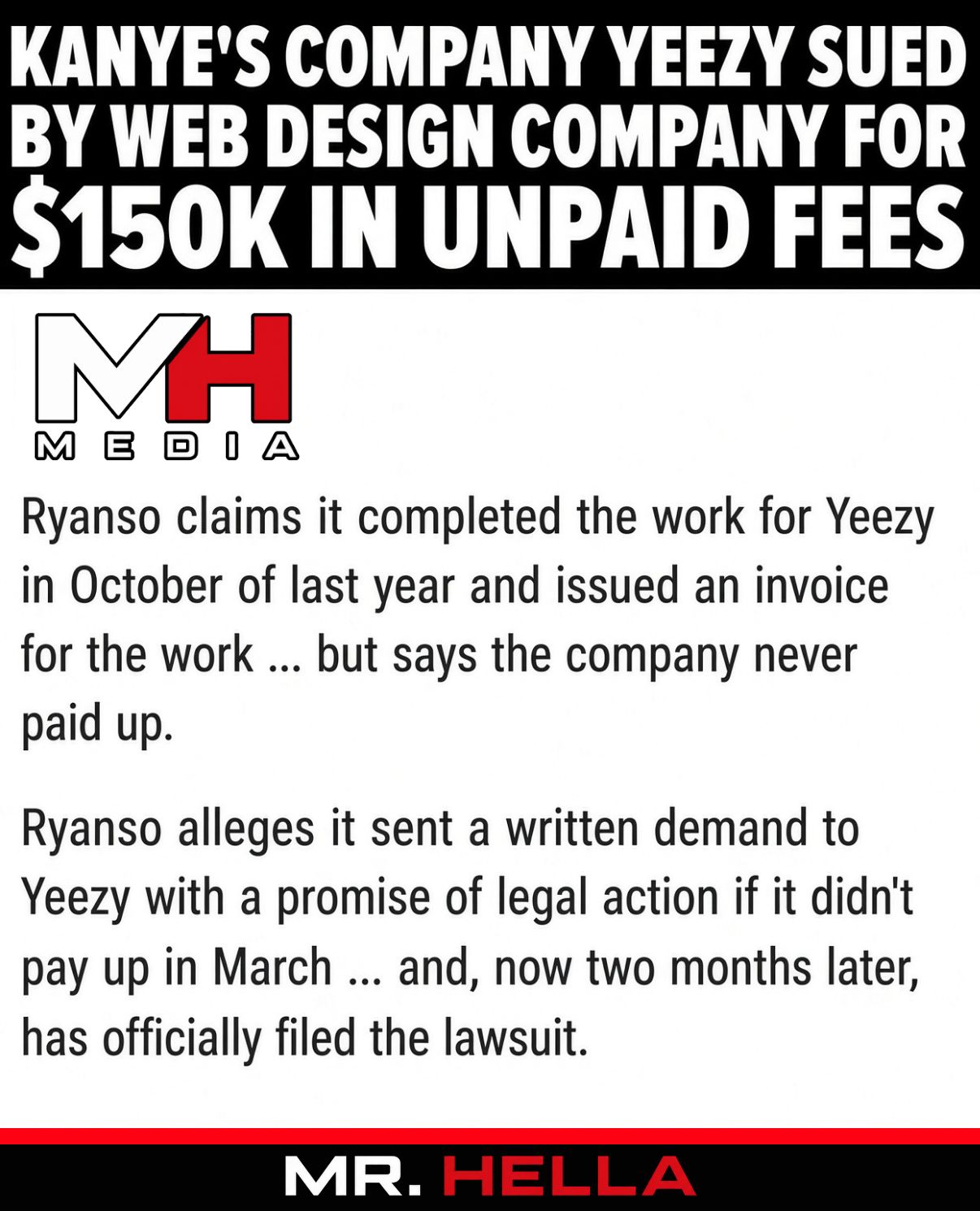
The story Ryanso told, and that AllHipHop and the graphics repeated, is simple on purpose. Contract signed January 2025. Work finished October 2025. Invoice sent. No check. Written demand in March 2026 with a promise to sue. Two months later, the complaint.
Plaintiff’s counsel on the public docket: Anthony M. Rainone, Brach Eichler LLC. Plaintiff address listed in Brooklyn. Defendant address listed in Northridge, California — Yeezy LLC, 20020 Parthenia Street. Jane-and-John-Doe placeholder corporations were dropped from the caption in early June when an amended complaint narrowed the target to Yeezy LLC.
That is the allegation. Yeezy’s side of the ledger is not in those first clips. There is no quoted answer in the May write-ups admitting the debt, disputing the work, or calling the invoice padded. A complaint is a request for money. It is not a receipt.
What the docket did after the headline
May 19: complaint, $405 filing fee.
May 27: designated for court-annexed compulsory arbitration under Local Civil Rule 83.7 — the rule that grabs civil money cases at or under $150,000.
June 2: amended complaint; dummy ABC Corp defendants terminated.
July 21: a Rule 4(m) reminder. Ninety days to serve. Service is how a lawsuit becomes a problem instead of a PDF.
August 24: Ryanso files a notice of voluntary dismissal.
August 25: Judge Chen terminates the civil case, citing that notice — dismissal with prejudice.
With prejudice is the phrase that matters. It means the same plaintiff does not get a second swing at the same claim in that court. It does not, by itself, tell you whether Yeezy paid, settled for less, settled for the sticker, or whether Ryanso walked because service failed or the juice was not worth the squeeze. The public index available in September does not attach a settlement amount. Anyone who prints “Yeezy lost $150K” from a terminated docket is guessing.
Why $150K still travels
Yeezy’s name does the distribution. After the Adidas collapse, vendor-and-judgment stories became a genre: copyright verdicts, trust suits, unpaid-creative claims. Bloomberg had a separate May 2026 Donda-era “Hurricane” copyright verdict in California putting figures on Ye and Yeezy LLC in a different courtroom. That case is not this case. Stacking them in a paragraph is context, not proof that one invoice proves a company is broke.
Web design for a fashion-and-music brand is unglamorous labor — pages, launches, revisions — and it is exactly the kind of invoice that sits until a demand letter. Ryanso’s sequence (finish, bill, wait, threaten, file) is how small shops collect from famous LLCs when accounts payable goes quiet. Filing in Brooklyn, where the shop sits, is also how diversity jurisdiction gets used: New York plaintiff, California LLC, amount over $75,000.
Compulsory arbitration in EDNY is not a moral victory for either side. It is a local rule that keeps $150K contract fights off a jury calendar. The case never had to reach a verdict to end. Voluntary dismissal with prejudice is how a lot of these files die: quiet paper, no press conference, no apology tour.
What is not in the record
No public finding that the work was defective.
No public finding that the work was perfect.
No itemized list of deliverables in the consumer write-ups.
No statement from Yeezy LLC in the May package.
No dollar figure on the August dismissal.
Kanye West as a person is the reason the filing left PACER. The defendant on the caption is the company. Vendors sue the entity that signed. Headlines use the founder.
The graphics — runway still, block headline, two paragraphs of Ryanso’s timeline — are accurate as a snapshot of the claim. They are incomplete as a snapshot of the case. The case opened May 19 and, on the clerk’s stamp, closed August 25 with the plaintiff’s own dismissal.
One hundred fifty thousand dollars is real money for a web firm and a rounding error in a Yeezy myth. Both can be true. The only number the court needed to print at the end was the one that closes a file.

Comments