

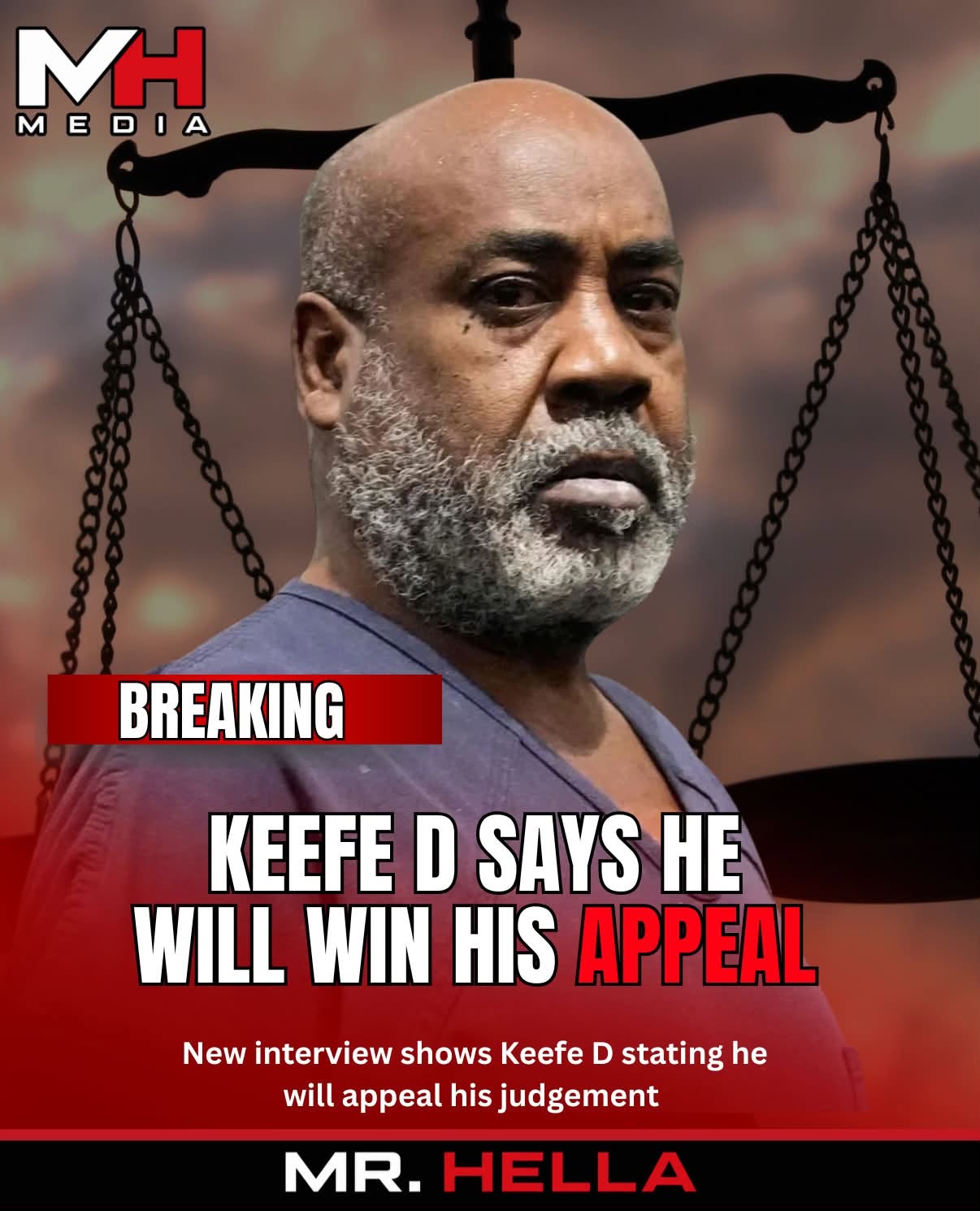
Duane “Keffe D” Davis is preparing to challenge the first-degree murder conviction that made him the only person ever convicted in connection with Tupac Shakur's 1996 killing, with his attorney signaling that a major issue on appeal will be the use of statements Davis made to investigators years before his arrest.
Davis, 63, remains jailed without bail after a Clark County jury found him guilty Aug. 31 of first-degree murder with use of a deadly weapon.
His sentencing is scheduled for Oct. 13.
Davis faces a potential sentence of life in prison without the possibility of parole, bringing him closer to a permanent prison sentence nearly three years after his September 2023 arrest reopened one of the most infamous murder cases in hip-hop history.
But his defense says the case is far from finished.
“We were preparing for the appeal, so even Mr. Davis knew that going in,” defense attorney Michael Sanft said after the verdict, adding that the defense had identified potential appellate issues before jury selection began.
Davis Asked for an Appeal Immediately After Verdict
Davis made his intentions clear before he even left the courtroom.
After the jury returned its guilty verdict and Judge Carli Kierny ordered him held without bail, Davis raised his hand and addressed the court.
He asked for the return of computers, phones and other property seized during the investigation before telling Kierny that he wanted to appeal the case.
Kierny responded that the appeal process would come after sentencing.
The exchange provided an immediate indication that the verdict would not end the legal fight surrounding Shakur's death.
Sanft subsequently confirmed that Davis' defense intends to challenge the conviction after the sentencing process is completed.
One of the central issues is expected to involve statements Davis made years before he was charged.
2008 Statements Could Become Major Appeal Issue
Davis' own words became some of the most consequential evidence presented against him.
For years, he publicly discussed the circumstances surrounding Shakur's killing through interviews, documentaries and his 2019 memoir, Compton Street Legend.
But the defense has drawn a distinction between Davis' public statements and information he provided to law enforcement during a 2008 proffer interview.
Sanft is expected to argue on appeal that statements Davis made under that agreement should not have been presented to jurors.
The prosecution successfully argued before trial that portions of Davis' statements could be used against him.
That ruling could now become one of the primary legal questions raised when Davis formally challenges his conviction.
The defense also argued throughout the trial that Davis' public accounts of Shakur's killing were unreliable, exaggerated and designed to generate attention and money rather than truthful confessions.
Sanft emphasized the absence of physical and documentary evidence directly placing Davis inside the white Cadillac used in the shooting, pointing out that prosecutors did not present surveillance footage, phone records or comparable evidence establishing that Davis was in Las Vegas at the time.
Jurors ultimately rejected that argument.
Prosecutors Said Davis Orchestrated Retaliation Against Tupac
Prosecutors did not accuse Davis of personally firing the shots that killed Shakur.
Instead, they argued that he helped organize and facilitate the retaliatory attack.
The prosecution's case centered on events that unfolded after Shakur and members of his entourage attacked Orlando Anderson—Davis' nephew—inside the MGM Grand following the Mike Tyson-Bruce Seldon fight on Sept. 7, 1996.
Prosecutors said Davis subsequently obtained a firearm and joined Anderson and other men in searching for Shakur.
A white Cadillac eventually pulled alongside the BMW carrying Shakur and Death Row Records co-founder Marion “Suge” Knight near the Las Vegas Strip.
Gunfire erupted.
Shakur was struck multiple times and died six days later at age 25. Knight survived.
Prosecutors argued that Davis' participation in supplying the weapon and facilitating the retaliatory attack made him criminally responsible for the murder even though they did not contend that he pulled the trigger.
The jury agreed.
After an 11-day trial, jurors deliberated for roughly three hours before finding Davis guilty of first-degree murder with use of a deadly weapon.
First Conviction in Tupac's Killing
The verdict marked the first criminal conviction stemming from Shakur's death nearly 30 years earlier.
Davis had been the only surviving occupant prosecutors placed inside the Cadillac involved in the shooting.
Anderson, whom Davis had previously identified as the gunman, died in an unrelated shooting in 1998. The other men prosecutors linked to the vehicle have also died.
Davis' own willingness to publicly discuss the case ultimately became a defining element of the prosecution against him.
His interviews and memoir helped revive interest in the dormant investigation, while prosecutors later argued those same statements contained details that supported their case.
The defense maintained that Davis had embellished his role for notoriety and financial benefit.
Jurors nevertheless concluded prosecutors had proved his guilt beyond a reasonable doubt.
Sentencing Comes Before Appeal
Davis' next major court date is Oct. 13.
Judge Kierny will formally sentence him before the defense can move forward with the expected appeal.
Until then, Davis will remain in custody without bail. He had previously been eligible for release on a $750,000 bond but never posted it. Following his conviction, Kierny ordered him held without bail.
The conviction carries the possibility of life imprisonment without parole.
For Shakur's family, the verdict represented the first criminal conviction after three decades of investigations, theories and unanswered questions surrounding the rapper's death.
For Davis, however, the courtroom battle is moving toward another stage.
His defense is preparing to argue that legal errors affected the trial that produced his conviction, beginning with the controversial use of statements Davis made to investigators years before he was ever charged.
Nearly 30 years after Tupac Shakur was fatally shot on a Las Vegas street, the criminal case surrounding his death is still not finished.
Comments