

MR. HELLA MEDIA | LATEST | NOVEMBER 2, 2026
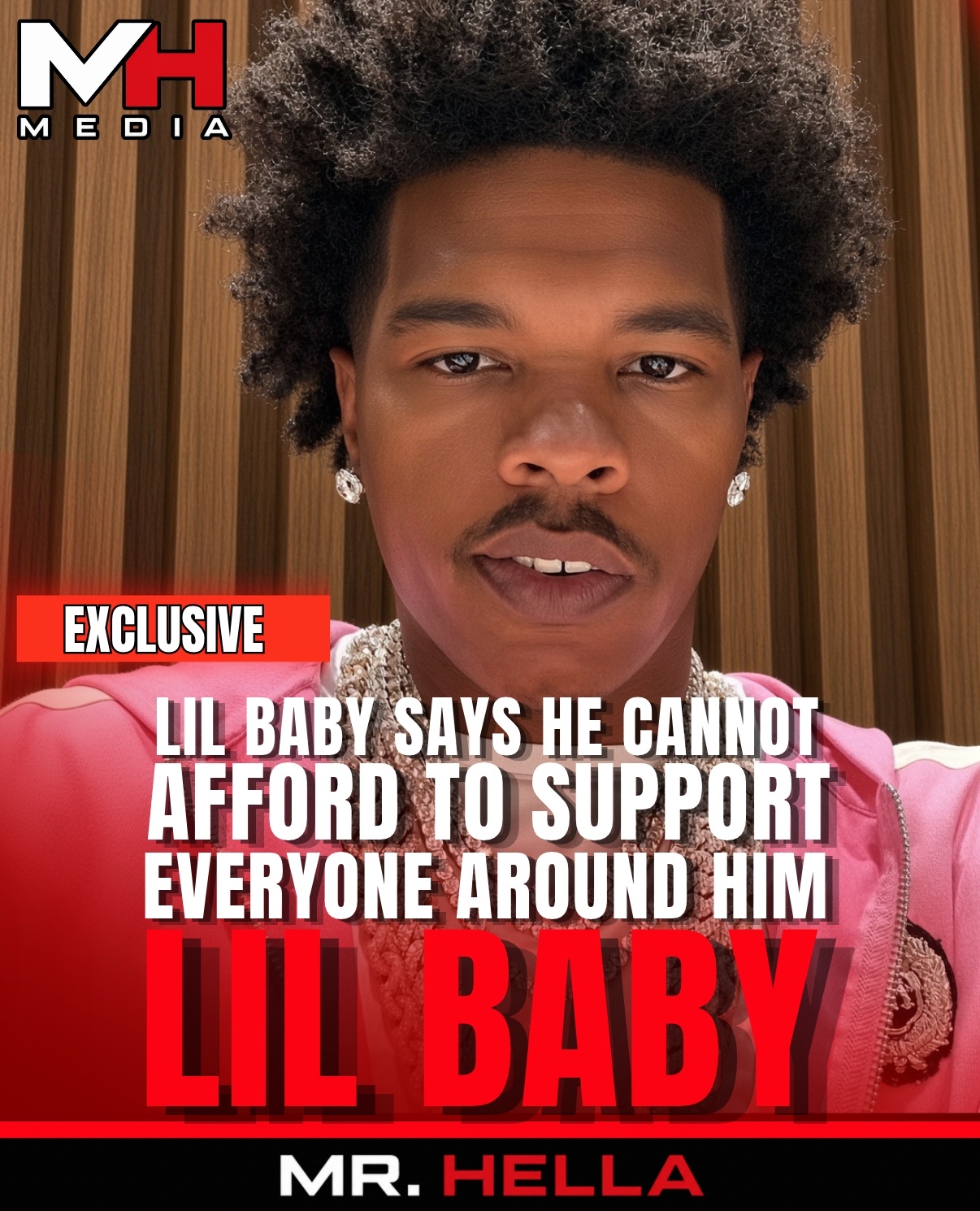
Lil Baby Says Even Millions Aren’t Enough to Support Everyone Around Him as Rapper Opens Up About Financial Pressure of Success
Atlanta rapper Lil Baby is opening up about a difficult reality of becoming wealthy while the people closest to him continue facing financial struggles. During a recent appearance on The New York Times podcast Popcast, the Grammy-winning artist discussed the pressure of supporting friends, relatives and others who depend on his success, explaining that even substantial wealth has its limits.
The conversation, released October 30, offered a more personal perspective on the responsibilities that can accompany fame. While successful rappers are often associated with luxury cars, expensive jewelry and extravagant lifestyles, Lil Baby described the less visible financial expectations that can develop when one person becomes significantly wealthier than the community around them.
His comments highlighted a challenge that extends beyond the entertainment industry: the difficulty of balancing personal financial security with the desire to help people who were part of one’s life before success.
For Lil Baby, the issue is not simply whether he wants to help. It is whether one person can realistically meet the needs of everyone who looks to him for financial support.
“I’m Rich, but I’m Not Rich Enough for Everybody”
During the October 30 interview with Popcast hosts Jon Caramanica and Joe Coscarelli, Lil Baby explained that his rise to superstardom has not erased the financial difficulties facing people he grew up with.
“I’m rich, but I’m not rich enough for everybody,” the rapper said.
He acknowledged that he has escaped the circumstances that shaped his early life, but many of his friends and family members remain in similar situations.
“I made it out. But my friends and my family are still in the same situation, same living conditions,” he explained.
The distinction is important because Lil Baby was not suggesting that he is struggling financially or unable to provide for himself. Instead, he was describing the difficulty of being surrounded by people whose financial needs can collectively exceed what one successful individual can reasonably provide.
For someone whose public image includes expensive jewelry, luxury vehicles and international performances, the comments offered a different perspective on what financial success actually looks like behind the scenes.
Lil Baby Explains How a $2,000 Request Can Become a Much Bigger Problem
One of the most revealing moments of the conversation came when Lil Baby described how individual requests for money can accumulate.
He used the example of a cousin asking for $2,000, explaining that the person making the request may consider the amount relatively small compared with the rapper’s perceived wealth.
However, that perspective changes when numerous friends and relatives are seeking similar assistance.
“They don’t count the 2,000 more people who need $2,000,” he explained.
His example illustrated how a single financial request can appear manageable in isolation but become overwhelming when multiplied across a large network of people.
If 2,000 individuals each requested $2,000, the total would reach $4 million. Lil Baby was using the figure to illustrate the scale of the pressure, not disclosing that he had actually received 2,000 identical requests.
The rapper also expressed frustration with what he sees as a lack of understanding from some of the people seeking his help.
According to Lil Baby, relatives may focus primarily on their own immediate circumstances without considering how many other people are approaching him with similar problems.
He suggested that even when he provides assistance, the expectations do not necessarily disappear.
The comments reveal an uncomfortable dynamic that can develop when one person’s financial success becomes a resource that an extended community expects to share.
Success Has Not Disconnected Lil Baby From His Old Neighborhood
Although Lil Baby now lives a dramatically different lifestyle from the one he experienced growing up in Atlanta, he explained that his personal connections continue to expose him to the realities of his former environment.
The rapper referenced the familiar saying about being able to take someone out of the neighborhood without removing the neighborhood’s influence from that person.
For Lil Baby, the expression has a practical meaning.
He no longer has to experience the same financial hardships directly, but he regularly hears about them through conversations with people he knows personally.
Those interactions keep him connected to circumstances that continue to influence his music.
During the interview, he explained that hearing about the experiences of people close to him allows him to continue telling stories rooted in the realities of his upbringing.
That connection is particularly significant because Lil Baby built much of his career on songs describing poverty, street life, ambition and the struggle to achieve financial stability.
His commercial success has changed his personal circumstances, but it has not completely separated him from the community that helped shape his perspective.
In that sense, the financial requests he receives represent both a burden and a reminder of the environment that influenced his artistic identity.
The Hidden Financial Responsibilities of Becoming a Successful Rapper
Lil Baby’s comments highlight a financial reality that is rarely visible in the public presentation of celebrity wealth.
Successful entertainers frequently become the highest earners within their families or social circles. As a result, they may face expectations to help cover housing expenses, transportation, medical costs, education and other everyday needs.
Those responsibilities can expand beyond immediate relatives to include longtime friends, extended family members and acquaintances.
The challenge becomes particularly complicated when a celebrity’s income is widely assumed to be unlimited.
Public appearances, expensive purchases and reported earnings can create the impression that an artist has unrestricted access to cash. In reality, professional success does not mean that every dollar earned is available for personal spending.
Recording artists may have business expenses, taxes, employees, management arrangements, investments and other financial commitments.
Lil Baby did not disclose his current net worth, the total amount he spends supporting others or the specific financial arrangements he has with relatives.
His remarks therefore should not be interpreted as evidence that he is experiencing financial difficulties.
Instead, he was describing the challenge of setting limits when many people view one person’s success as a potential solution to their own financial problems.
BigXThaPlug Recently Shared a Different Approach to Supporting Family
Lil Baby is not the only Southern rapper discussing the financial responsibilities that accompany success.
During a recent appearance on Shannon Sharpe’s Club Shay Shay podcast, Texas rapper BigXThaPlug revealed plans to develop a 150-acre family compound in his home state.
BigXThaPlug explained that the idea would allow him to provide housing and help manage essential living expenses for relatives in a more organized way.
Rather than receiving separate requests for rent, mortgage payments and utility bills, the rapper hopes to create a shared living arrangement where certain expenses can be handled collectively.
The proposed compound represents one possible approach to managing the financial expectations associated with becoming a family’s primary source of wealth.
Lil Baby, however, did not announce a comparable plan or suggest that he intends to stop assisting people close to him.
His comments focused on the difficulty of balancing generosity with the reality that even substantial financial resources have limits.
The separate conversations demonstrate how artists who achieve financial success can develop different strategies for managing the needs of relatives and longtime friends.
Lil Baby Is Preparing to Release His New Album ‘Fresh’
The financial discussion was part of a broader conversation about Lil Baby’s career, personal life and upcoming music.
The rapper appeared on Popcast ahead of the scheduled November 6 release of his album Fresh, which represents another chapter in his recording career.
During the interview, he discussed his creative process, the public perception of his career and his willingness to explore different musical approaches.
One of the major topics was his recent single “Dead Fresh,” produced by Pharrell Williams.
The collaboration reflects Lil Baby’s interest in expanding his sound beyond the producers and musical arrangements most closely associated with his earlier releases.
He also addressed criticism suggesting that his popularity has declined since the commercial peak of his career.
Lil Baby pushed back against that characterization, arguing that his personal and professional position has not fundamentally changed simply because he is no longer releasing hit records at the same pace.
His remarks about family finances fit into that larger conversation about what success means after an artist has already achieved fame, financial stability and widespread recognition.
Rather than discussing success solely through chart positions and record sales, he offered insight into the personal obligations that continue after the initial breakthrough.
From Atlanta’s Streets to International Stardom
Lil Baby, born Dominique Armani Jones, emerged from Atlanta’s rap scene in 2017 and quickly established himself as one of the defining voices of his generation.
His early mixtapes attracted attention for their melodic delivery and personal storytelling, while his 2018 debut studio album, Harder Than Ever, helped introduce him to a wider audience.
Songs such as “Yes Indeed,” featuring Drake, and “Drip Too Hard,” his collaboration with Gunna, became major commercial successes.
His second studio album, My Turn, released in 2020, further solidified his position in hip-hop and became one of the year’s most successful rap releases.
That same year, he released “The Bigger Picture,” a politically conscious record addressing police brutality and racial injustice during a period of nationwide demonstrations.
The song earned Grammy nominations and demonstrated his ability to move beyond conventional street-oriented rap into broader social commentary.
As his career expanded, Lil Baby became associated with substantial commercial success, international touring and collaborations with some of the biggest names in music.
His latest comments offer a reminder that reaching those milestones does not necessarily eliminate the responsibilities or emotional connections established before fame.
Lil Baby’s Comments Spark a Larger Conversation About Wealth and Responsibility
The rapper’s interview raises a question that extends beyond celebrity culture: How much financial responsibility should one successful person carry for the people around them?
For some families, helping relatives is an important expression of loyalty, gratitude and shared responsibility. Financial support can provide opportunities that might otherwise remain inaccessible.
At the same time, the expectation that one individual should consistently solve other people’s financial problems can create difficult personal and financial boundaries.
Lil Baby’s comments illustrate the tension between those competing realities.
He has achieved the type of success that many aspiring artists hope to reach, but his friends and relatives have not necessarily experienced the same financial transformation.
That difference has created expectations that he says are difficult to satisfy, regardless of how much money he earns.
His message was not that he no longer cares about the people he grew up with. Rather, he emphasized that the number of people seeking assistance makes it impossible to satisfy every request.
As he prepares to release new music, Lil Baby’s candid discussion provides a glimpse into an aspect of success that rarely appears in music videos or social media posts.
For Lil Baby, becoming wealthy has changed his life, but it has not changed the financial realities of everyone around him. And as he explained, even millions of dollars cannot necessarily solve every problem when an entire network of people is looking to one person for help.



Comments