

Lynsi Snyder Says the Bible Verses Stay on In-N-Out Cups and Wrappers. They Were Never a Slogan. That Is Why They Keep Starting Fights.
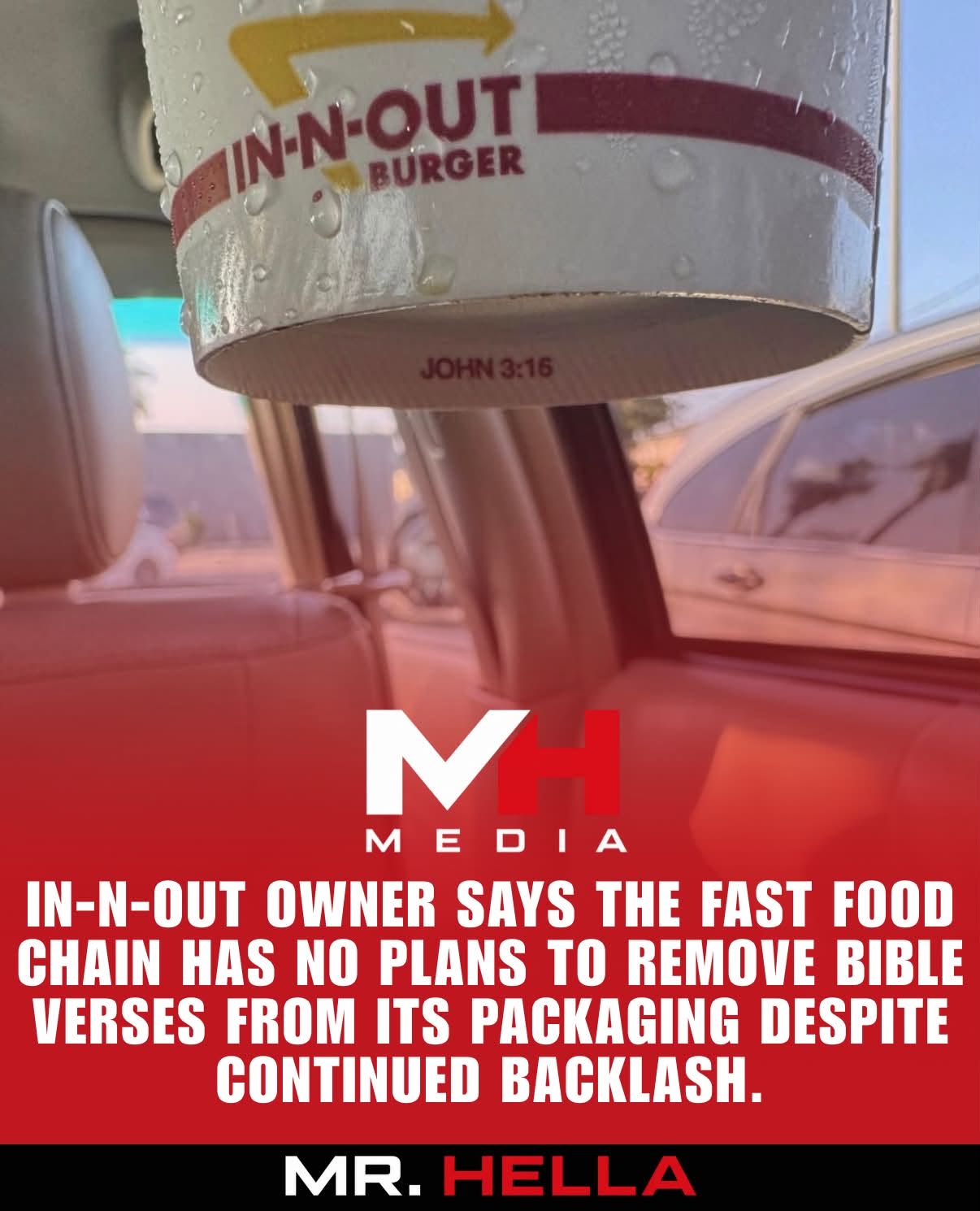
The print is small on purpose. Bottom rim of a soda cup. Underside of a wrapper. A fry boat if you turn it over. John 3:16 on the cold drinks is the one everyone can recite. Fan catalogs and older explainers also place Proverbs 3:5 on shake cups, Revelation 3:20 or Nahum 1:7 on burger paper, Proverbs 24:16 and Luke 6:35 on fry boats and hot cups — Snyder has said some of those later citations were her additions. Christmas runs have carried Isaiah 9:6. None of it is a billboard on the freeway. All of it is a citation, not the verse spelled out.
In August 2026 the argument came back anyway. Complex and the supporter posts that travel with these cycles put Snyder on the record: no plan to take them off. Family faith, company history, not a marketing calendar. She is sole heir and president. The decision is hers.
Who put them there
Harry and Esther Snyder opened the first stand in 1948. The verses are not from that generation’s menu board. Rich Snyder, Lynsi’s uncle, former president, added John 3:16 after a return to Christian faith — late 1980s in some company lore, early 1990s in her own retellings to Christian Post and later profiles. He wanted a mark of what he believed on an object people already held. She kept it and extended it. That is the origin she gives: personal, then institutional because the family never sold the chain.
She has talked about faith in the same interviews where she talks about three difficult marriages and trying not to lower the quality bar her grandparents set. Glassdoor once ranked her near the top of employee-approved CEOs. None of that is a First Amendment brief. It is why a privately held burger company still prints chapter-and-verse on wax paper.
Why “backlash” is a recurring weather pattern
Every few years someone photographs the rim, someone calls it theocracy in a drive-thru, someone else calls a Double-Double a witness tract. The 2026 wave is the same argument with a new ratio. Critics treat a citation on packaging as the company preaching to a captive customer. Defenders treat removing it as asking a family to sand off the only theology they put in public. Both sides overclaim. You can eat the burger and ignore the rim. You can also decide the rim is why you will not eat the burger. A private company can print a verse. A customer can go to Shake Shack.
A separate 2026 lawsuit — a cook alleging he was fired after asking for Sundays off for church — is not the same story as the cups, but it is the story opponents staple to the cups: faith on the wrapper, fight in the schedule. Allegations in a complaint are not findings. They are the other half of the brand’s religious reputation.
What the verses are not
They are not a secret menu. They are not a political action committee. They are not new. Snyder’s line that they reflect family values rather than a campaign is the historically accurate one. Rich did not A/B test John 3:16 against a Super Bowl spot. He put a reference where only a person finishing a Coke would see it.
Whether that is humble or passive-aggressive depends on whether you wanted the citation. In-N-Out will still cook the same meat. The rim will still have a number. If the next backlash is louder than the last, the company’s answer, as of her latest confirmation, is already printed on the cup.


Comments