

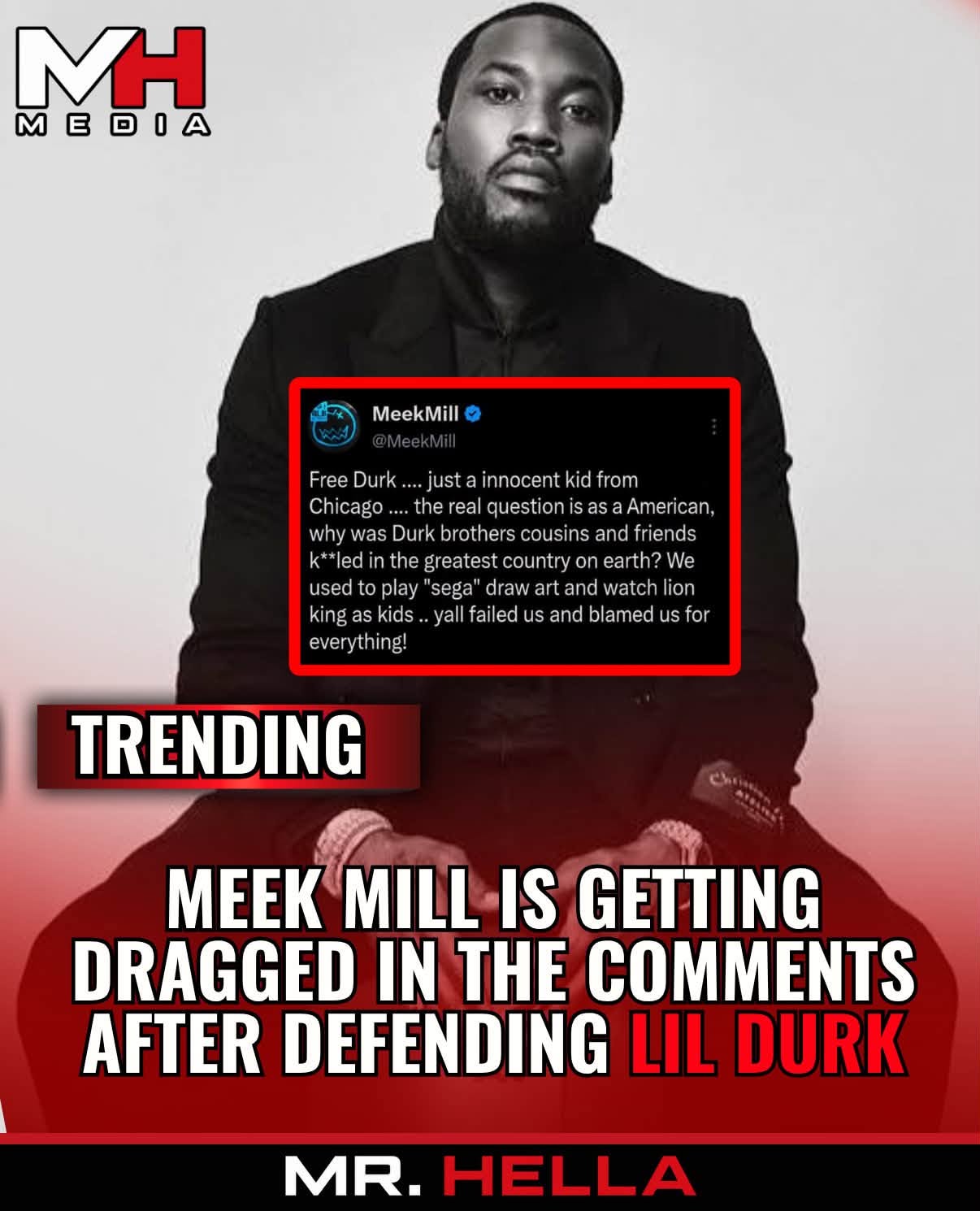
Meek Mill is facing heavy criticism online after publicly defending Lil Durk as the Chicago rapper’s federal murder-for-hire trial enters its final stage, with the Philadelphia rapper describing Durk as “just a innocent kid from Chicago” and arguing that America failed the generation they came from.
Meek made the comments Friday, Sept. 4, one day after prosecutors and defense attorneys rested their cases in Durk’s closely watched federal trial in Los Angeles. Closing arguments are scheduled to begin Tuesday before the case moves toward the jury.
“Free Durk .... just a innocent kid from Chicago,” Meek wrote on X.
Rather than focusing only on the criminal case, Meek then turned his attention toward the violence Durk experienced around him while growing up, questioning why so many of the rapper’s relatives and friends had been killed.
“The real question is as a American, why was Durk brothers cousins and friends killed in the greatest country on earth?” Meek wrote. “We used to play ‘sega’ draw art and watch lion king as kids .. yall failed us and blamed us for everything!”
The post quickly spread across social media, but much of the conversation centered on four words: “innocent kid from Chicago.”
Meek’s ‘Innocent Kid’ Description Draws Backlash
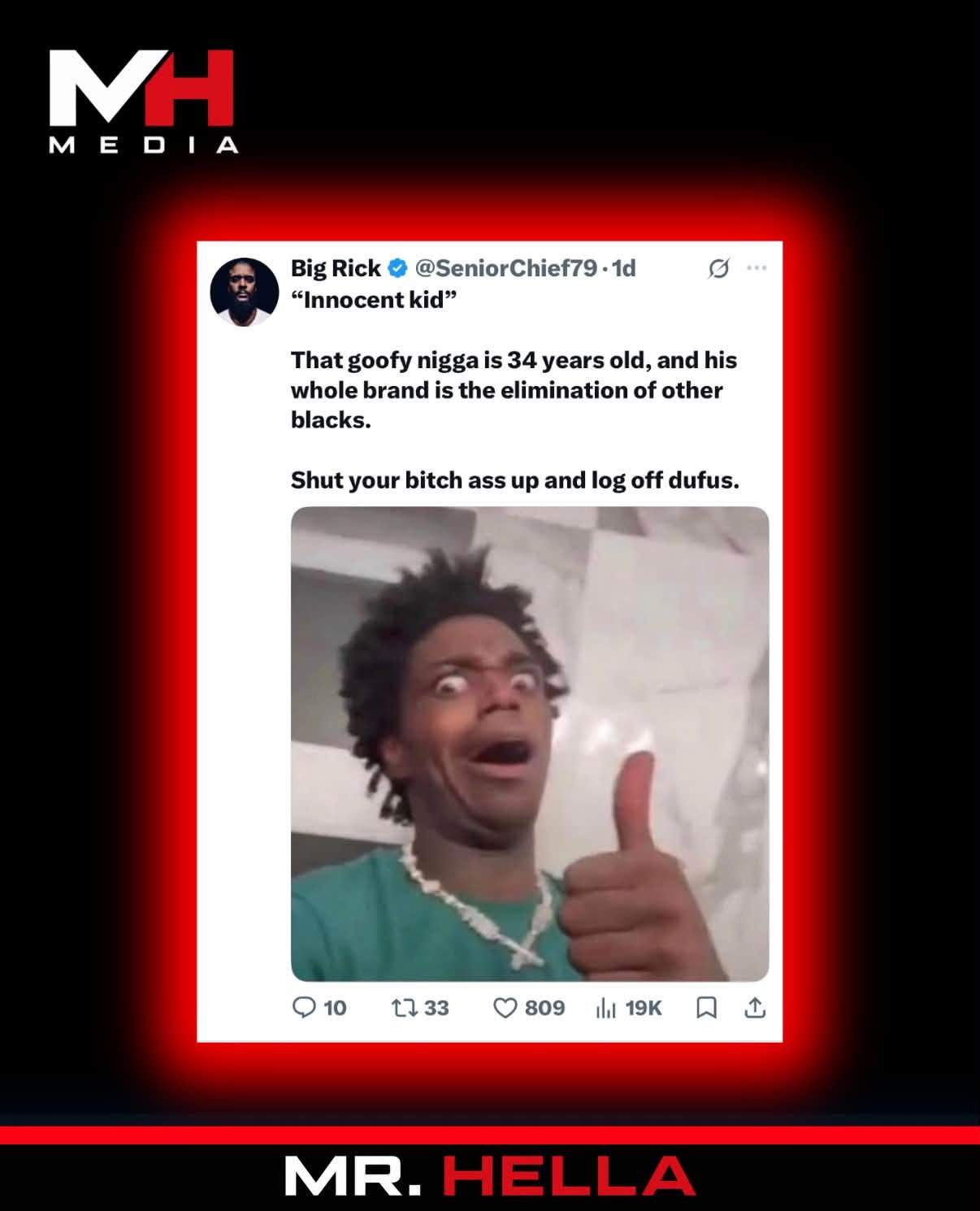
Critics argued that Meek’s description was difficult to reconcile with Durk being a 33-year-old man standing trial on serious federal charges.
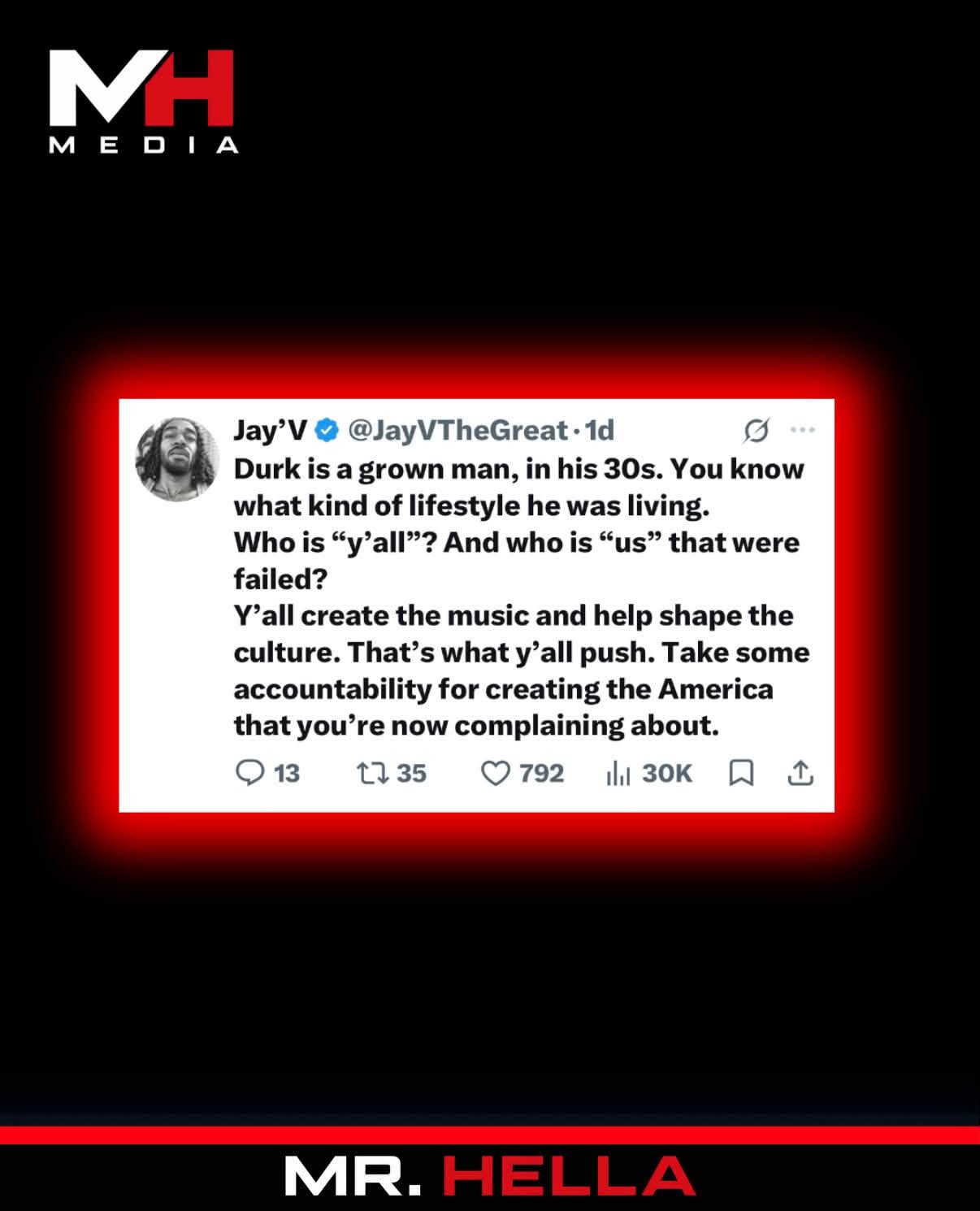
Some questioned why Meek did not simply express support for his longtime collaborator without characterizing him as a kid, while others argued that childhood trauma and exposure to violence could provide context for someone’s life without eliminating personal responsibility for decisions made as an adult.
The reaction became intense enough that Meek’s comments generated their own conversation separate from the trial itself.
At the same time, not everyone rejected what he was trying to say. Some supporters interpreted Meek’s post as an argument about environment rather than a literal attempt to describe Durk as a child. They pointed to the repeated deaths surrounding Durk and argued that Meek was questioning why society often focuses on criminal behavior after years of community violence without examining the conditions that came before it.
That distinction became central to the debate.
Meek was not making a legal argument based on evidence presented inside the courtroom. His post instead framed Durk’s circumstances through the broader experiences of young Black men who grew up around violence, poverty and instability.
But by using the word “innocent” while Durk was actively fighting federal charges, Meek opened himself up to criticism that his message went beyond discussing environment and appeared to reach a conclusion about a case that had not yet been decided.
Durk’s Personal Losses Were Central to Meek’s Argument
The people Meek referenced include several figures whose deaths have played major roles in Durk’s life and music.
Durk’s cousin McArthur “OTF Nunu” Swindle, commonly known as Nuski, was shot and killed in 2014. His close friend and fellow Chicago rapper King Von was fatally shot outside an Atlanta nightclub in November 2020. Durk’s older brother Dontay “DThang” Banks Jr. was killed outside a nightclub in Harvey, Illinois, in June 2021.
Meek appeared to use those losses to make a broader point: before Durk became a wealthy and internationally successful rapper facing federal prosecution, he was a child growing up in an environment where violence would eventually claim numerous people close to him.
His references to playing SEGA, drawing and watching The Lion King reinforced that framing.
The backlash, however, focused on what happened after that childhood.
Critics argued that understanding the conditions someone grew up around is different from absolving an adult of responsibility for alleged conduct. Durk’s attorneys, meanwhile, are making their own argument inside federal court: that prosecutors have failed to prove he committed the crimes charged at all.
Durk’s Murder-for-Hire Trial Nears the Jury
The timing of Meek’s comments made them particularly notable.
Durk, whose legal name is Durk Banks, is standing trial alongside Deandre “OTF Dede” Wilson and David “Browneyez” Lindsey in federal court in Los Angeles.
Prosecutors allege Durk orchestrated and financed a 2022 murder-for-hire plot targeting rapper Quando Rondo, whose legal name is Tyquian Bowman, as retaliation following the 2020 killing of King Von.
Bowman survived the August 2022 shooting near the Beverly Center in Los Angeles, but his cousin, Saviay’a “Lul Pab” Robinson, was killed.
Durk has pleaded not guilty and denies orchestrating the attack.
The government has relied in part on testimony from cooperating witnesses, including Kacey “OTF Jam” Hester and Kavon “OTF Vonni” Grant, who pleaded guilty before taking the stand. Durk’s defense has attacked the credibility of those witnesses and argued that Grant—not Durk—was responsible for organizing the operation.
On Sept. 3, both sides rested their cases after Durk’s defense called nine witnesses. Durk and his two co-defendants declined to testify.
Closing arguments are scheduled for Tuesday, Sept. 8.
At the time Meek posted his message, there had been no verdict and the allegations against Durk remained exactly that—allegations that prosecutors still had to prove beyond a reasonable doubt.
Meek Has His Own History With the Criminal Justice System
Meek’s willingness to speak publicly about Durk also comes against the backdrop of his own highly publicized experience with incarceration and probation.
The Philadelphia rapper spent months in prison after receiving a two-to-four-year sentence in 2017 for probation violations, setting off a national debate about probation and criminal-justice reform. He was released in 2018, and his conviction was eventually overturned before he pleaded guilty to a misdemeanor gun charge in 2019.
Meek later became a prominent advocate for criminal-justice reform.
That history provides additional context for why he may view Durk’s situation through a broader institutional lens rather than simply through the allegations presented by federal prosecutors.
Meek and Durk also have a longstanding musical relationship. The two have collaborated on records including “Pain Away,” “Sharing Locations” and “Still Runnin.”
His Sept. 4 post therefore came from someone who has both a personal relationship with Durk and his own history of criticizing the American criminal-justice system.
Still, the wording of his defense proved divisive.
Meek appeared to be asking a larger question about how young people shaped by violent environments eventually become adults judged for what happens within those environments. His critics countered with another question: at what point does explaining someone's environment stop being enough, and individual accountability begin?
That debate exploded across social media while Durk’s actual legal fate remained unresolved.
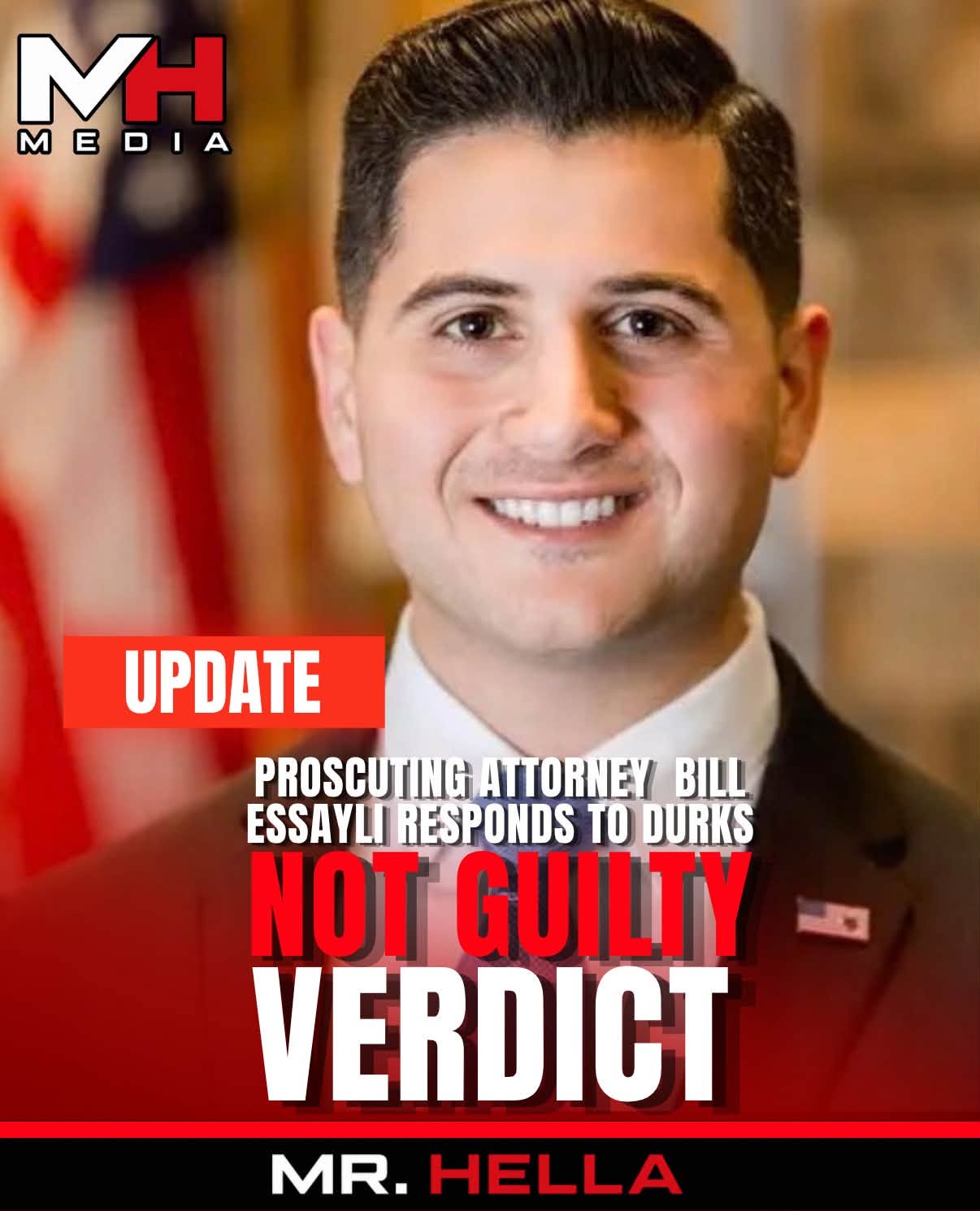
With testimony now complete and closing arguments approaching, the answer to whether federal prosecutors proved their allegations against Durk will ultimately belong not to Meek Mill, his critics or social media—but to the jury.


Comments