

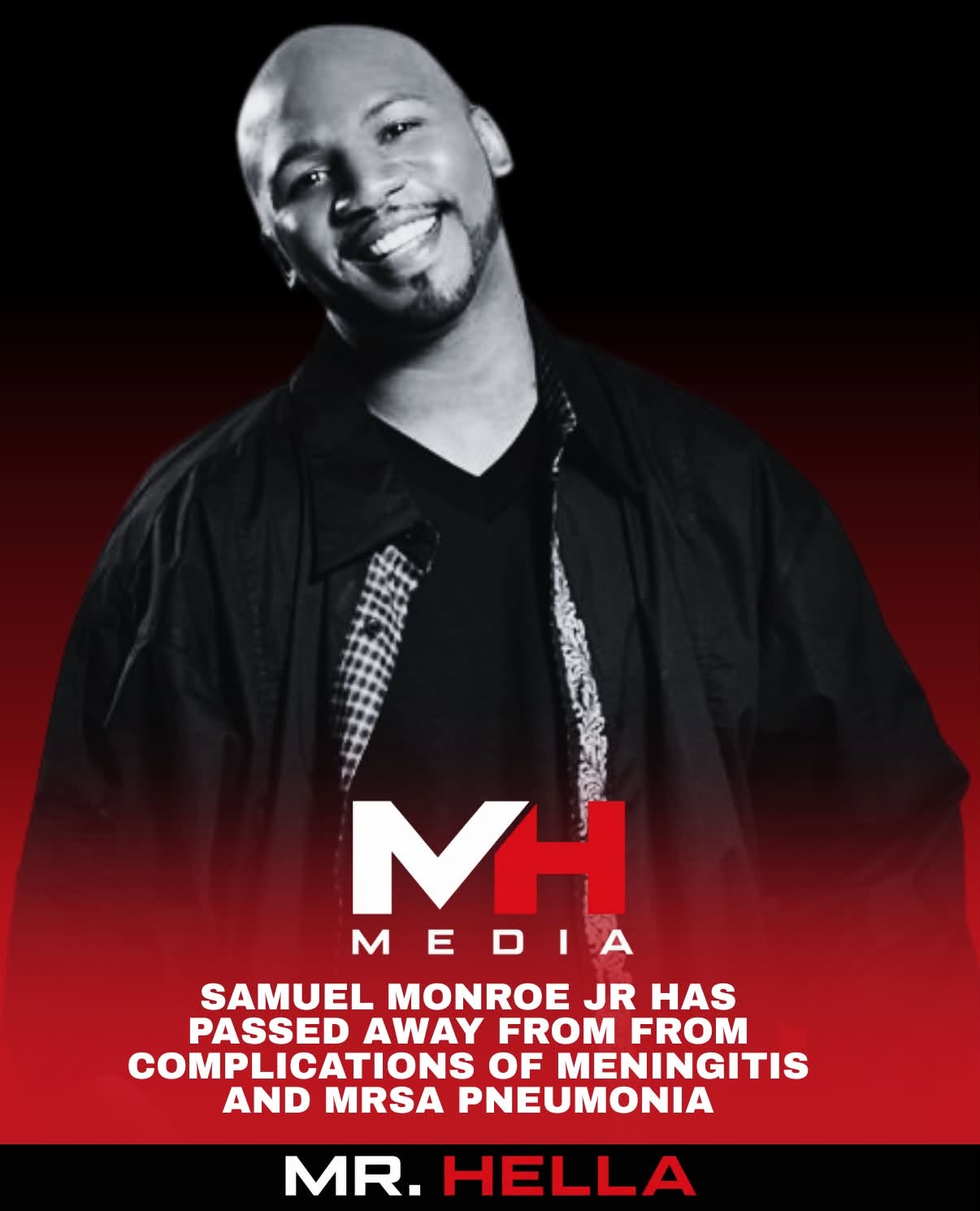
Samuel Monroe Jr., the actor whose appearances in Menace II Society, Tales from the Hood, Set It Off and The Players Club made him a familiar face to a generation of fans of 1990s Black cinema, has died after a lengthy battle with meningitis and severe medical complications. He was 52.
Monroe died Wednesday, Aug. 26, at Providence Saint Joseph in Burbank, California, after spending months in critical condition. His wife, Shawna Stewart, announced his death on social media, while his mother, Joyce Patton, separately confirmed that her son had passed away and asked supporters who had followed his health battle to continue praying for his family, particularly his three children.
“I want to thank all of my Facebook family and friends new and old for praying for Samuel Monroe, Jr., my son,” Patton wrote while announcing his death. “But today God called him home.”
The announcement ended a difficult medical ordeal that Monroe's family had been documenting publicly for months. He had been on life support since April as doctors treated him for the effects of meningitis, MRSA pneumonia and other complications that severely damaged his health. His family had previously asked fans for prayers and financial support as his condition worsened.
A Medical Crisis That Stretched for Months
According to Stewart, Monroe originally contracted meningitis while working in Las Vegas. She said he sought treatment at multiple hospitals but was repeatedly misdiagnosed, alleging that the infection went untreated for approximately eight months. Those claims about his medical treatment are allegations from the family and have not been established through an independent medical or legal finding.
By April, Monroe's condition had become critical. He was hospitalized with severe meningitis and MRSA pneumonia, a serious lung infection, and eventually required life support. His condition included neurological complications as the meningitis affected his brain and spinal cord. Stewart said in July that Monroe had lost the ability to move his body and suffered seizures and swelling of the brain.
The family established a fundraiser during his hospitalization to help with the growing financial burden associated with his treatment. As the months passed, relatives continued providing updates while asking supporters to keep Monroe in their prayers.
Only hours before announcing her son's death, Patton had told followers that Monroe was undergoing another medical procedure and that his condition was “not looking good.” He died later that Wednesday.
After his death, Patton organized another fundraiser to help pay for Monroe's funeral, burial, memorial services and final arrangements. She said any remaining funds would be placed into college funds for his three children.
A Familiar Face From a Landmark Era of Black Cinema
Although Monroe was rarely the actor receiving top billing, his filmography placed him inside several movies that became enduring pieces of 1990s Black popular culture.
Born Nov. 28, 1973, in Los Angeles, Monroe began his screen career in the early 1990s. One of his earliest television appearances came on Out All Night, the NBC sitcom starring Patti LaBelle. His film breakthrough followed in 1993 when he appeared as Ilena's cousin in the Hughes brothers' Menace II Society.
The film became one of the defining urban dramas of its era, following young men navigating violence and difficult choices in South Central Los Angeles. Monroe's appearance connected him with a movie that would remain part of the cultural conversation decades after its theatrical release.
He continued working throughout the decade, appearing as Bulldog in the 1995 horror anthology Tales from the Hood. The following year brought appearances in two more recognizable films: the Wayans brothers' satire Don't Be a Menace to South Central While Drinking Your Juice in the Hood and the crime drama Set It Off.
Monroe later appeared in Ice Cube's 1998 directorial debut, The Players Club, another movie that developed a lasting audience well beyond its original theatrical run. His credits across those projects gave Monroe an unusual connection to several films that helped define Black cinema during the decade.
His career extended far beyond those best-known titles. Monroe accumulated television and film appearances over more than three decades, including work on NYPD Blue, The Steve Harvey Show, Southland and Black Jesus. His later film work included projects released into the 2020s.
Monroe Also Pursued Music
Acting was not Monroe's only creative pursuit. He also worked as a rapper and was known professionally by names including Caffeine and Caffamilliano. His music career included a connection to Jive Records and work with figures in the recording industry, while he continued appearing in films and television.
That combination of acting and music placed Monroe within the broader entertainment culture surrounding many of the movies in which he appeared. Hip-hop and Black cinema became increasingly intertwined throughout the 1990s, and Monroe's career crossed both worlds.
Still, it was his screen work that made him instantly recognizable to many fans. His résumé reads almost like a list of movies that became staples for viewers who grew up during the period: Menace II Society, Tales from the Hood, Don't Be a Menace, Set It Off and The Players Club.
His Family Remembered the Man Behind the Roles
Following Monroe's death, Stewart remembered her husband not simply for his work as an actor and rapper but for the person his family knew away from the screen.
She described the strength Monroe showed during his prolonged medical battle and said he remained a fighter through months of serious illness. In announcing his death, Stewart wrote that while his life had ended, his “light will continue to shine.”
Patton similarly focused attention on the family Monroe left behind. Her announcement asked supporters to pray especially for his three children, Kingston, Milliano and Brooklynn. Monroe is survived by his mother, wife and children.
The family’s account of his final year paints a dramatically different picture from the energetic characters audiences saw on screen. Monroe went from working as an actor to enduring a prolonged medical crisis involving neurological damage, respiratory illness, life support and repeated procedures, while relatives publicly rallied around him.
For fans, however, Monroe leaves behind more than three decades of screen work and a particularly strong connection to one of the most memorable periods in Black film.
He may never have been the marquee name on the posters for Menace II Society, Set It Off or The Players Club, but Samuel Monroe Jr. was part of the ensemble of performers who gave those films their identity. More than 30 years later, those movies continue finding audiences, ensuring that Monroe's performances remain visible long after his death.
He was 52 years old.



Comments