

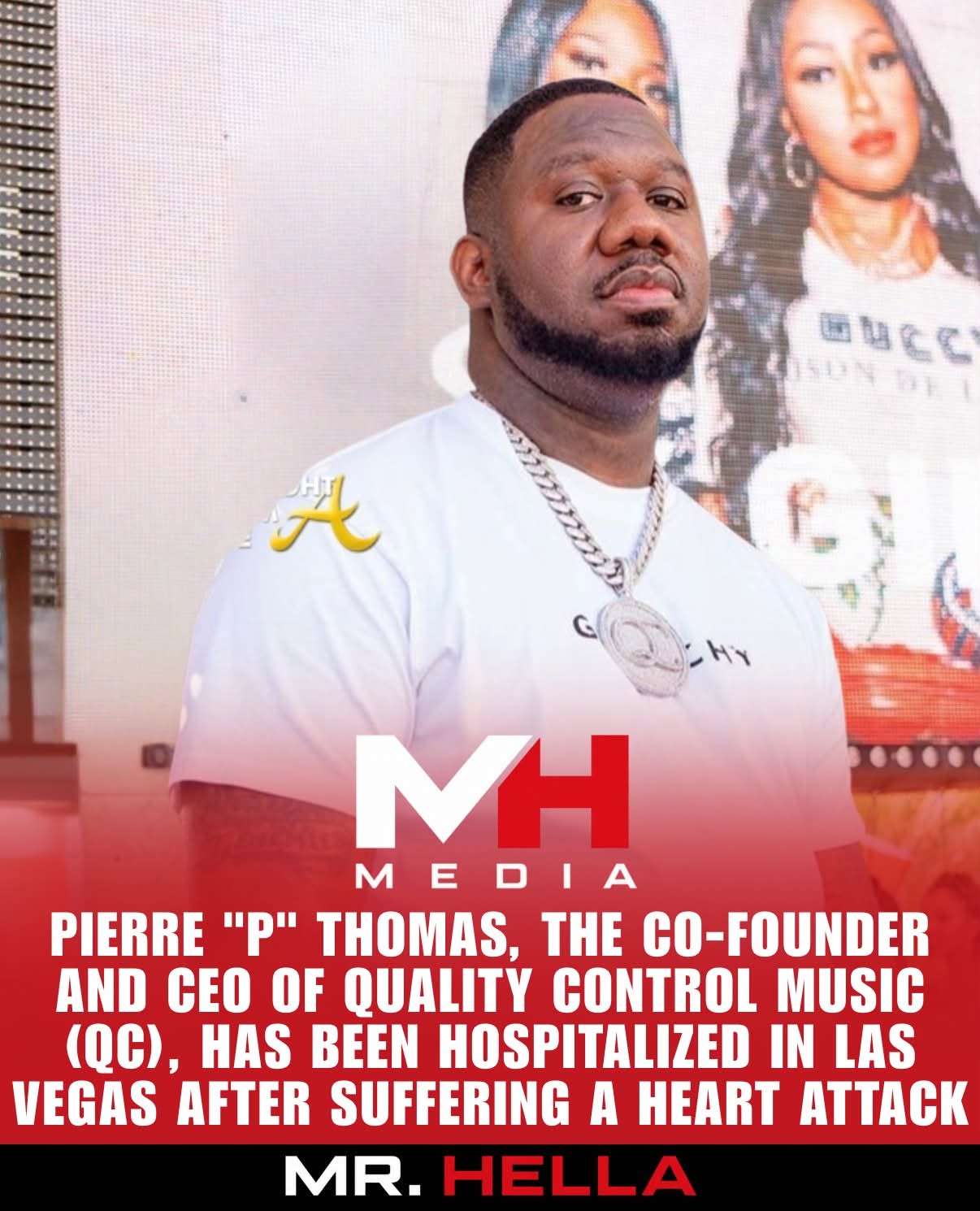
Quality Control Music co-founder and CEO Pierre “P” Thomas is recovering after suffering a heart attack that landed the influential hip-hop executive in intensive care in Las Vegas.
The medical emergency occurred on August 21, 2026, triggering an immediate wave of concern throughout the music industry—and eventually a wave of false reports claiming Thomas had died.
Quality Control quickly stepped in to shut down those rumors.
The Atlanta-based company confirmed that Thomas was alive and receiving medical treatment while asking fans, artists and members of the public to respect the family's privacy.
Now, weeks after the frightening health scare, Thomas has given supporters their first glimpse of him since being hospitalized.
Pierre “P” Thomas Resurfaces Following Heart Attack
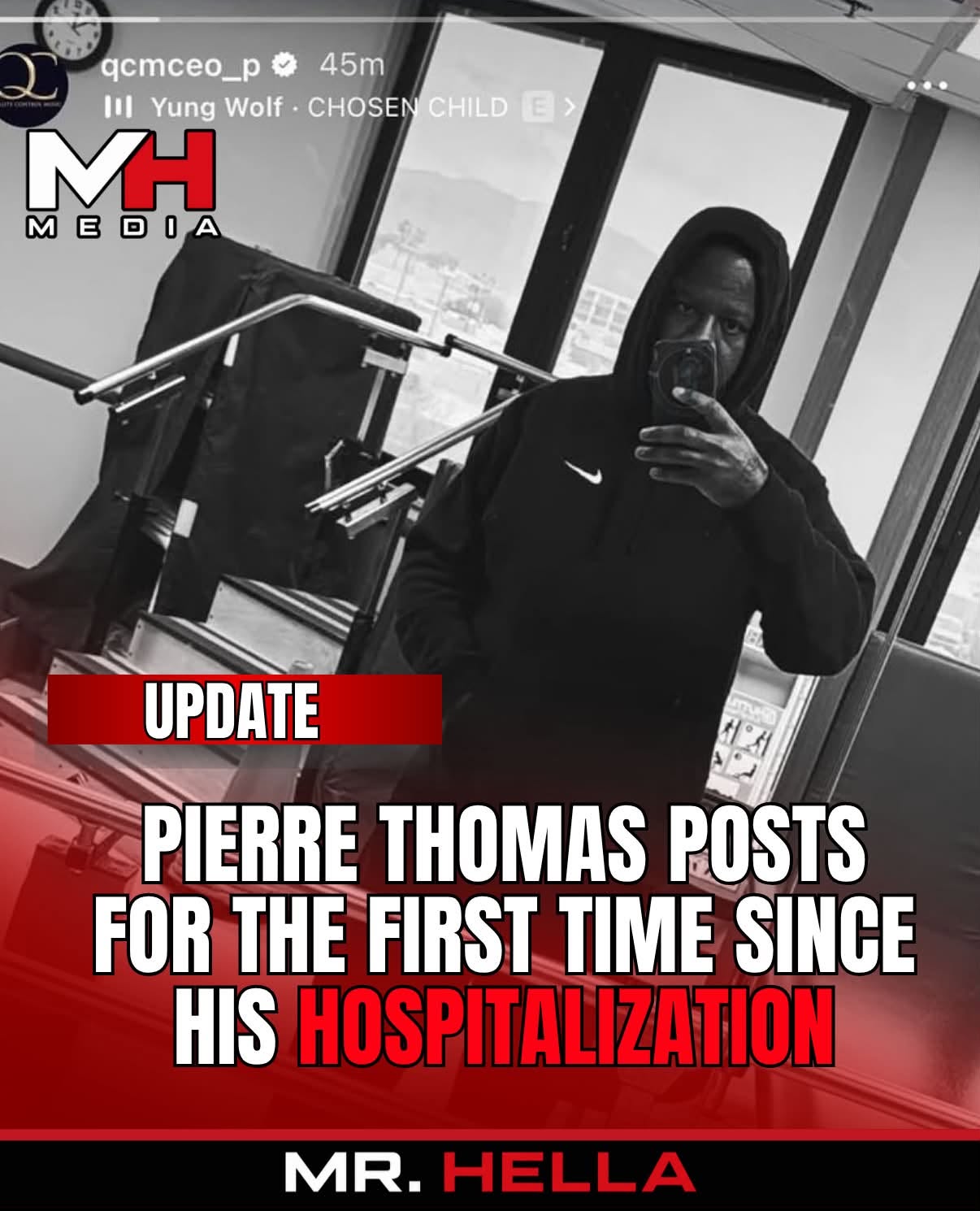
On September 6, Thomas returned to social media with a black-and-white mirror selfie posted to his Instagram Story.
There was no lengthy explanation attached to the image.
Instead, the QC executive included prayer hands, a purple heart and raised-hands emojis.
It marked his first known social media appearance since the August medical emergency and provided a welcome sign of progress following weeks of uncertainty surrounding his condition.
Thomas' current medical status has not been publicly disclosed in extensive detail, and there has not been a comprehensive public account of his recovery.
Still, his return to social media represented a notable development after his family and company had previously been forced to combat false claims that he had died.
What Happened in Las Vegas
Reports of Thomas' medical emergency began circulating on August 21.
TMZ reported that Thomas had suffered a heart attack and was being treated in the intensive care unit at a Las Vegas hospital.
His family was reportedly by his side as doctors treated him and evaluated the situation.
Quality Control subsequently confirmed his hospitalization, although the company's official statement did not independently provide specific medical details about what caused it.
“We want to clarify that Pierre ‘P’ Thomas is alive and currently hospitalized receiving medical care,” the company said at the time.
Quality Control also asked supporters to keep Thomas and his family in their thoughts and prayers while giving them privacy.
The distinction is important: the heart attack and ICU details originated through reporting citing sources familiar with Thomas' condition, while QC's official statement confirmed that he was alive and hospitalized receiving medical care.
False Reports Claimed P Had Died
The situation became even more confusing when false reports claiming Thomas had died began spreading across social media.
Quality Control's statement specifically emphasized that Thomas was alive.
His mother later addressed the rumors herself, making it unmistakably clear that her son had survived.
She said that Thomas was healing and recovering, directly rejecting the death claims that had circulated online.
The episode demonstrated how quickly misinformation surrounding a celebrity medical emergency can spread.
A report that someone has been hospitalized can rapidly transform into speculation about their condition, particularly when official information is limited.
In Thomas' case, the absence of detailed medical updates created an information vacuum that social media rumors quickly filled.
Quality Control and his family ultimately had to publicly correct the record.
His Condition Reportedly Began Improving
By August 24, reporting indicated that Thomas remained hospitalized in Las Vegas but was improving.
Several weeks later, Thomas' September 6 Instagram appearance provided the first public image directly from the executive himself since the emergency.
The post did not reveal whether he had been discharged from the hospital or provide specific details regarding his medical treatment.
That means any claims about Thomas being completely recovered should be treated cautiously until Thomas, his family or Quality Control provides a more comprehensive update.
What can be established is that he survived the medical emergency and subsequently returned to social media.
For the hip-hop community, that alone was a significant development following the initial uncertainty.
P Is One of the Most Important Executives in Modern Hip-Hop
Thomas' hospitalization attracted so much attention because his influence extends far beyond simply owning a record label.
Alongside Kevin “Coach K” Lee, Thomas built Quality Control Music into one of the defining hip-hop companies of the 2010s and early 2020s.
The pair founded Quality Control in Atlanta in 2013.
At the time, Atlanta was already one of America's most important hip-hop cities.
But QC would eventually become one of the companies responsible for defining the city's next generation.
Rather than relying on one superstar artist, Quality Control developed an entire ecosystem of rappers, producers and brands.
The company's rise would become closely associated with some of the biggest names in modern rap.
Migos Helped Put Quality Control on the Map
One of QC's earliest major breakthroughs came through Migos.
Quavo, Offset and Takeoff were still emerging from Atlanta's rapidly evolving rap scene when “Versace” exploded in 2013.
The record became even bigger after Drake jumped on the remix.
Migos would eventually become one of the most influential rap groups of their generation.
Their triplet-style flows were copied and adapted throughout hip-hop, while records including “Bad and Boujee,” “T-Shirt,” “MotorSport” and “Walk It Talk It” helped transform the group into global stars.
Quality Control grew alongside them.
As Migos became bigger, so did QC.
The success demonstrated that Thomas and Coach K weren't simply managing artists—they were developing acts capable of changing the sound of mainstream hip-hop.
Then Came Lil Yachty
Quality Control's reach expanded again with Lil Yachty.
Yachty represented something very different from Migos.
His colorful image, melodic approach and internet-driven rise positioned him at the center of a younger generation of rap fans.
His success demonstrated QC's ability to identify talent that didn't necessarily fit into a single traditional Atlanta sound.
That versatility became increasingly important as streaming and social media transformed the music business.
Instead of relying exclusively on radio or traditional label marketing, artists could build enormous audiences online.
QC understood that shift early.
Lil Baby Became Another Superstar
Perhaps the strongest demonstration of Quality Control's artist-development machine came with Lil Baby.
Baby's rise was remarkably fast.
Within a few years of beginning his rap career, he became one of the biggest artists in hip-hop.
Albums including My Turn helped establish him as a commercial powerhouse, while songs such as “The Bigger Picture” demonstrated his ability to move beyond conventional street records.
His success reinforced QC's reputation for identifying artists capable of becoming more than temporary viral sensations.
Thomas and Coach K had helped create another superstar.
City Girls Expanded QC's Reach
Quality Control also played a central role in the rise of City Girls.
JT and Yung Miami brought a completely different energy to the roster, helping QC expand beyond its male-dominated lineup.
Records including “Act Up” became major cultural moments.
The duo's success further demonstrated how broad Quality Control's influence had become.
At various points, the QC ecosystem included or worked closely with Migos, Lil Baby, Lil Yachty, City Girls, Rich the Kid and other prominent artists and producers.
The label wasn't simply participating in Atlanta hip-hop.
It was helping shape mainstream rap.
Quality Control Became Much More Than a Record Label
As QC grew, Thomas and Coach K expanded beyond traditional music operations.
The company moved into management, publishing, sports and film.
That expansion reflected a larger strategy.
Rather than functioning solely as a label collecting revenue from recorded music, Quality Control was becoming a broader entertainment company.
Its artists were brands.
Its executives were entrepreneurs.
And QC itself became an increasingly valuable piece of intellectual property.
Eventually, that value attracted one of the biggest entertainment companies in the world.
The Massive HYBE America Deal
In 2023, HYBE America announced a major deal to acquire Quality Control's parent company, QC Media Holdings.
The transaction was valued at approximately $320 million, not $300 million as sometimes summarized in reports.
The deal brought Quality Control into the same broader corporate ecosystem as HYBE, the South Korean entertainment giant behind some of the world's biggest music properties.
At the time, HYBE America was led by music executive Scooter Braun.
For Thomas and Coach K, the transaction represented an extraordinary conclusion to the first decade of Quality Control.
They had started the company in Atlanta in 2013.
Approximately ten years later, the business they built was involved in a deal worth hundreds of millions of dollars.
Thomas and Coach K continued working with the company following the transaction.
Building a Black-Owned Company Into a Hip-Hop Powerhouse
Thomas has previously discussed the significance of Quality Control's rise.
Speaking about how he wanted QC to be remembered, he emphasized the company's origins as a Black business entering an industry where many doors initially appeared closed.
The company's story became one of overcoming those barriers while developing some of the biggest stars of its era.
That legacy helps explain why news of Thomas' heart attack immediately traveled throughout hip-hop.
For casual listeners, the stars are Migos, Lil Baby, Lil Yachty and City Girls.
Behind many of those careers were executives like P and Coach K.
The Tragedy QC Has Already Experienced
The Quality Control family has also experienced devastating loss.
On November 1, 2022, Migos member Takeoff was shot and killed in Houston, Texas.
He was only 28.
Takeoff's death devastated the group, the label and the wider hip-hop community.
For a company whose identity had been intertwined with Migos almost from its beginning, his killing represented far more than the loss of an artist.
It was the loss of someone who had helped build the QC story.
Less than four years later, news that Thomas himself had suffered a serious medical emergency understandably generated another wave of fear among people connected to the label.
That fear became even worse when false reports began circulating that he had died.
Social Media Turned a Medical Emergency Into a Misinformation Crisis
Thomas' hospitalization also illustrates a growing problem surrounding celebrity news.
Information now travels faster than official confirmation.
One social-media account posts something.
Another account repeats it.
Screenshots begin circulating.
Larger pages repost those screenshots.
Within minutes, an unconfirmed claim can appear established simply because thousands of people have seen it.
Thomas' situation showed why confirmation matters.
There was a genuine medical emergency.
He really was hospitalized.
Reports indicated that the situation was serious enough to involve intensive care.
But that did not mean reports of his death were true.
They weren't.
Quality Control explicitly said he was alive.
His mother subsequently said he was recovering.
And Thomas eventually resurfaced himself.
P's Return to Instagram Is an Encouraging Development
Thomas' September 6 appearance doesn't answer every question about his health.
It doesn't reveal the extent of the heart attack.
It doesn't tell the public what treatment he received.
It doesn't establish whether he has completely recovered.
And it doesn't provide a timetable for his return to regular business activities.
Those details remain private unless Thomas or his family chooses to disclose them.
But the image does provide something that wasn't available during the initial chaos surrounding his hospitalization:
A direct sign from P himself.
After weeks of rumors, concern and speculation, the man at the center of the story finally appeared again.
For someone whose company has spent more than a decade helping shape the sound of modern hip-hop, the simple photograph carried considerably more weight than an ordinary Instagram Story.
The Hip-Hop Community Continues to Root for His Recovery
Pierre “P” Thomas isn't a rapper whose face appears on every album cover.
But his fingerprints are all over an era of hip-hop.
Migos.
Lil Baby.
Lil Yachty.
City Girls.
The rise of Quality Control.
The transformation of Atlanta from an important rap city into one of the unquestioned centers of the global hip-hop industry.
And ultimately, the sale of the company he co-founded in a deal valued at roughly $320 million.
That history explains the reaction when news broke that Thomas had suffered a heart attack.
For years, P worked behind the scenes helping build careers that millions of fans watched from the front.
Now those fans, artists and members of the music industry are watching his recovery.
The latest public sign is encouraging.
Thomas survived.
His family has said he is recovering.
And weeks after a medical emergency that generated false reports of his death, Pierre “P” Thomas was able to make his return to social media.
For now, the Quality Control family continues to ask for the same thing it requested when the news first broke:
Privacy, support and prayers as P continues his recovery.
Comments