

MR. HELLA MEDIA | UPDATES | NOVEMBER 8, 2026
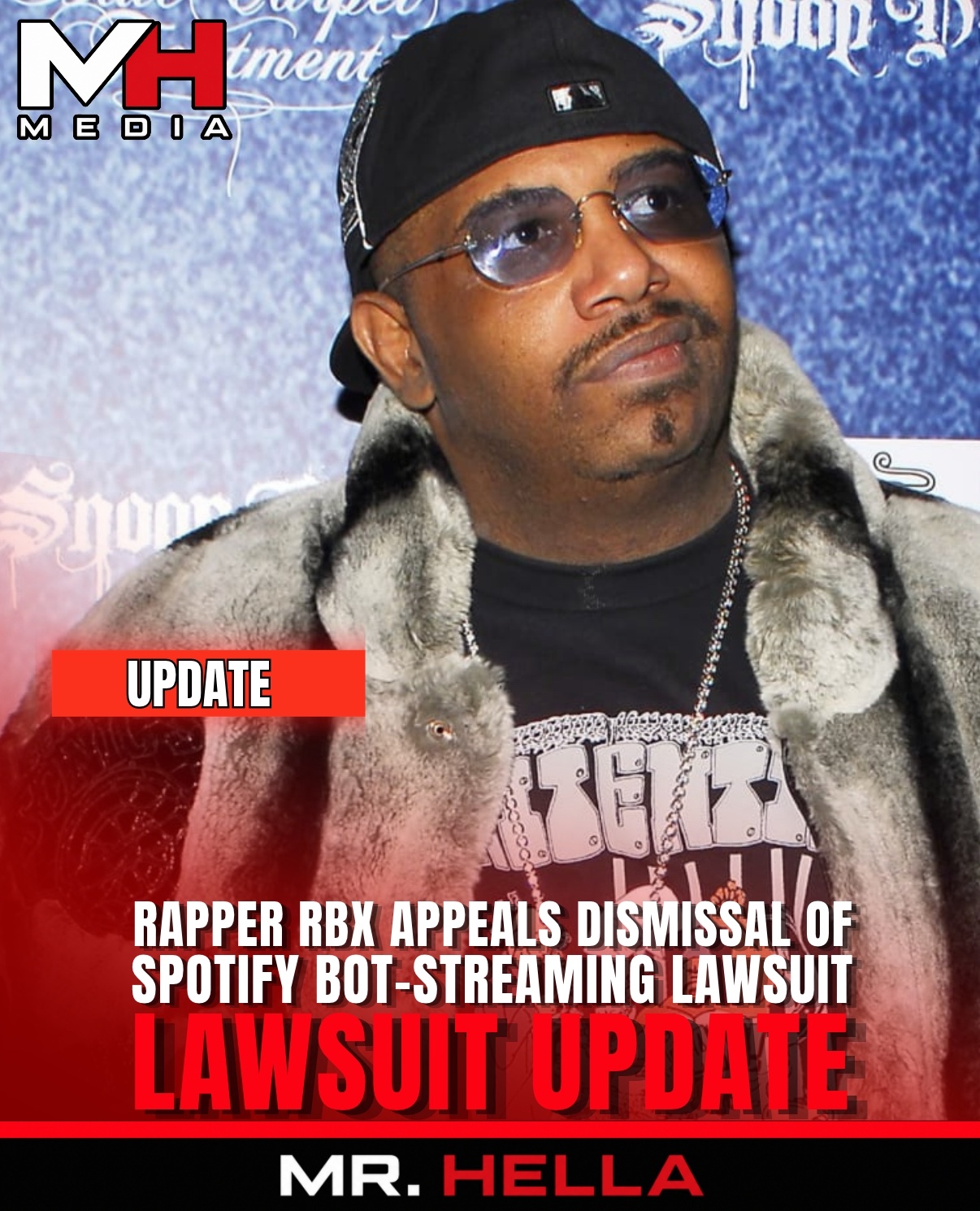
Rapper RBX Appeals Dismissal of Spotify Bot-Streaming Lawsuit After Judge Rejects Claims Involving Drake’s Music
West Coast rapper RBX is refusing to abandon his legal battle against Spotify after a federal judge dismissed his lawsuit accusing the streaming giant of allowing fraudulent streams to distort royalty payments and financially harm independent artists.
The Long Beach rapper, whose legal name is Eric Dwayne Collins, filed a notice of appeal on November 6, 2026, with the U.S. Court of Appeals for the Ninth Circuit. The filing comes approximately two weeks after a California federal judge dismissed his amended class-action complaint with prejudice, effectively ending the case at the district court level.
At the center of the dispute are allegations that Spotify failed to adequately address artificial streaming activity involving major recording artists, including Drake, while applying stricter anti-fraud measures to smaller musicians.
RBX argues that the alleged imbalance allowed artificially inflated streaming numbers to affect the distribution of royalties, potentially costing legitimate music rights holders hundreds of millions of dollars.
However, those allegations have not been established as fact. The federal judge concluded that RBX failed to present sufficient factual allegations to support his legal claims, and Spotify has maintained that it actively combats artificial streaming.
The newly filed appeal gives RBX another opportunity to challenge that decision, although it does not overturn the dismissal or establish that the alleged streaming manipulation occurred. Digital Music News +2
RBX Takes His Legal Fight to Federal Appeals Court
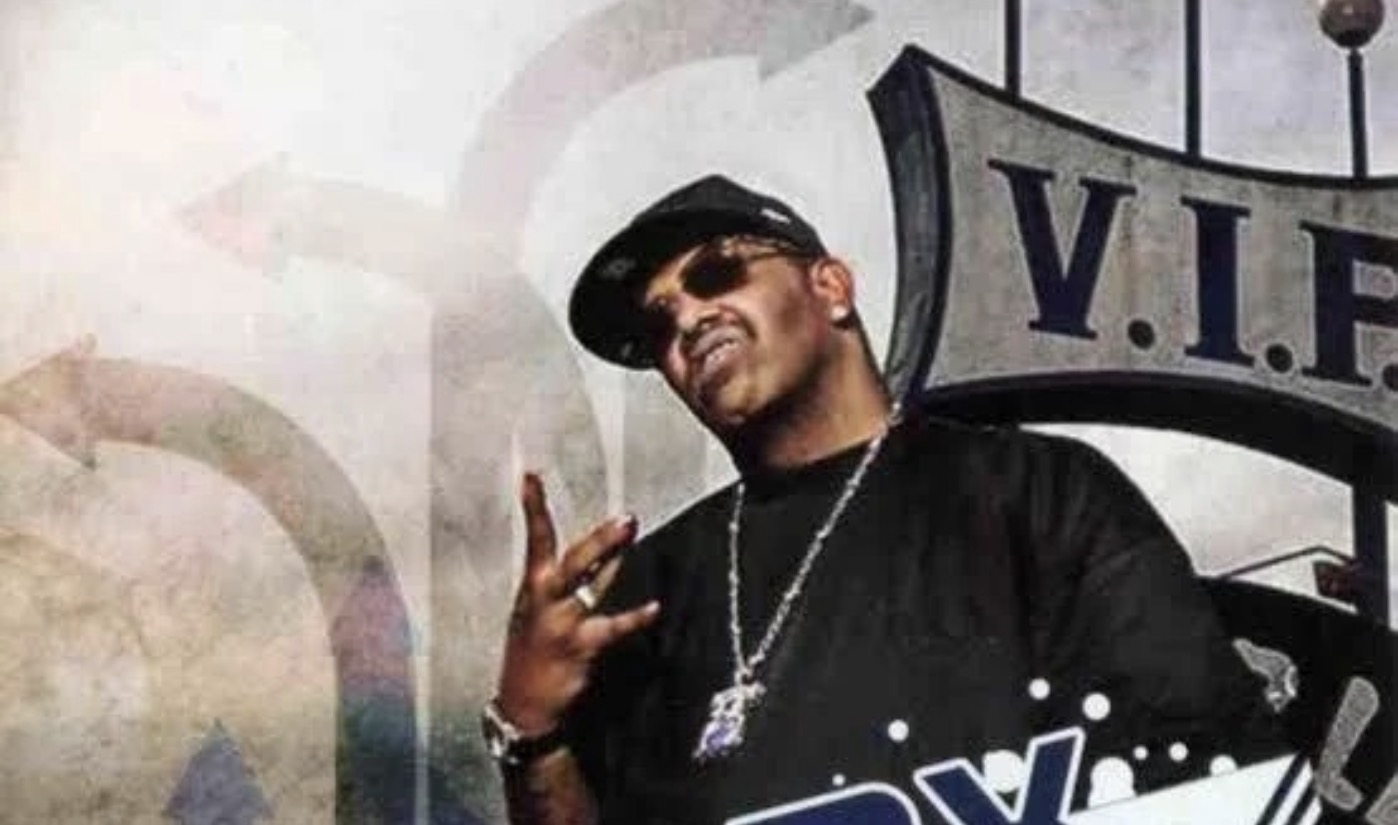
The latest development follows a series of setbacks for the veteran rapper, who initially filed his proposed class-action lawsuit against Spotify in November 2025.
RBX sought to represent music rights holders who he claimed had been financially affected by fraudulent streaming activity on the platform.
The original complaint alleged that Spotify’s royalty distribution system allowed artificially generated streams to reduce the percentage of revenue available to artists whose music was being played by legitimate listeners.
In June 2026, U.S. District Judge Josephine L. Staton dismissed the initial complaint but permitted RBX to submit an amended version.
His attorneys returned in July with additional allegations concerning Spotify’s enforcement of its artificial-streaming policies.
That revised complaint also failed to persuade the court.
On October 23, Judge Staton granted Spotify’s motion to dismiss, finding that the allegations did not adequately support claims of negligence or violations of California’s Unfair Competition Law.
The court subsequently entered judgment in Spotify’s favor on October 29, dismissing the case with prejudice.
RBX’s November 6 notice of appeal now moves the dispute to the Ninth Circuit, where a panel of appellate judges may review whether the district court correctly applied the law when rejecting his claims. Justia Law +2
Lawsuit Alleged Billions of Drake Streams Were Artificially Inflated
One of the most controversial aspects of RBX’s lawsuit involves allegations concerning Drake’s streaming numbers.
In his original complaint, RBX alleged that a substantial portion of approximately 37 billion Spotify streams credited to Drake’s music between January 2022 and September 2025 appeared suspicious.
The lawsuit claimed that automated accounts and streaming farms may have been responsible for some of that activity.
Among the examples presented was an allegation involving Drake’s song “No Face.” RBX claimed that at least 250,000 streams originated in Turkey during a four-day period in 2024 but were made to appear as though they came from the United Kingdom through the use of virtual private networks.
The complaint also alleged that certain accounts displayed unusual listening patterns, including activity approaching 23 hours per day.
RBX’s legal team argued that these patterns were consistent with automated streaming operations rather than ordinary listener behavior.
The amended lawsuit went further, alleging that artificial streaming had diverted at least $600 million in royalties from legitimate music rights holders.
These figures are allegations made by RBX, not independently verified findings. No court has determined that Drake generated billions of fraudulent streams or that $600 million was improperly distributed.
Drake was not named as a defendant in RBX’s lawsuit. Spotify was the sole defendant, and the case did not establish that Drake personally participated in streaming manipulation. Ars Technica +2
How Alleged Streaming Bots Could Affect Independent Artists
The lawsuit raises broader questions about how streaming platforms distribute money to recording artists.
Spotify generally operates through a system in which subscription and advertising revenue is pooled and distributed to eligible rights holders according to their share of qualifying streams within a particular market.
Under this model, an artist’s earnings are influenced not only by how many times their music is played but also by how those streams compare with the overall listening activity on the platform.
RBX’s argument was that artificially generated streams could distort that calculation.
If automated accounts inflate the number of streams attributed to particular recordings, those recordings could receive a larger share of the royalty pool than they would otherwise be entitled to receive.
That could theoretically reduce the amount available to other artists, including independent musicians who rely on legitimate listening activity.
RBX also accused Spotify of applying its anti-fraud policies unevenly, arguing that smaller artists faced stricter enforcement while commercially successful performers benefited from insufficient scrutiny.
Spotify, however, has publicly described systems intended to identify and remove artificial streaming activity. The platform says detected fraudulent streams do not generate royalties or count toward public streaming totals.
The central legal question was not simply whether streaming bots exist. It was whether RBX had alleged sufficient facts to show that Spotify engaged in unlawful conduct that caused him a legally recognizable injury. Music Business Worldwide +1
Federal Judge Said RBX Failed to Support His Allegations
In her October ruling, Judge Staton rejected the argument that RBX had adequately demonstrated selective enforcement of Spotify’s anti-fraud policies.
The judge found that the amended complaint relied heavily on assertions that Spotify treated popular artists differently from independent musicians without identifying sufficient supporting facts.
According to the ruling, RBX had not demonstrated that Spotify maintained an undisclosed policy of selectively enforcing its artificial-streaming rules.
The court also rejected his negligence claim, finding that Spotify did not have the type of special legal relationship with RBX that would create a duty to protect him from alleged misconduct by third parties.
Although Spotify possesses substantially greater commercial power than an individual musician, the judge concluded that this imbalance did not automatically create the legal obligations RBX asserted.
The court additionally found that the allegations did not adequately establish the consumer or competitive harm necessary to support the unfair-competition claim.
After considering the revised complaint, Judge Staton determined that another opportunity to amend would be futile.
The dismissal with prejudice prevented RBX from simply rewriting and refiling the same claims in the district court. It did not, however, prevent him from appealing the decision. Bloomberg Law +2
Why the Appeal Matters for the Music Industry
RBX’s decision to appeal keeps a contentious issue in the spotlight at a time when streaming revenue remains central to the music business.
Artificial streaming has become an increasingly significant concern for record labels, distributors, digital platforms and independent artists.
As automated technologies become more sophisticated, streaming services face growing pressure to distinguish legitimate listening activity from coordinated attempts to manipulate engagement figures.
For independent musicians, the financial implications can be especially important because even relatively small changes in royalty distributions may affect their earnings.
The dispute also raises questions about transparency.
RBX’s lawsuit sought to challenge whether Spotify applies its fraud-detection systems consistently across artists with different levels of commercial influence.
However, the appeal will not automatically become a broad investigation into Spotify’s entire royalty system. The Ninth Circuit’s immediate task will be to determine whether the district court properly dismissed the legal claims presented.
A successful appeal could allow the case to return to the lower court for additional proceedings, but it would not itself prove the allegations or establish Spotify’s liability.
What Happens Next in RBX’s Lawsuit Against Spotify?
The November 6 notice of appeal represents the beginning of the appellate process rather than a final legal victory for either side.
RBX’s attorneys will have an opportunity to submit a more detailed appellate brief explaining why they believe Judge Staton’s dismissal should be reversed.
Spotify will then be able to defend the district court’s decision.
The Ninth Circuit could uphold the dismissal, reverse portions of the ruling or return the case for additional proceedings, depending on its review of the legal record.
As of November 8, RBX’s detailed appellate arguments have not yet been publicly outlined in the reporting reviewed, and no appellate ruling has been issued.
The case remains particularly notable because of its allegations involving one of the world’s most commercially successful rappers, but Drake’s involvement in the lawsuit remains limited to being referenced in RBX’s allegations.
For now, RBX has succeeded in keeping his legal challenge alive through the appeals process. Whether he can persuade a federal appellate court to revive the dismissed lawsuit remains an open question.
The outcome could carry implications for future lawsuits involving streaming royalties, platform accountability and allegations of artificial engagement in the music industry.


Comments