

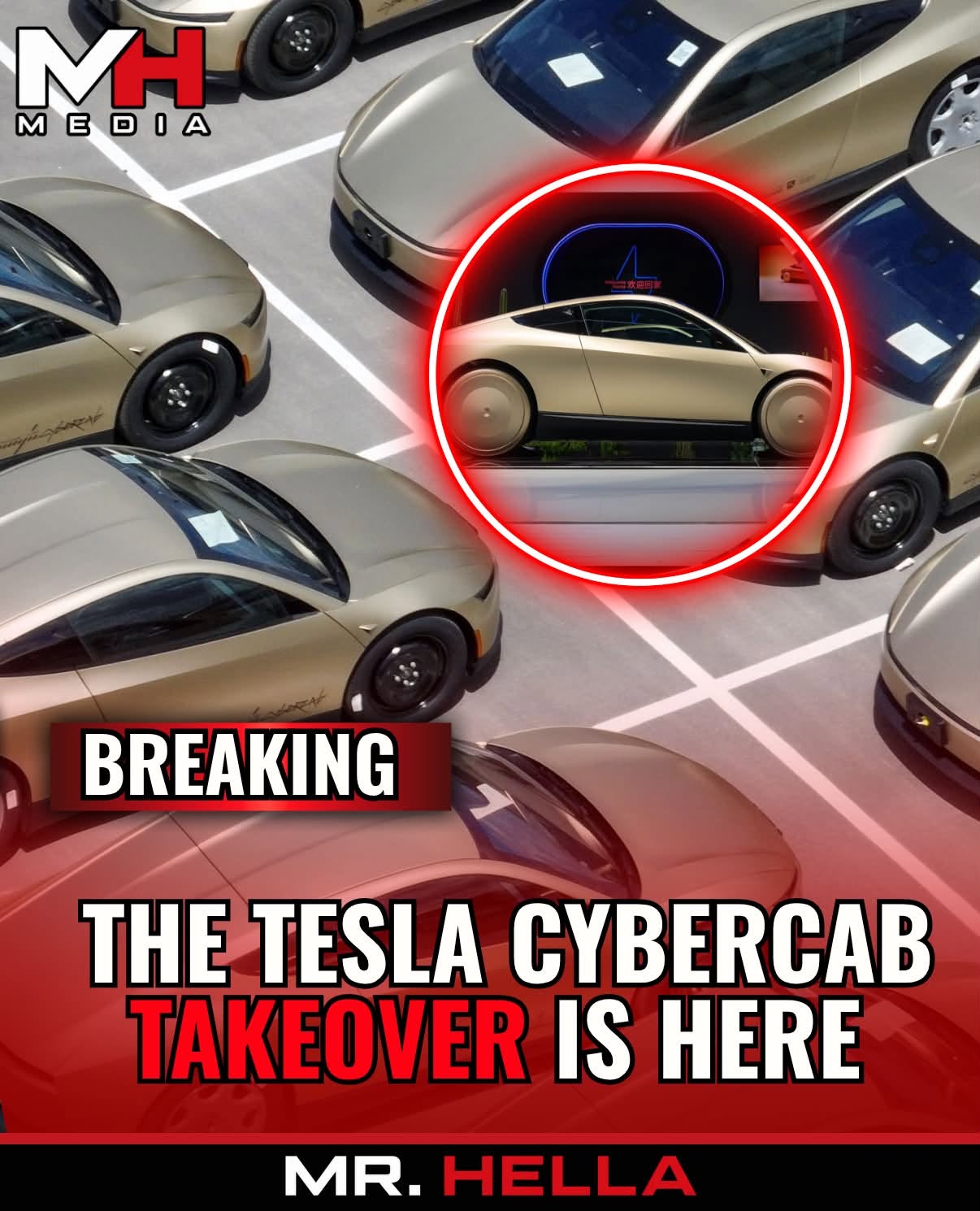
Tesla has officially put its purpose-built Cybercab into service in Austin, Texas, moving a vehicle with no steering wheel or pedals from years of prototypes and promises into real-world passenger operations.
The electric automaker began offering rides in the two-passenger Cybercab on Sept. 3 in limited areas of Austin, adding the gold-colored autonomous vehicle to the Robotaxi network Tesla had previously operated primarily with Model Y vehicles. The launch represents a major milestone in CEO Elon Musk’s effort to transform Tesla from a conventional electric-vehicle manufacturer into a company increasingly centered on autonomous transportation, robotics and artificial intelligence.
Unlike the Model Ys Tesla has used to build out its Robotaxi service, the Cybercab was designed from the beginning without traditional driver controls.
Tesla’s own rider guide states that the vehicle has two passenger seats and is not equipped with a steering wheel, accelerator pedal or brake pedal. Instead, passengers interact with the vehicle through Tesla’s Robotaxi app and a large touchscreen inside the cabin.
For Tesla, that makes the Sept. 3 rollout more significant than simply introducing another vehicle.
Tesla’s Purpose-Built Robotaxi Finally Reaches Passengers
Tesla unveiled the Cybercab concept in October 2024 as the centerpiece of Musk’s long-running vision for autonomous transportation.
Rather than designing another consumer vehicle that could eventually drive itself, Tesla built the Cybercab specifically around the assumption that a human driver would not be necessary.
The result is a compact two-seater with butterfly-style doors, a large central touchscreen and luggage space, but none of the equipment traditionally required for a person to operate a car. Tesla says the vehicle relies on its autonomous-driving system to navigate without human control.
That distinguishes the Cybercab from the Model Y vehicles that helped Tesla establish its Robotaxi network.
Tesla began its Austin Robotaxi pilot in June 2025 and gradually expanded autonomous operations afterward. By the second quarter of 2026, the company said it had begun production of Cybercab and was conducting engineering drives of production vehicles on public roads, along with employee rides at Gigafactory Texas.
Those tests were described at the time as precursors to putting Cybercab into the Robotaxi fleet.
On Sept. 3, that transition began.
Reuters reported that Tesla was offering Cybercab rides in limited portions of Austin, while Tesla now tells customers that Cybercab rides are available in limited areas of the city.
No Steering Wheel. No Pedals.
The absence of physical driver controls is the defining feature of the vehicle—and one of the reasons its introduction is being watched closely.
Passengers cannot simply grab a steering wheel or press a brake pedal if they become uncomfortable with what the vehicle is doing. There are no conventional controls available to them.
Tesla instead designed Cybercab around full autonomy, using cameras and its autonomous-driving software to interpret the environment and control the vehicle.
The minimalist cabin effectively turns both occupants into passengers.
Tesla says Cybercab can accommodate two people and provides enough rear storage for luggage and other larger items. Riders can use the central display and Robotaxi app to control features such as climate and entertainment.
That design represents the physical manifestation of a strategy Musk has discussed for years: removing the human driver entirely rather than merely assisting one.
Federal Regulators Are Watching
Putting such a vehicle onto public roads also introduces regulatory questions that conventional Teslas do not face.
The National Highway Traffic Safety Administration said it was evaluating Tesla’s Cybercab deployment as rides began in Austin. Federal vehicle-safety standards have historically been written around automobiles containing human controls, creating complications for vehicles designed without equipment such as steering wheels and pedals.
Those questions have since intensified, with NHTSA seeking information from Tesla about how the Cybercab was certified to comply with federal safety requirements.
The regulatory scrutiny underscores the unusual nature of what Tesla is attempting. Fully autonomous vehicles themselves are no longer unprecedented, but Cybercab is Tesla’s first production vehicle built specifically around eliminating the driver.
Tesla’s Larger Bet on AI and Autonomy
The Cybercab launch arrives as Tesla increasingly presents autonomy and artificial intelligence as central to its future.
Tesla currently describes its Robotaxi fleet as part of its effort to define “the future of autonomy and artificial intelligence,” while Cybercab is positioned as the purpose-built vehicle at the center of that network.
That strategy places Tesla in increasingly direct competition with autonomous-driving companies that have spent years developing commercial driverless services.
Waymo, in particular, already operates thousands of autonomous vehicles across multiple markets, giving Tesla a significant competitor as it attempts to expand its own service.
Tesla is betting on a substantially different technological approach. Its vehicles primarily depend on cameras and artificial intelligence rather than the more sensor-heavy combinations of cameras, radar and lidar used by some competitors.
The company also has an enormous potential manufacturing advantage if it can successfully scale the Cybercab. Tesla has described the vehicle as the future workhorse of its Robotaxi fleet and began production earlier in 2026.
For now, however, the rollout remains limited.
Cybercab rides are available only in restricted areas of Austin, even as Tesla's broader Robotaxi network using other vehicles has expanded into additional U.S. cities.
That makes Sept. 3 less the completion of Tesla’s autonomous-driving ambitions than the beginning of their most consequential real-world test.
For years, the Cybercab existed as a representation of Musk’s argument that Tesla’s future would eventually extend beyond selling electric cars to people who drive them.
Now, at least in parts of Austin, passengers can summon a Tesla specifically designed so that nobody drives it at all.



Comments