

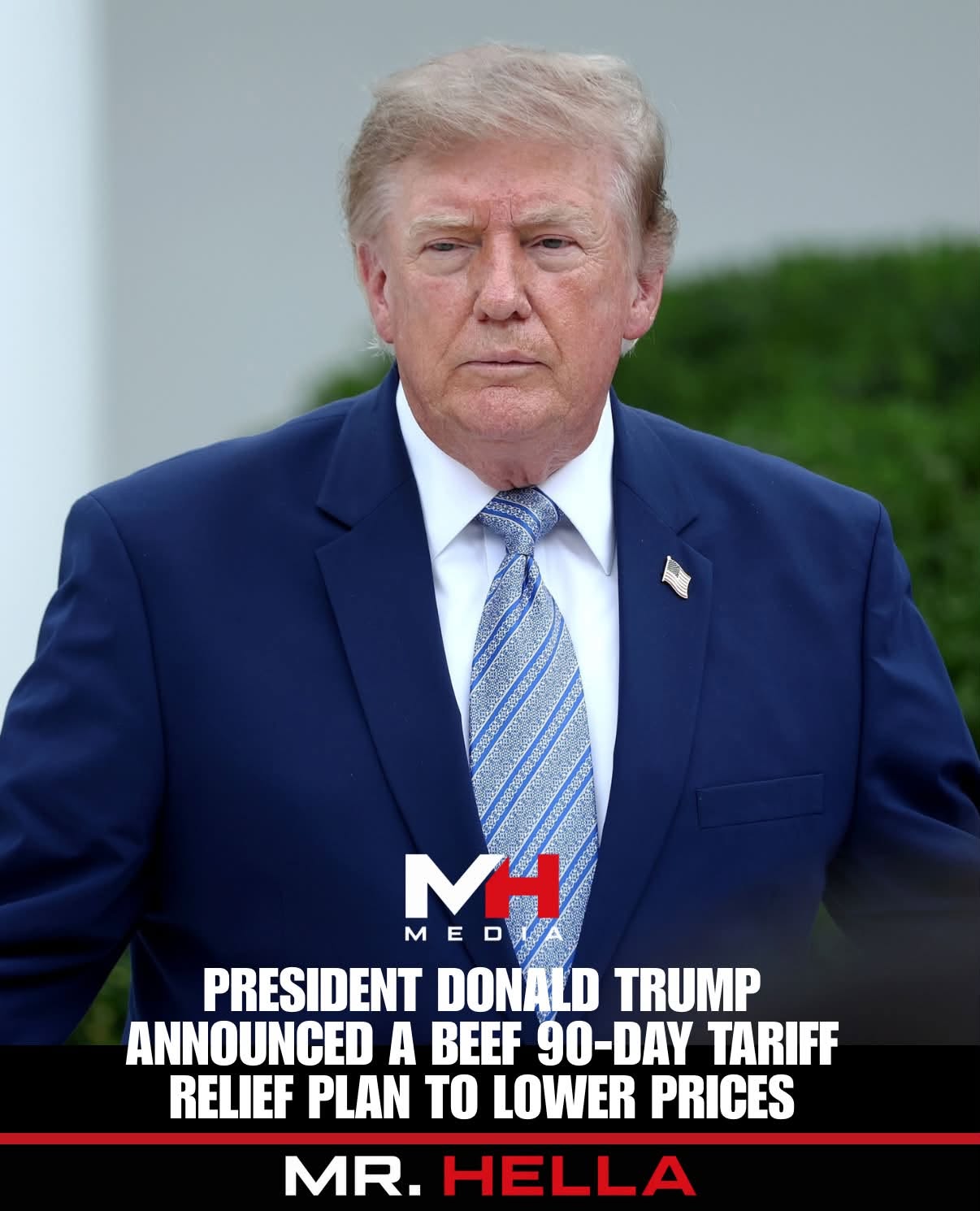
President Donald Trump has temporarily opened the door to hundreds of thousands of additional metric tons of imported beef in an effort to bring down soaring ground beef prices for American consumers.
The policy allows an additional 300,000 metric tons of lean beef trimmings to enter the United States under the lower tariff rate available within the country's beef tariff-rate quota.
Trump initially announced the plan on August 21, describing it as a 90-day effort to provide immediate price relief while America's depleted cattle herd rebuilds.
Five days later, on August 26, the White House formally implemented the expanded quota through a presidential proclamation.
The additional imports began September 1 and are scheduled to run through November 30, 2026.
The administration says the goal is straightforward: increase the supply of beef available for ground beef production and put downward pressure on prices at grocery stores.
But the plan has also generated significant opposition from American cattle producers, creating a debate over whether lowering prices for consumers through additional imports could come at the expense of domestic ranchers.
Trump Initially Announced the Plan on August 21
Trump revealed the proposal in a Truth Social post on Friday, August 21.
He said the United States would temporarily allow up to 300,000 metric tons of additional beef product used for ground beef to enter without being subjected to the higher out-of-quota tariff.
Trump also said his administration had received a commitment that the imported beef would be sold at 25 percent below current market prices.
The president presented the policy as a temporary bridge.
The idea is to increase supply immediately while giving American cattle producers time to rebuild a domestic herd that has fallen to historically low levels.
Trump argued that doing both simultaneously could provide short-term relief for consumers without abandoning the administration's longer-term goal of strengthening American cattle production.
The White House Formally Implemented the Policy Five Days Later
The August 21 announcement was followed by formal presidential action on August 26.
The White House proclamation increased the 2026 in-quota quantity by 300,000 metric tons specifically for certain lean beef trimmings.
That distinction matters.
The policy isn't simply allowing 300,000 metric tons of every type of foreign beef into the country without normal quota restrictions.
The additional quota applies to designated categories of lean beef trimmings.
Those trimmings are particularly important to the American ground beef market because processors can combine lean imported beef with fattier domestic beef to produce ground beef with the fat percentages consumers expect.
The White House said increasing the supply of those trimmings should help ensure adequate ground beef supplies at what it considers reasonable prices.
The 300,000 Metric Tons Are Being Released in Three Stages
The government isn't releasing the entire additional quota at once.
Instead, the White House divided it into three separate 100,000-metric-ton tranches.
The first opened September 1 and runs through September 30.
The second opens October 1 and runs through October 30.
The third opens October 31 and continues until the additional quota is filled or November 30 arrives, whichever happens first.
The additional quota is being administered on a first-come, first-served basis.
That structure effectively turns Trump's initial 90-day announcement into a three-month temporary expansion of the amount of qualifying beef that can enter under the lower tariff treatment.
Why Ground Beef Has Become So Expensive
The administration's action comes amid an unusual period for America's beef market.
The national cattle herd has fallen to its lowest level in approximately 75 years, according to the White House.
At the same time, consumer demand for beef remains strong.
That combination creates a basic economic problem.
There are fewer cattle available while Americans still want large quantities of beef.
Rebuilding cattle herds also isn't something ranchers can accomplish quickly.
Unlike industries where manufacturers can simply increase production within weeks or months, cattle production operates on biological timelines.
Breeding animals must be retained.
Calves must be born.
Those calves need time to mature.
Ranchers also have to contend with feed prices, land costs, weather conditions and drought.
That means today's decision to expand a herd doesn't immediately translate into additional beef appearing in grocery stores.
The White House has acknowledged that rebuilding the domestic herd will take time.
Drought Has Played a Major Role
Years of drought conditions have contributed to the shrinking cattle supply.
When pasture conditions deteriorate and feed becomes more expensive, ranchers can be forced to reduce herd sizes.
Selling cattle can provide short-term financial relief.
But widespread herd reductions eventually mean fewer cattle are available for beef production.
Reversing that trend requires ranchers to retain more animals for breeding rather than sending them into the beef supply.
That can actually tighten near-term beef supplies even further while the herd is rebuilding.
The result is an unusual challenge for policymakers.
Consumers want lower beef prices now.
Ranchers need favorable economics to justify rebuilding their herds.
Policies designed to accomplish one goal can potentially complicate the other.
Trump Says the Imported Beef Will Be Cheaper
One of the most attention-grabbing portions of Trump's announcement was his claim that the additional imported beef would be sold at a significant discount.
Trump said his administration had a commitment that the beef would be sold at 25 percent below current market prices.
The White House's subsequent proclamation was somewhat more cautious.
Rather than guaranteeing a specific nationwide retail reduction, the formal proclamation said Trump anticipated that the additional imports would result in ground beef being sold at a discounted price compared with current sale prices.
The proclamation also included an important warning.
Trump said he could terminate the temporary action if it fails to result in lower prices for imported ground beef, including to prevent foreign producers from receiving a windfall.
That means the administration has explicitly tied continuation of the policy to its affordability objective.
That Doesn't Mean Grocery Store Beef Automatically Drops 25 Percent
Consumers should be careful about interpreting the 25 percent figure.
Trump's announcement doesn't mean every package of ground beef at every American supermarket will suddenly become 25 percent cheaper.
Retail beef prices involve multiple stages.
Cattle prices.
Processing.
Transportation.
Labor.
Packaging.
Wholesale contracts.
Retail margins.
And the specific mixture of beef used in a product.
The temporary tariff treatment affects one component of that system.
Increasing supplies of lean beef trimmings could put downward pressure on ground beef production costs, but the ultimate amount passed along to shoppers will depend on how processors, distributors and retailers respond.
Market analysts have therefore expressed uncertainty about how quickly or dramatically the additional imports will affect grocery prices.
American Ranchers Aren't Happy About the Plan
The policy immediately generated opposition from cattle industry organizations.
The National Cattlemen's Beef Association criticized the announcement, arguing that bringing additional foreign beef into the country at below-market prices could undermine American cattle producers.
That concern illustrates the central tension surrounding the policy.
Consumers benefit when food becomes cheaper.
Producers benefit when prices are high enough to support their businesses and encourage expansion.
Trump's administration says the temporary measure can lower consumer prices while domestic herds recover.
Some ranchers argue that artificially increasing cheaper foreign competition could instead weaken the financial incentive American producers need to rebuild.
The National Cattle Herd Is at a Historic Low
The scale of the domestic supply problem helps explain why the administration is willing to accept that criticism.
The White House says America's cattle herd is at a 75-year low.
Meanwhile, beef demand has increased over the past decade.
That creates an environment where even relatively small disruptions can have noticeable effects on prices.
Weather problems can reduce supply.
Disease can interrupt imports.
Processing disruptions can create bottlenecks.
Trade restrictions can limit access to foreign beef.
And rebuilding domestic cattle inventories takes years rather than months.
The administration argues that temporarily expanding import access gives the market additional supply while longer-term domestic production catches up.
The U.S. Already Imports Beef
The policy also doesn't mean America suddenly became dependent on imported beef.
The United States is simultaneously a major beef producer, exporter and importer.
That can sound contradictory until the differences between beef products are considered.
American consumers demand large quantities of ground beef.
Domestic cattle often produce beef with relatively higher fat content.
Processors can blend that product with imported lean beef trimmings to create ground beef at specific lean-to-fat ratios.
That means imported lean beef can complement rather than simply replace American beef in some processing operations.
Trump's proclamation specifically targets those lean trimmings.
Argentina Had Already Received a Separate Quota Increase
The 300,000-metric-ton action also isn't the administration's first attempt to address beef prices through imports.
Earlier in 2026, Trump increased the in-quota amount for lean beef trimmings from Argentina by 80,000 metric tons.
The August proclamation specifically references that earlier action.
The new 300,000-metric-ton increase is separate and substantially larger.
The White House says the additional amount is allocated to “other countries or areas,” rather than simply expanding the earlier Argentina-specific increase.
Together, the policies demonstrate how aggressively the administration has turned toward targeted import adjustments as one tool for dealing with elevated beef prices.
Trump Is Also Taking Steps Designed to Help Domestic Ranchers
At the same time, the administration has pursued policies intended to increase domestic production.
On September 4, Trump signed additional executive actions addressing ranchers and livestock markets.
The White House said it wants to expand grazing opportunities, support smaller and regional beef processors, address competition within livestock markets and reduce barriers that make it more difficult for ranchers to process and sell their products.
One executive order directed action toward establishing a guaranteed loan program for small and regional beef processors.
Another emphasized rebuilding the domestic ranching industry and ensuring that government policies ultimately benefit consumers through lower prices.
Those actions illustrate the administration's two-track strategy:
Use imports for immediate supply relief while attempting to increase domestic production capacity over the longer term.
Whether Consumers Actually See Lower Prices Will Be the Real Test
The political announcement is only the beginning.
The real test will happen in grocery stores.
If additional lean beef enters the country at lower costs and those savings move through processors and retailers, consumers could see some relief on ground beef prices.
If retail prices remain largely unchanged, the administration could face questions about whether temporarily reducing the tariff burden benefited consumers or primarily affected companies further up the supply chain.
The White House appears aware of that possibility.
That's why the formal proclamation specifically reserves Trump's ability to end the action if the expected price reduction doesn't materialize.
The Debate Comes Down to Consumers Versus Long-Term Supply
The policy highlights a difficult problem facing the American beef market.
High cattle prices can encourage ranchers to rebuild.
But high beef prices hurt consumers.
Increasing imports can help expand supply and potentially reduce prices.
But too much cheaper foreign competition can concern domestic producers who are being asked to invest money into rebuilding their herds.
The administration's answer is a temporary compromise.
For 90 days, qualifying lean beef trimmings can enter under an expanded tariff-rate quota.
The additional amount is capped at 300,000 metric tons.
The program ends by November 30.
And the administration says it expects the imported product to be sold below current market prices.
Whether that produces a meaningful change at American grocery stores will become clearer as the three import tranches work their way through the beef supply chain.
For consumers paying historically high prices for hamburger meat, that's ultimately the number that matters most—not how many metric tons cross the border, but whether the price on the package finally starts coming down.



Comments