

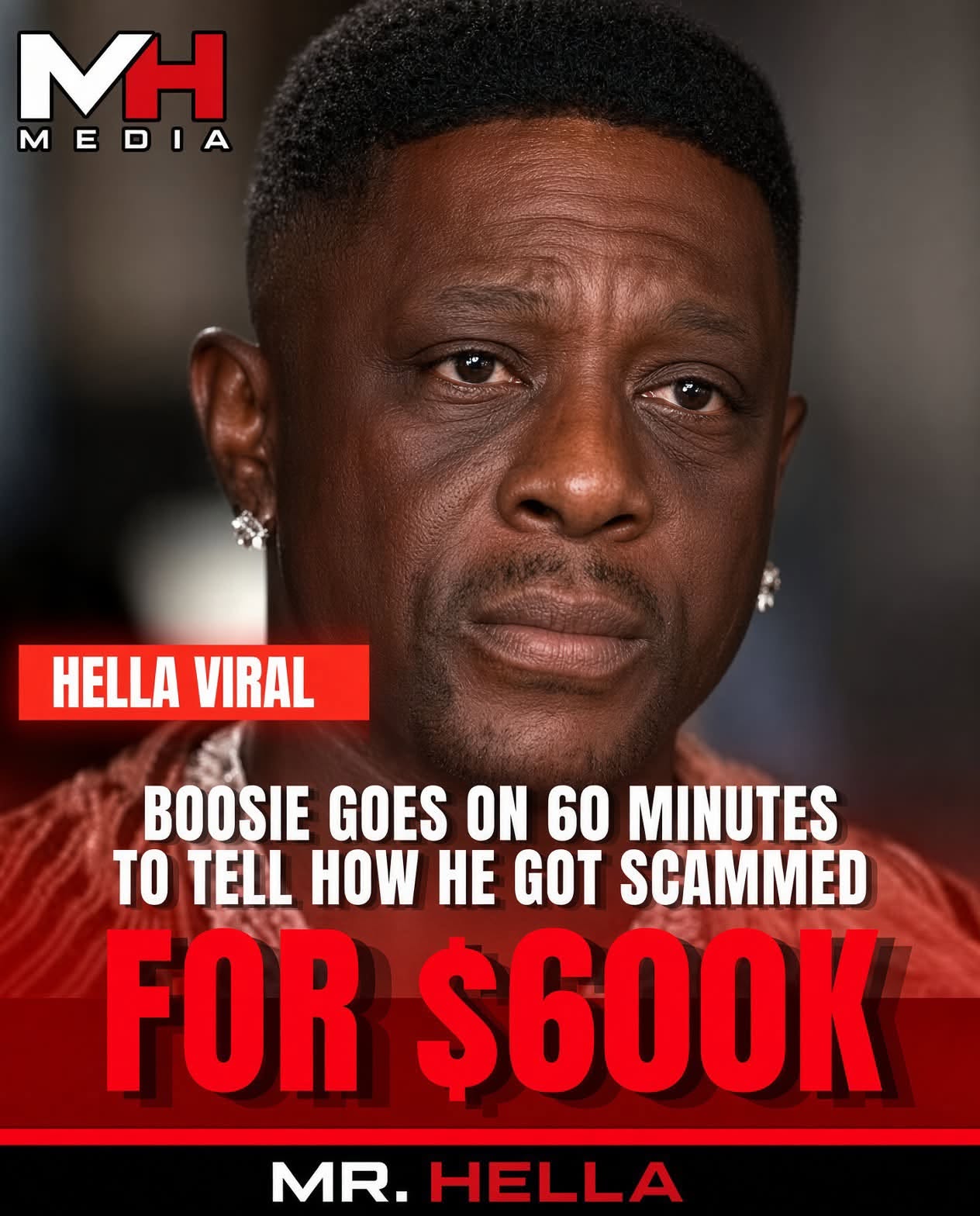
Boosie BadAzz is taking his fight over a failed presidential pardon attempt to one of the biggest news programs in America.
The Baton Rouge rapper is featured in a major 60 Minutes investigation airing Sunday, Sept. 13, as CBS examines the lucrative and largely behind-the-scenes business of lobbyists and political operatives charging convicted felons enormous sums of money to pursue presidential pardons.
The segment, titled “The Pardon Economy,” goes beyond Boosie's case.
CBS used hidden cameras to document how pardon brokers pitch prospective clients, what they claim they can do to get clemency requests in front of President Donald Trump and how much access to that process can cost.
For Boosie, whose legal name is Torrence Hatch Jr., the investigation is personal.
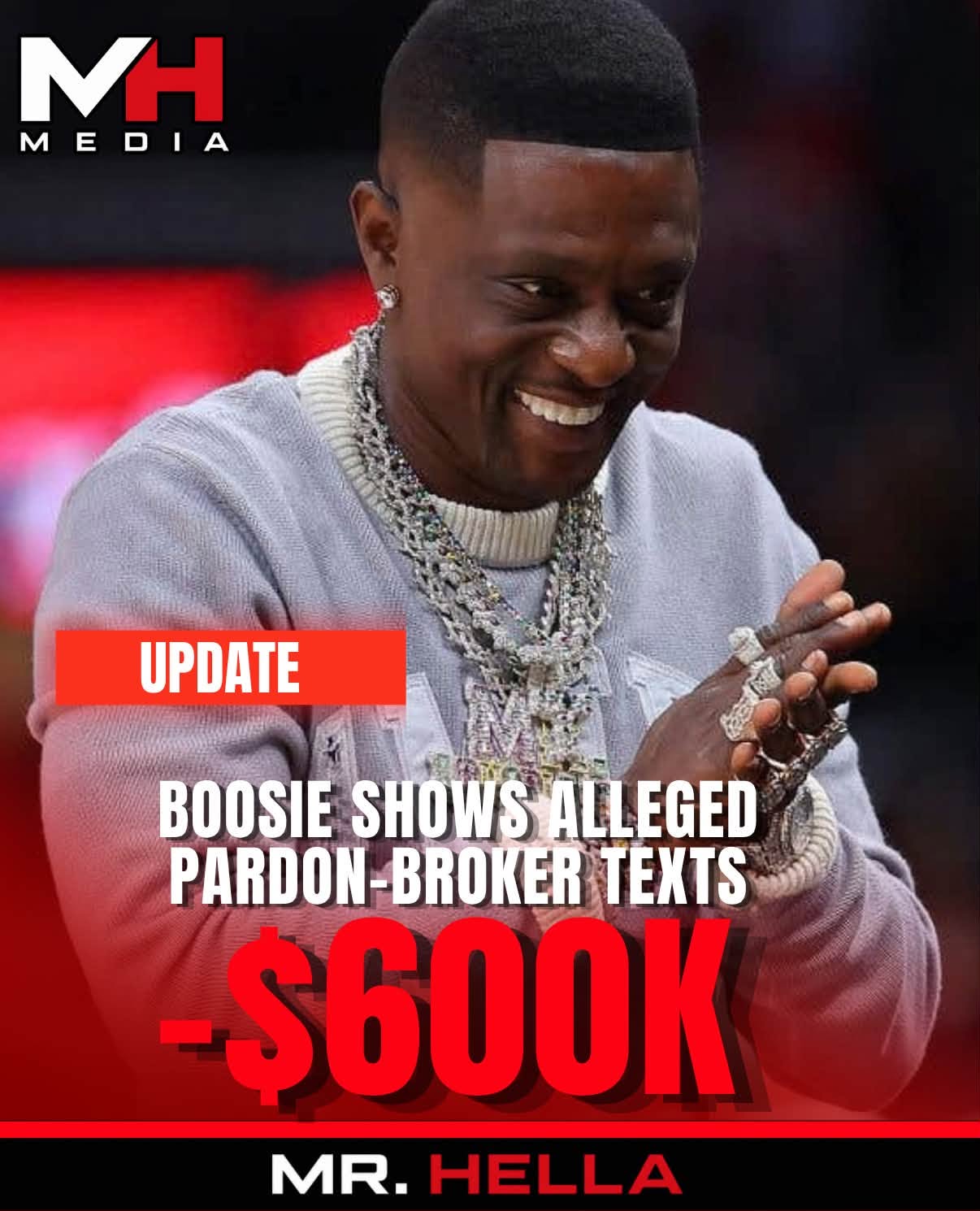
He says he paid $600,000 to political operatives Jack Burkman and Jacob Wohl after being led to believe they could help secure a presidential pardon in his federal gun case.
“This is what I was led to believe: If you come with this money, you will get a pardon,” Boosie told 60 Minutes correspondent Lesley Stahl.
He never received one.
Boosie Says He Paid $600,000
Boosie's involvement gives the investigation a high-profile example of just how expensive the pursuit of presidential clemency can become.
According to CBS, Burkman and Wohl made a pitch to Boosie after his federal gun conviction. Boosie says he paid the pair $600,000 upfront believing their political connections would help get his pardon request to the president.
CBS reviewed messages allegedly connected to the effort that referenced influential figures including conservative activist Laura Loomer, House Speaker Mike Johnson, Erika Kirk and White House aide Natalie Harp.
The people named in those messages denied involvement in Boosie's pardon effort, according to CBS. Burkman and Wohl have also disputed sending certain messages attributed to them.
Boosie told Stahl that he believed he was paying people who knew how to navigate the system.
“I just thought, I mean, ‘This is the way it's done,’” he said. “I'm paying these guys, you know? And they're gonna make it happen.”
It didn't.
President Trump has not pardoned Boosie.
The Money Is Now at the Center of a Lawsuit
Boosie's dispute did not end when the pardon failed to materialize.
CBS reports that his agreement with the brokers provided for half of the money to be returned if he did not receive clemency. Boosie is now suing as he attempts to recover money from the failed effort.
Burkman and Wohl dispute his position and have challenged the validity of the agreement, according to CBS.
The lawsuit means Boosie's story is more than an anecdote inside the 60 Minutes investigation.
It offers viewers a look at what can happen when a high-priced attempt to obtain political access doesn't produce the result a client expected.
CBS Goes Undercover
The broader investigation takes viewers inside a business that usually operates far away from public view.
CBS enlisted convicted felon Ammon Covino to pose as a prospective client while meeting with Burkman and Wohl at the Ritz-Carlton in Tysons Corner, Virginia.
The meeting was recorded using hidden cameras.
According to CBS, the brokers told Covino they could pursue a pardon for $300,000 and predicted that clemency could potentially come as early as October.
“With this particular White House, you have to put pressure on the president from all directions in a consistent way to force his hand,” Burkman told Covino during the recorded meeting.
What the brokers didn't know was that Covino was working with 60 Minutes.
After CBS informed Burkman and Wohl about the hidden-camera operation, the two agreed to sit down with the program and discuss their business, including how they determine their prices and use outside influencers while advocating for clients.
A Growing ‘Pardon Economy’
The investigation arrives amid increased scrutiny of how presidential clemency requests reach the White House.
The Constitution gives presidents broad authority to pardon federal offenses, and presidents are not required to follow the traditional Justice Department clemency process.
Lobbying for a pardon is also not inherently illegal. Registered lobbyists can advocate on behalf of clients seeking clemency and disclose those relationships and payments.
The controversy explored by 60 Minutes centers instead on the enormous fees, promises of political access and the increasingly prominent role of well-connected intermediaries in trying to place clemency requests before the president.
That distinction is important.
The investigation does not establish that paying a lobbyist means someone is purchasing a presidential pardon. Nor does it establish that the president or White House receives the money charged by outside brokers.
The White House told CBS that aide Natalie Harp had never interacted with Burkman or Wohl.
What CBS is exposing is the business that has developed around access to the pardon process—and the extraordinary amount of money some people are willing to spend for a chance at clemency.
For Boosie BadAzz, that price was $600,000.
He says he believed the people he hired could deliver a pardon.
They didn't.
Now his failed attempt has become part of a national 60 Minutes investigation into the people making money by promising convicted felons a path toward one of the most powerful acts a president can perform.

Comments