

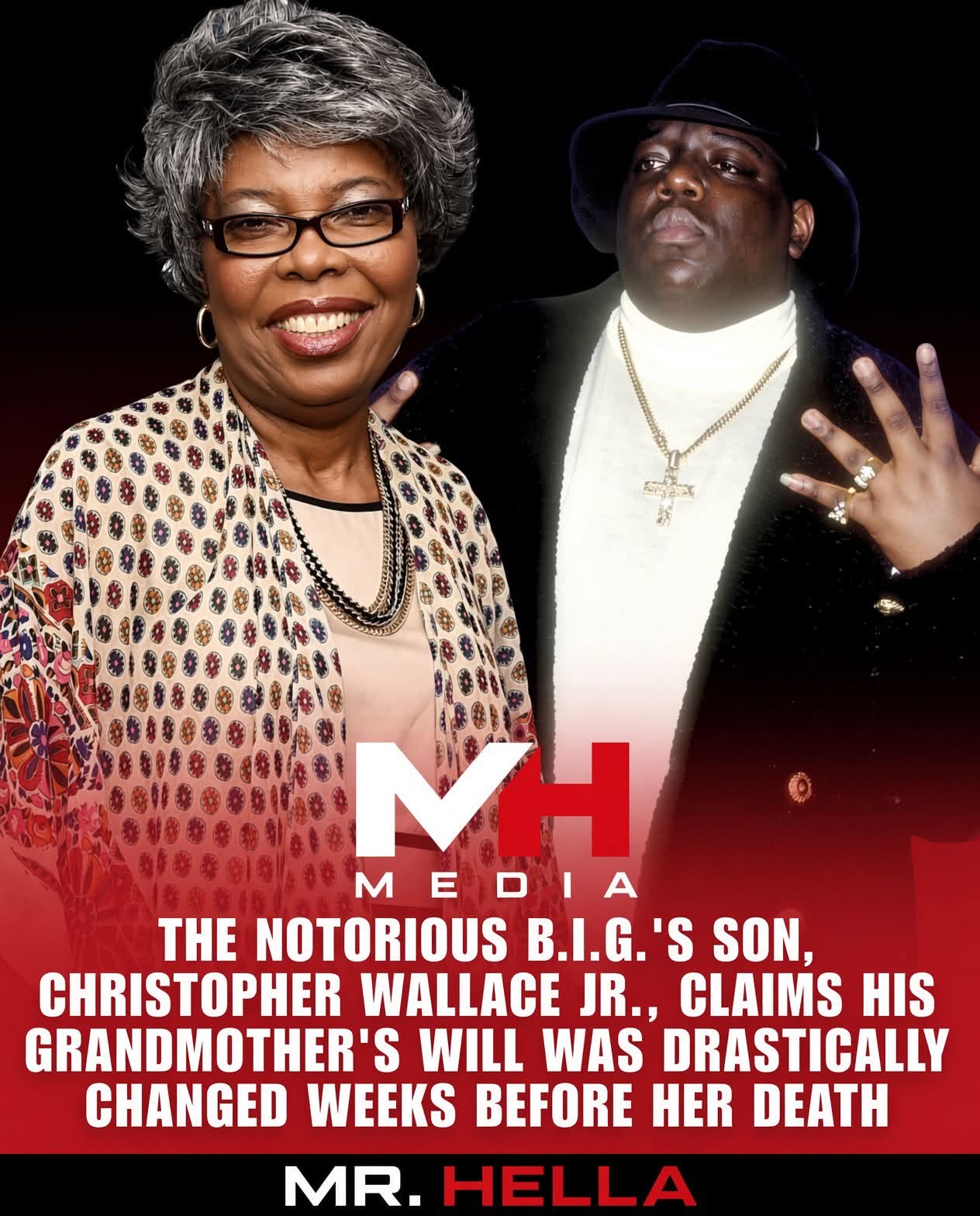
Christopher Wallace Jr. has asked a Pennsylvania court to throw out paperwork his grandmother signed on February 6, 2025. Voletta Wallace died fifteen days later, on February 21. The 2020 will and trust had named C.J., family friend Carol Sampson, and Wayne Barrow — Biggie’s former manager — as successor trustees and executors. The February 6 trust amendment and will codicil, in the Delaware Chancery recitation of the documents, removed C.J. and Sampson and left Barrow alone. C.J.’s filing says the signatures look facially inconsistent, that she was severely ill, bedridden, and heavily medicated, and that grandchildren were cut from the plan those pages created. He wants the codicil voided and Barrow out. Those are allegations in a petition. They are not a finding that anyone forged a dying woman’s name.
Voletta Wallace spent decades as the keeper of Christopher Wallace’s catalog and image after 1997. Foundations, a teacher’s spine, a public grief that outlasted most of the industry that ate her son. Estate fights after a matriarch dies are how families discover what the last two weeks of paper were for. Barrow has been in the business of that catalog a long time. In August 2026 the Delaware Court of Chancery, in a related LLC fight, treated the Voletta Wallace Revocable Trust as a permitted transferee of Notorious B.I.G., LLC and ruled in Barrow’s favor on that company-law piece. Pennsylvania is a different caption: capacity, signatures, who should sit in the executor’s chair. One court can bless a trust’s membership in an LLC while another still asks whether the amendment should exist.
What “facially inconsistent” is asking
It is asking a judge to look at ink and decide whether a sick woman signed what the notary stamped. Heavily medicated and bedridden is the capacity story C.J. is telling. People sign valid documents in hospice. People also get steered. The difference is evidence: medical records, witnesses in the room, a handwriting expert, the lawyer who brought the packet. TMZ-style inventories — jewelry, awards, a Jamaica property, a car — are how the public understands a will. The legal fight is who controls the machine that holds the publishing.
How to talk about this without a villain stamp
C.J. is Biggie’s son. He was a child when the first estate was already a war. Voletta was the adult who remained. Accusing a last-minute codicil is how a grandson says the last adult was no longer the author. Barrow saying he is following the paper is how a longtime manager says he was asked to finish the job. Both can believe themselves. Only one set of signatures can be the last valid set.
Do not turn Voletta into a plot device. She died in hospice care. The amendment is dated when she was dying. That timing is why the petition exists. It is also why courts demand more than timing. Fifteen days is suspicious to a family and normal to a trust lawyer who has done this a hundred times.
The catalog will keep earning while Pennsylvania decides. Delaware already moved a piece. C.J. wants the February 6 pages treated as if they did not happen. Until a judge writes, the executor of record is the man the codicil named. The grandmother is gone. The son’s name is still on the music. The grandson is in court. That is the succession fight Biggie never got to have. It arrived a generation late, on letterhead.


Comments