

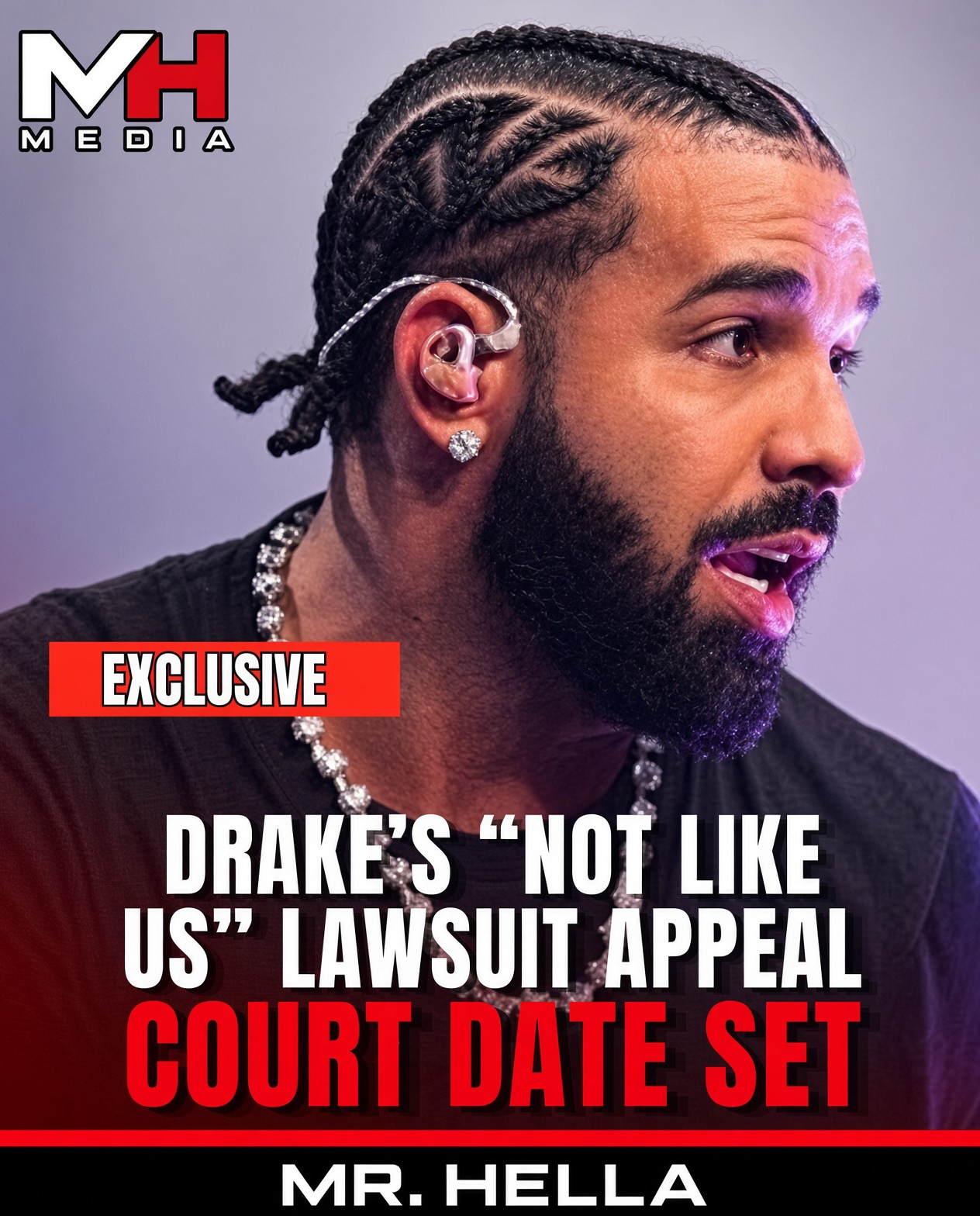
Drake isn’t finished fighting Universal Music Group over Kendrick Lamar’s “Not Like Us.”
More than a year after a federal judge dismissed his closely watched lawsuit against UMG, Drake will get another opportunity to challenge that decision when attorneys for both sides appear before the U.S. Court of Appeals for the Second Circuit.
The appeals court has scheduled oral arguments for December 4, 2026, marking the next major stage in a legal battle that grew directly out of Drake and Kendrick Lamar’s explosive 2024 rap feud.
Drake, whose legal name is Aubrey Drake Graham, is asking the appellate court to reverse the dismissal of his lawsuit and allow his claims against UMG to move forward.
UMG wants the dismissal affirmed.
The December hearing will give a panel of federal appellate judges an opportunity to question lawyers for both sides after months of written briefing over a central issue: whether the allegations contained in a rap diss track can constitute actionable defamation when viewed in the context of an escalating musical battle. (Complex)
Drake Sued UMG — Not Kendrick Lamar
One of the most important details surrounding the case has remained unchanged since it began.
Drake did not sue Kendrick Lamar.
He sued UMG Recordings, the music company connected to both artists, over UMG’s role in releasing and promoting Lamar’s “Not Like Us.”
Drake filed the federal lawsuit in January 2025, months after the diss track became the defining record of his highly publicized feud with Lamar.
The complaint alleged that UMG promoted and profited from a song containing accusations Drake says are false and defamatory, particularly lyrics portraying him as a pedophile and suggesting sexual misconduct involving minors.
Drake’s lawsuit also asserted claims involving alleged harassment and deceptive business practices.
UMG denied wrongdoing and moved to dismiss the case, arguing that the song had to be understood within its obvious context: two superstar rappers exchanging extreme insults and accusations during a highly public rap battle. (Pitchfork)
The Original Lawsuit Was Dismissed
In October 2025, U.S. District Judge Jeannette Vargas sided with UMG and dismissed Drake’s case.
The ruling focused heavily on context.
Rather than examining isolated words from “Not Like Us” as though they had appeared in a news report or factual statement, the court considered the environment in which Lamar released them.
By that point, Drake and Kendrick had been trading increasingly personal diss records, with both artists using insults, accusations, exaggeration and provocative language against each other.
Judge Vargas concluded that a reasonable listener familiar with that context would understand Lamar’s lyrics as part of the rhetorical warfare of a rap battle rather than as a presentation of objectively verifiable facts.
The court therefore found the challenged lyrics to be nonactionable opinion.
That decision effectively ended Drake’s case at the trial-court level before it could proceed to discovery or a jury trial. (Pitchfork)
But Drake appealed.
Drake Says the Judge Went Too Far
Drake’s attorneys argue that the district court’s reasoning creates a much broader problem.
In his opening appellate brief, Drake contends that the lower court effectively established an unprecedented rule insulating statements made in rap diss tracks from defamation claims simply because they appear within a musical feud.
His attorneys argue that the accusation at the center of “Not Like Us” is capable of being proven true or false and therefore should not automatically be treated as protected opinion.
Drake’s team also argues that the case should not have been resolved at such an early procedural stage.
Their position is that determining how an ordinary listener understood the allegations should have involved a fuller factual record rather than dismissal of the complaint before discovery.
“The court effectively created an unprecedented and overbroad categorical rule that statements in rap diss tracks can never constitute statements of fact,” Drake’s appeal argues. (Complex)
That characterization is disputed by UMG.
UMG Says There Is No Special Rule for Rap
UMG argues that the district judge did not create a blanket exemption for rap lyrics.
Instead, the company says the court applied ordinary New York defamation law, which requires potentially defamatory language to be examined in its complete context.
UMG’s appellate brief argues that context includes the forum, tone, surrounding circumstances and broader language used by the speaker.
Under that analysis, UMG says “Not Like Us” is unmistakably part of a diss-track exchange filled with insults, hyperbole and rhetorical attacks.
The company argues that Drake is attempting to remove individual lyrics from that setting and have them treated as literal factual assertions.
UMG wants the Second Circuit to leave the original dismissal intact. (Music Business Worldwide)
Drake Also Challenges How the Judge Reached Her Decision
The appeal isn’t limited to whether Kendrick’s lyrics should qualify as opinion or fact.
Drake’s lawyers have raised procedural objections to the way the district court handled UMG’s motion to dismiss.
His appellate filings argue that the court improperly relied on material outside his complaint, including Drake’s own “Taylor Made Freestyle,” while assessing the context surrounding the feud.
Drake’s team argues that the court weighed evidence and drew conclusions against him at a stage when judges generally must accept well-pleaded factual allegations in a complaint as true.
According to Drake, those alleged procedural errors provide another reason for the Second Circuit to reverse the ruling and return the case to the district court. (LegalClarity)
UMG disputes those arguments and maintains that the court was entitled to consider the broader context necessary to determine whether the challenged statements could legally support a defamation claim. (Music Business Worldwide)
Outside Groups Have Entered the Appeal
The implications of the case have also attracted attention outside Drake and UMG.
Multiple outside parties have filed amicus briefs — submissions from individuals or organizations that are not direct parties to the lawsuit but believe the court’s decision could affect broader legal or cultural issues.
The Floyd Abrams Institute for Freedom of Expression at Yale Law School and University of Florida law professor Lyrissa Lidsky submitted arguments supporting UMG.
Their brief raises an additional argument: that Drake invited or consented to the subject matter of Lamar’s response by publicly challenging Lamar during the feud to address rumors involving young women.
Other scholars have submitted arguments examining rap battles as a cultural form traditionally built around exaggeration, insults and competitive boasting.
Those briefs do not decide the case. They provide the appellate judges with additional legal and cultural arguments to consider. (Complex)
“Not Like Us” Became Much Bigger Than a Diss Track
The lawsuit emerged from one of the most consequential rap battles in recent memory.
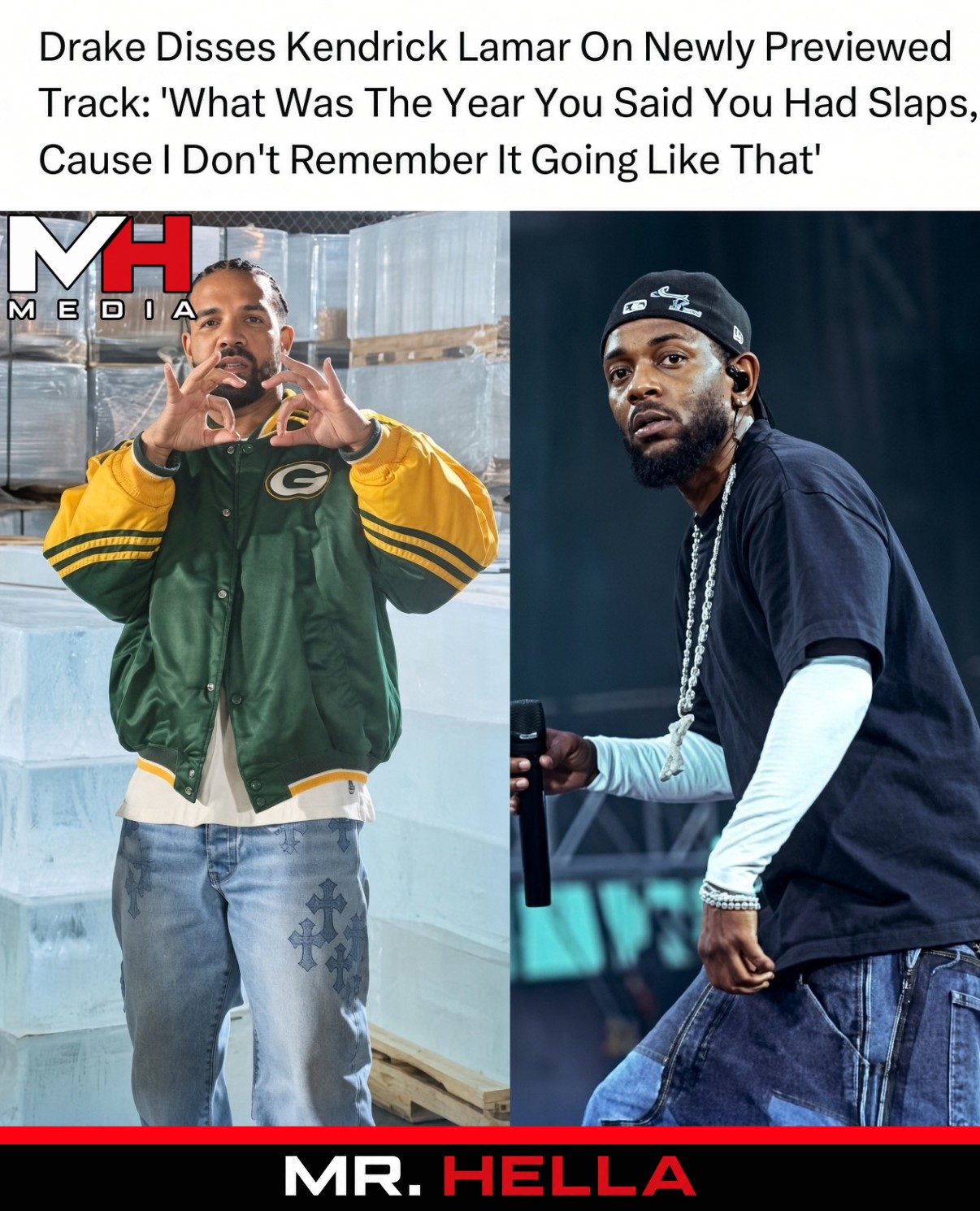
Drake and Kendrick Lamar’s long-simmering rivalry erupted publicly in 2024 after Lamar’s appearance on Future and Metro Boomin’s “Like That.”
The exchange quickly escalated.
Drake released records including “Push Ups,” “Taylor Made Freestyle,” “Family Matters” and “The Heart Part 6.”
Lamar responded with tracks including “Euphoria,” “6:16 in LA,” “Meet the Grahams” and eventually “Not Like Us.”
The latter became far more than another entry in the feud.
“Not Like Us” developed into a massive commercial hit and cultural phenomenon, with its hook and accusations against Drake becoming inseparable from the public perception of the battle.
That success eventually became central to Drake’s dispute with UMG because his lawsuit focused not only on the song’s content but on what he alleged was the company’s deliberate promotion of the record.
UMG has rejected Drake’s allegations of wrongdoing. (Pitchfork)
What Happens on December 4
Oral argument does not mean Drake’s original lawsuit has been reinstated.
The lawsuit remains dismissed unless and until the Second Circuit changes that result.
On December 4, lawyers representing Drake and UMG will appear before a panel of appellate judges and answer questions about the legal issues raised in their written briefs.
Unlike a trial, there will be no jury, witness testimony or presentation of new evidence.
Appellate arguments generally focus on whether the lower court correctly applied the law based on the record already before it.
The judges could question Drake’s lawyers about why Lamar’s lyrics should be treated as potentially factual despite the context of the rap battle.
They could question UMG about whether the district court went too far in resolving questions about meaning and context before discovery.
They could also explore the procedural issues raised by Drake concerning the materials considered by the district judge.
The judges do not necessarily have to announce their decision from the bench.
A written decision can arrive later.
Three Broad Paths From Here
The Second Circuit could affirm the district court’s decision, leaving the dismissal in place.
It could reverse the ruling in whole or in part, potentially sending Drake’s claims back to the district court for additional proceedings.
The appellate court could also resolve particular legal questions differently while still leaving some or all of the dismissal intact.
A reversal would not mean Drake had proven that UMG defamed him.
It would mean the case — or portions of it — survived the earlier dismissal and could continue through additional litigation.
Likewise, an appellate ruling affirming the dismissal would represent a legal victory for UMG in this case, not a judicial determination about every factual allegation exchanged between Drake and Kendrick during their feud.
The Battle Has Moved From Records to Appellate Court
More than two years after “Not Like Us” transformed Drake and Kendrick Lamar’s feud, the song remains the subject of a federal legal battle.
The original lawsuit is gone for now.
But Drake’s appeal is very much alive.
His attorneys have completed their written arguments. UMG has responded. Outside legal and academic groups have weighed in. And the Second Circuit has now put the case on its calendar.
On December 4, lawyers for Drake and Universal Music Group will go before a federal appellate panel to argue over whether the lawsuit should remain dismissed — or whether Drake should get another opportunity to pursue his claims over one of the most consequential diss tracks in hip-hop history.
Comments