


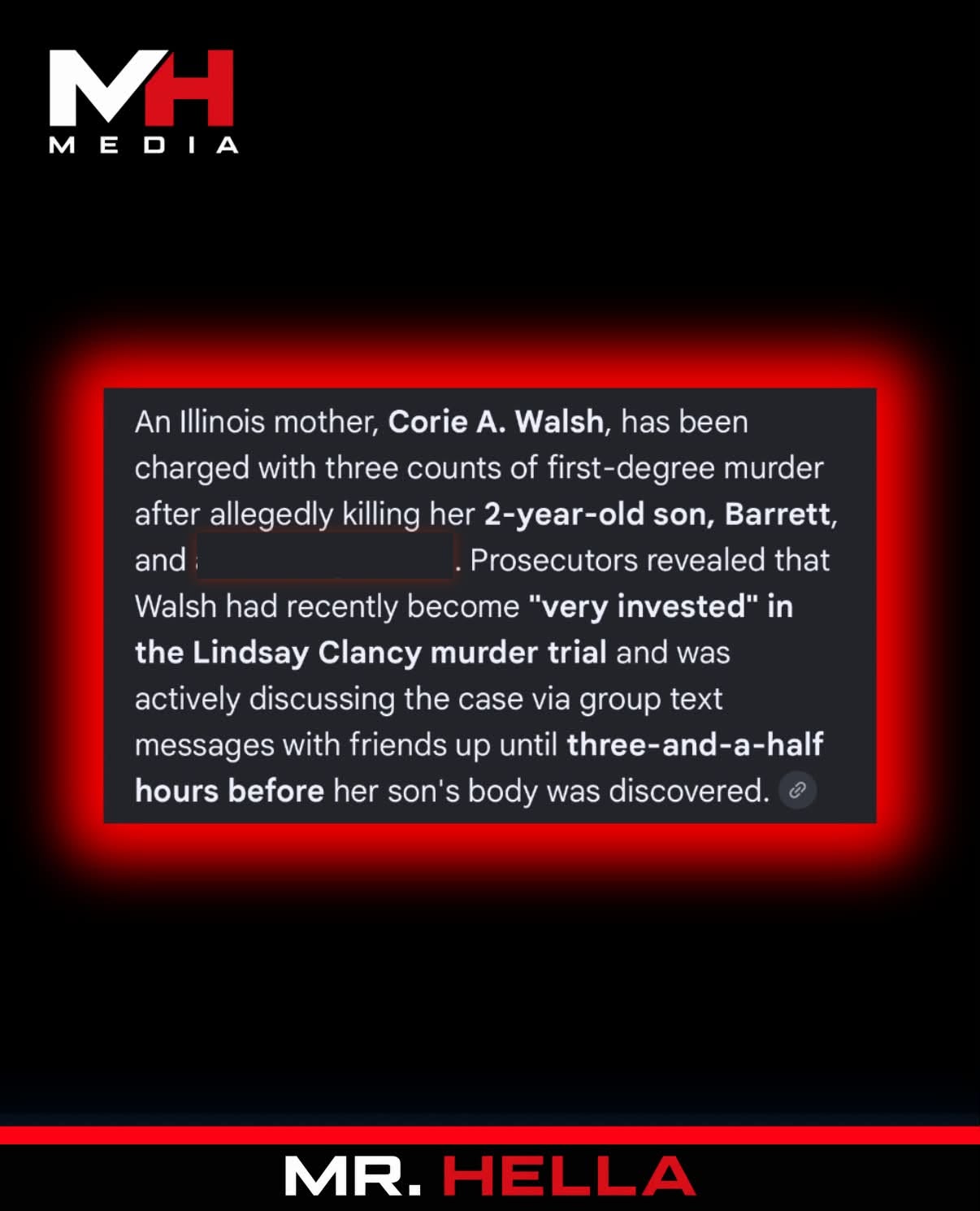
An Illinois mother charged with murdering her 2-year-old son had become intensely focused on the Lindsay Clancy murder trial and was discussing the Massachusetts case with friends just hours before her child was found dead, according to prosecutors.
Corie A. Walsh, 40, of Frankfort, Illinois, faces three counts of first-degree murder in the Sept. 1 death of her son, Barrett Walsh. The 2-year-old was discovered in the basement of the family's suburban Chicago home shortly before 4 p.m., according to court records.
The timing has drawn national attention because prosecutors say witnesses described Walsh as having recently become “very invested” in the murder trial of Lindsay Clancy, the Massachusetts mother accused of killing her three young children.
According to a petition filed by prosecutors seeking to keep Walsh detained before trial, she had been “actively discussing” the Clancy case in a group text with friends until approximately 12:30 p.m. on Sept. 1—roughly three and a half hours before Barrett was discovered.
At the time, Clancy's trial was still underway in Massachusetts, with jurors deliberating over whether she should be held criminally responsible for the January 2023 deaths of her children.
Neighbor Discovers Barrett in Basement
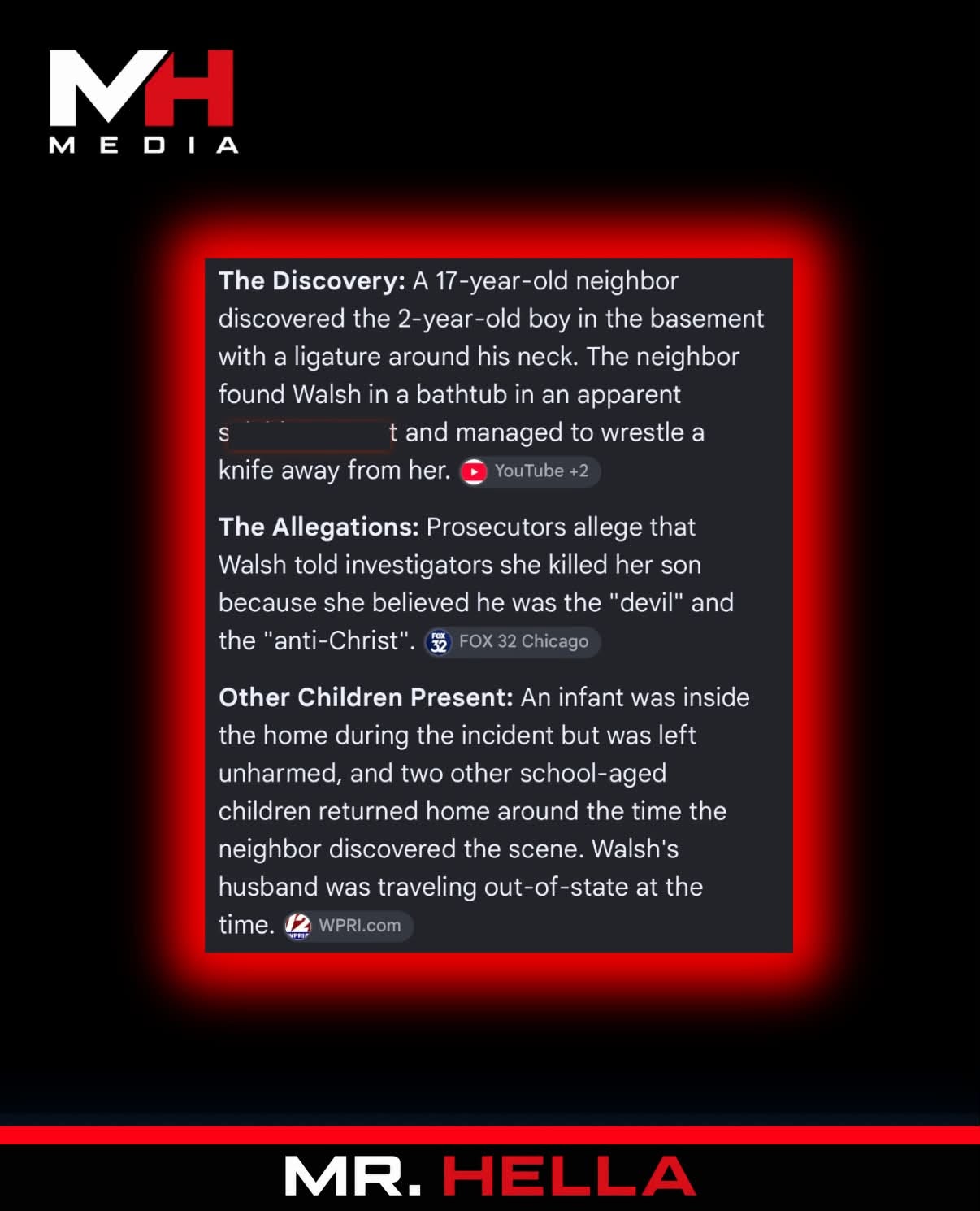
Police were called to the Walsh family's Frankfort home shortly before 4 p.m. after a neighbor discovered Barrett in the basement.
According to prosecutors, the neighbor found the toddler hanging from a rafter and attempted CPR while emergency personnel were called. Barrett was transported to a hospital, where he was pronounced dead.
An autopsy later determined that Barrett died from asphyxia caused by ligature compression of the neck.
The neighbor then went upstairs and found Walsh in a bathtub with injuries that authorities said were self-inflicted. Prosecutors allege the neighbor took a knife away from Walsh after finding her attempting to harm herself.
Walsh survived her injuries.
An infant was also inside the home at the time and was unharmed. Walsh's other two school-aged children arrived home around the time the scene was discovered, according to court records. Her husband was out of town.
Prosecutors Detail Disturbing Statements
Court documents also describe statements Walsh allegedly made following her son's death.
Prosecutors say Walsh told investigators that she killed Barrett because she believed the child was the “devil” and the “anti-Christ.”
Those statements are allegations contained in the prosecution's account of the case and have not yet been tested at trial.
Walsh's defense has already indicated that her mental condition will be central to the case.
Her attorney, Andrea Lyon, has said Walsh was experiencing a psychotic episode at the time of Barrett's death. Lyon, a veteran criminal-defense attorney who previously worked on Casey Anthony's defense team, has described what happened as a tragedy for the entire Walsh family.
Walsh has been ordered held pending further proceedings.
The Lindsay Clancy Connection
The revelation that Walsh had been closely following the Clancy case has become one of the most unusual aspects of the prosecution's timeline.
Clancy's trial had attracted national attention because there was no dispute that she killed her children—Cora, 5, Dawson, 3, and Callan, 8 months—but her attorneys argued that severe postpartum mental illness left her without criminal responsibility.
Prosecutors in that case argued that Clancy understood her actions and knew they were wrong.
On Sept. 1, while the Massachusetts jury was still attempting to resolve those competing arguments, Walsh was discussing the case with friends in Illinois, according to prosecutors. Approximately three and a half hours after those messages stopped, police were responding to her home.
Three days later, the Clancy trial itself ended in a mistrial after jurors said they were hopelessly deadlocked.
Despite the striking timing, there is currently no evidence establishing that the Clancy case caused Walsh to allegedly kill her son or that Barrett's death was an attempt to imitate the Massachusetts case. Authorities have disclosed Walsh's interest in the trial as part of the evidence and timeline surrounding the case, but have not publicly established a causal connection between the two.
Lyon has pushed back against the suggestion that Barrett's death was a copycat crime, instead maintaining that Walsh was experiencing a severe mental-health episode.
That distinction will be important as the Illinois case moves forward.
For now, what prosecutors have placed on the record is narrower but still extraordinary: hours before her 2-year-old son was found dead, Walsh was communicating with friends about another nationally watched case involving a mother accused of killing her children.
Whether that interest ultimately has any legal significance in Walsh's case remains unresolved.


Comments