

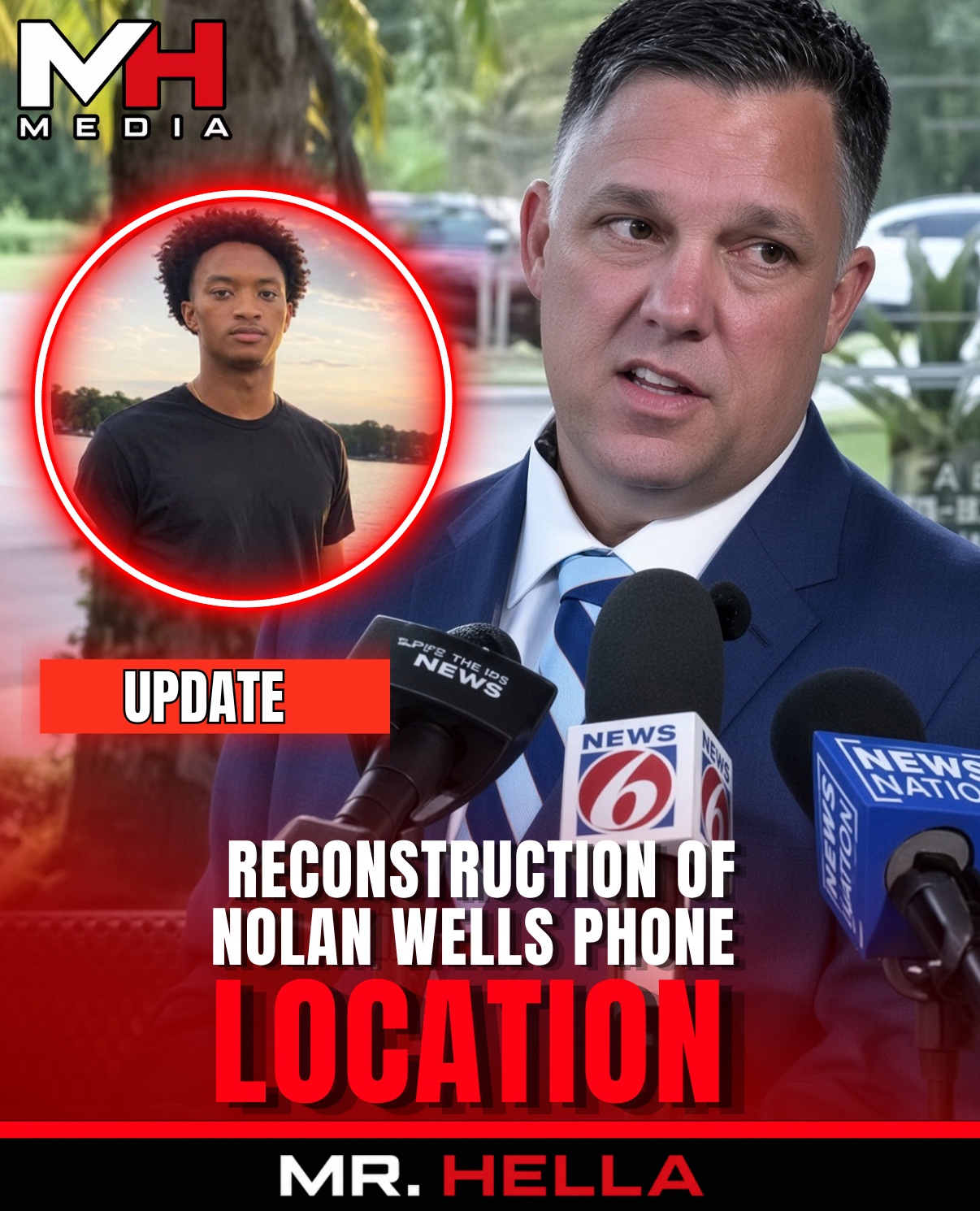
A newly released forensic reconstruction of Nolan Wells’ cellphone traces the device from the morning of his July 4 trip to Horn Island through its return to the Mississippi mainland — providing one of the most detailed timelines yet of what happened to a key piece of evidence after Wells was last known to have used it.
The reconstruction was presented Thursday, September 24, by Andrew Garrett, CEO of Garrett Discovery, the digital-forensics firm retained by Wells’ family. Garrett’s team analyzed GPS information, device activity, social-media data, calls and other digital records recovered from the 18-year-old’s phone.
The reconstruction indicates Wells was actively using the phone during the trip to Horn Island and last personally interacted with it at approximately 2:18 p.m.
Hours later, the phone left Horn Island.
It traveled across the water, reached a mainland boat ramp, moved by land to a residence and remained there until Wells’ parents ultimately recovered it at approximately 3 a.m.
Wells did not make that journey.
His body was found two days later near Horn Island.
That difference is crucial to understanding what the reconstruction does — and does not — establish. The GPS data tracks the location of Wells’ phone. After his last confirmed interaction with the device, it cannot by itself establish where Wells was or who possessed the phone. (WDSU)
The Reconstruction Begins Early July 4
Garrett’s team created a visual timeline by combining location information with other activity recovered from the device.
According to the reconstruction, Wells’ phone was at a McDonald’s at approximately 8:24 a.m. on July 4.
By approximately 8:37 a.m., the device had arrived at another location described publicly only as another person’s home. Investigators deliberately withheld names and residential addresses from the public presentation to protect the privacy of people connected to the investigation.
The phone was active during portions of that morning.
Garrett said Wells primarily communicated through Snapchat and Instagram rather than conventional text messaging, meaning reconstructing his activity required considerably more than simply reviewing his SMS history.
His team ultimately recovered more than one million digital artifacts from the device.
The reconstruction then shows the phone moving toward the water as the group prepared for its Fourth of July outing. (The NC Beat)
Phone Boards a Boat Around 9:31 A.M.
At approximately 9:31 a.m., the location data indicates the phone boarded a boat.
Wells was with the group at that point.
Garrett said Snapchat messages and other activity continued while the group traveled by boat.
Between approximately 10:30 and 10:54 a.m., the phone was moving across the water. The reconstruction synchronizes that movement with communications recovered from the device.
At approximately 11:18 a.m., the phone arrived at Horn Island.
The device remained there for several hours. (WDSU)
Horn Island, part of Mississippi’s Gulf Islands National Seashore, was crowded with Fourth of July visitors that day. Wells had traveled there with friends for what was supposed to be a holiday boating trip.
He would never return home.
Wells Was Still Using His Phone on Horn Island
The forensic analysis provides something particularly important: evidence of when Wells himself was still interacting with the device.
Garrett said the phone showed the type of activity expected from Wells personally using it.
That included Face ID authentication, application activity and communications.
At approximately 2:17 p.m., the phone was unlocked and application activity resumed.
At approximately 2:18 p.m., Wells last interacted with the device, according to Garrett’s analysis.
“That is when Nolan was last using his phone,” Garrett said during the presentation.
The phone was then locked.
Garrett’s team calculated that Wells was on a boat when that final interaction occurred. (The NC Beat)
That timestamp is significant.
It gives investigators a digital reference point for the last time the forensic team says it could associate activity on the device with Wells himself.
It does not establish that 2:18 p.m. was when Wells died.
It does not establish that something happened to him immediately afterward.
And it does not establish that Wells never physically possessed the phone again.
What it establishes, according to Garrett’s analysis, is that approximately 2:18 p.m. was the last identified point at which Wells personally used it.
Witness Reported Seeing Wells Slip From a Boat Later That Afternoon
The phone timeline overlaps with another piece of evidence discussed during the investigation.
According to the Jackson County grand jury report, a witness said Wells was seen slipping awkwardly from the side of a boat at approximately 3:30 p.m.
The witness could not determine whether Wells struck his head during the fall.
According to the grand jury, Wells continued socializing afterward and did not appear visibly injured.
That testimony has received renewed attention because the state autopsy later documented two contusions on the back of Wells’ head.
The precise source of those injuries remains undetermined.
Neither the grand jury nor the medical examiners established that the reported fall caused them. (AP News)
A Boat Problem Appears in the Digital Timeline
At approximately 4:35 or 4:36 p.m., the reconstruction records another important event.
A call was made to Sea Tow concerning a problem with the bilge system on one of the boats.
Garrett referenced a communication saying, “Captain, pull the bilge.”
That event helps anchor the phone’s location against something independently connected to the boating trip.
From there, the reconstruction continues following the device.
But as the afternoon becomes evening, the distinction between Nolan Wells and Nolan Wells’ phone becomes increasingly important.
The phone continued moving.
Wells did not return with it. (The NC Beat)
The Phone Leaves Horn Island
The reconstruction shows the device eventually leaving the Horn Island area by water.
Garrett said the GPS information was sufficiently detailed to show the phone’s movement, speed and direction.
The phone first traveled to a dock.
WDSU reports the reconstruction placed it at that dock at approximately 6:30 p.m.
It then left the dock and traveled toward a boat ramp. (WDSU)
During his presentation, Garrett emphasized that the movement across water meant the phone was being transported by some type of watercraft.
His team also reviewed video from another boat moving in the same direction at approximately the same speed, along with photographs and other material from the day.
The publicly released reconstruction intentionally blurred identifying information associated with residences and individuals.
According to Garrett, prosecutors received the unredacted version.
Phone Reaches the Mainland Boat Ramp Around 7 P.M.
The phone eventually reached a mainland boat ramp.
Reporting on Garrett’s presentation places the device at the ramp at approximately 7 p.m., with the boat clearing the area by approximately 7:25 p.m.
Another account of the reconstruction places the phone at the ramp at approximately 7:24 p.m.
The difference appears to reflect whether the timeline is referring to arrival, presence at the ramp or departure.
The larger point is clear:
By roughly 7 to 7:25 p.m. on July 4, Nolan Wells’ phone had returned from the water to the mainland.
Nolan had not. (USA Herald - The People’s Voice)
That is one of the most important moments in the reconstructed timeline.
It establishes a physical separation between Wells and his device.
What the GPS data alone cannot establish is precisely when that separation occurred or who possessed the phone while it traveled.
The Phone Then Travels by Land
Once the device left the boat ramp, its movement changed from water travel to land travel.
The reconstruction shows it being transported to a residence.
According to WDSU’s account of Garrett’s presentation, the phone traveled to the home at approximately 8:51 p.m. (WDSU)
The public reconstruction does not identify the residence.
Garrett said identifying information was intentionally removed from the version shown publicly.
The unredacted information, according to his presentation, was supplied to the district attorney.
The device remained away from Wells.
His parents eventually recovered it at approximately 3 a.m.
By then, Wells had been reported missing. (The NC Beat)
Nolan’s Phone Continued Receiving Messages Without Nolan
One unusual feature of smartphone forensics is that activity on a device can continue even when its owner is no longer using it.
That happened here.
Wells participated heavily in group conversations, particularly through Snapchat.
Other people in those conversations continued communicating after Wells disappeared.
Those messages could continue syncing to his phone even though Wells was no longer participating.
Garrett said the extraction therefore contains communications extending beyond Wells’ last personal use of the device.
That distinction is essential.
A message appearing on Wells’ phone after 2:18 p.m. does not necessarily mean Wells opened it, sent it or was physically holding the phone.
Some of the activity reflects other participants continuing conversations that were automatically synchronized to his device. (USA Herald - The People’s Voice)
Forensic Team Says Snapchat Data Was Deleted
The phone analysis produced another potentially significant finding.
Garrett said his team determined that material was deleted from Wells’ phone during the period between Wells’ last use of the device and his parents recovering it.
The deleted material involved Snapchat.
Garrett said deleting the information required user action.
But he repeatedly stopped short of assigning responsibility.
The forensic analysis, as publicly described, does not establish who deleted the material.
It does not establish why it was deleted.
And it does not establish that the deletions were intended to conceal evidence related to Wells’ death. (The NC Beat)
Garrett made that limitation explicit.
His job, he said, was to analyze the digital evidence rather than speculate about someone’s intent.
That is especially important given the intense online speculation surrounding Wells’ death.
A deletion can be forensic evidence that an action occurred without proving the motive behind that action.
Why Snapchat Was Difficult to Reconstruct
Recovering Wells’ communications wasn’t straightforward.
Garrett said approximately 90% of Wells’ communications took place through Snapchat and Instagram.
The version of Snapchat installed on his phone was newer than what two commonly used forensic programs could automatically process.
That forced Garrett Discovery to manually work through portions of the data.
The process took approximately a week.
Investigators reconstructed Snapchat material, device activity and other digital artifacts to establish the broader timeline. (WDSU)
Crump’s team has described the resulting Snapchat material as hundreds of pages.
The grand jury materials identify a 21-page final phone report and a 261-page Snapchat report — 282 pages combined — in addition to a separate preliminary report. (USA Herald - The People’s Voice)
The Phone Was Forensically Copied Before Being Turned Over
The handling of the device itself has also become part of the dispute between Wells’ family and local authorities.
According to the family’s attorneys, Wells’ parents wanted their own expert involved in examining the phone.
Garrett Discovery ultimately created a forensic image of the device before the physical phone was surrendered.
Garrett said the extraction was extensive and took roughly a day or longer to complete.
The purpose of a forensic image is different from an ordinary phone backup. It preserves a much broader collection of information that can include application artifacts, system activity, location information, cached material and deleted data that would not necessarily be visible to someone simply opening the phone.
The family’s attorneys say prosecutors were informed about the extraction process and ultimately received the reports and underlying evidence.
The district attorney and the family have publicly disputed aspects of how the phone examination was coordinated, but Garrett said the state’s forensic laboratory uses the same principal forensic tools available to his team. (The NC Beat)
Grand Jury Already Considered the Phone’s Return Without Nolan
The fact that Wells’ phone returned to the mainland without him was not hidden from the Jackson County grand jury.
The grand jury specifically addressed it.
According to its findings, Wells was not the only person whose cellphone returned to the mainland while its owner remained elsewhere.
The panel concluded that people visiting Horn Island sometimes moved between boats or left personal belongings with other people, and it did not find the circumstances surrounding Wells’ phone sufficient to establish criminal conduct. (AP News)
After hearing testimony from 43 witnesses and reviewing extensive records, the grand jury unanimously declined to indict anyone.
It found no credible evidence that Wells’ friends or others involved in the trip committed a crime against him and no credible evidence that his death was racially motivated.
The grand jury also concluded that the circumstances surrounding the location and condition of Wells’ body were consistent with drowning. (AP News)
But that conclusion did not resolve every question.
Phone Reconstruction Does Not Prove What Happened to Nolan
The newly public GPS reconstruction is compelling because it allows people to visualize the movement of a physical object connected to Wells during the final hours of his life.
But the evidence has limits.
It does not show Nolan traveling back to the mainland.
It shows his phone traveling back.
It does not identify who possessed the phone at every point after Wells stopped using it.
It does not determine precisely when Wells became separated from the device.
It does not establish Wells’ time of death.
It does not establish whether Wells intentionally remained on Horn Island.
And it does not establish that another person harmed him.
The reconstruction answers questions about the device.
It does not, by itself, answer what happened to its owner.
That distinction is particularly important because the grand jury found no evidence warranting criminal charges. (AP News)
Nolan Was Found Two Days Later
While Wells’ phone was back on the mainland by the evening of July 4, Wells remained missing.
His mother reported him missing later that night.
A search followed.
Two days later, on July 6, Wells’ body was discovered in the water near Horn Island. (AP News)
The medical evidence has not produced a definitive explanation for his death.
The Mississippi state medical examiner classified both the cause and manner of death as undetermined.
An independent forensic pathologist retained by Wells’ family reached the same classification.
The grand jury found the circumstances consistent with drowning and said accidental drowning could not be excluded, but neither medical examiner formally certified drowning as Wells’ cause of death. (AP News)
That uncertainty is one reason the cellphone timeline has become so important to his family.
Autopsy Findings Add Another Layer of Questions
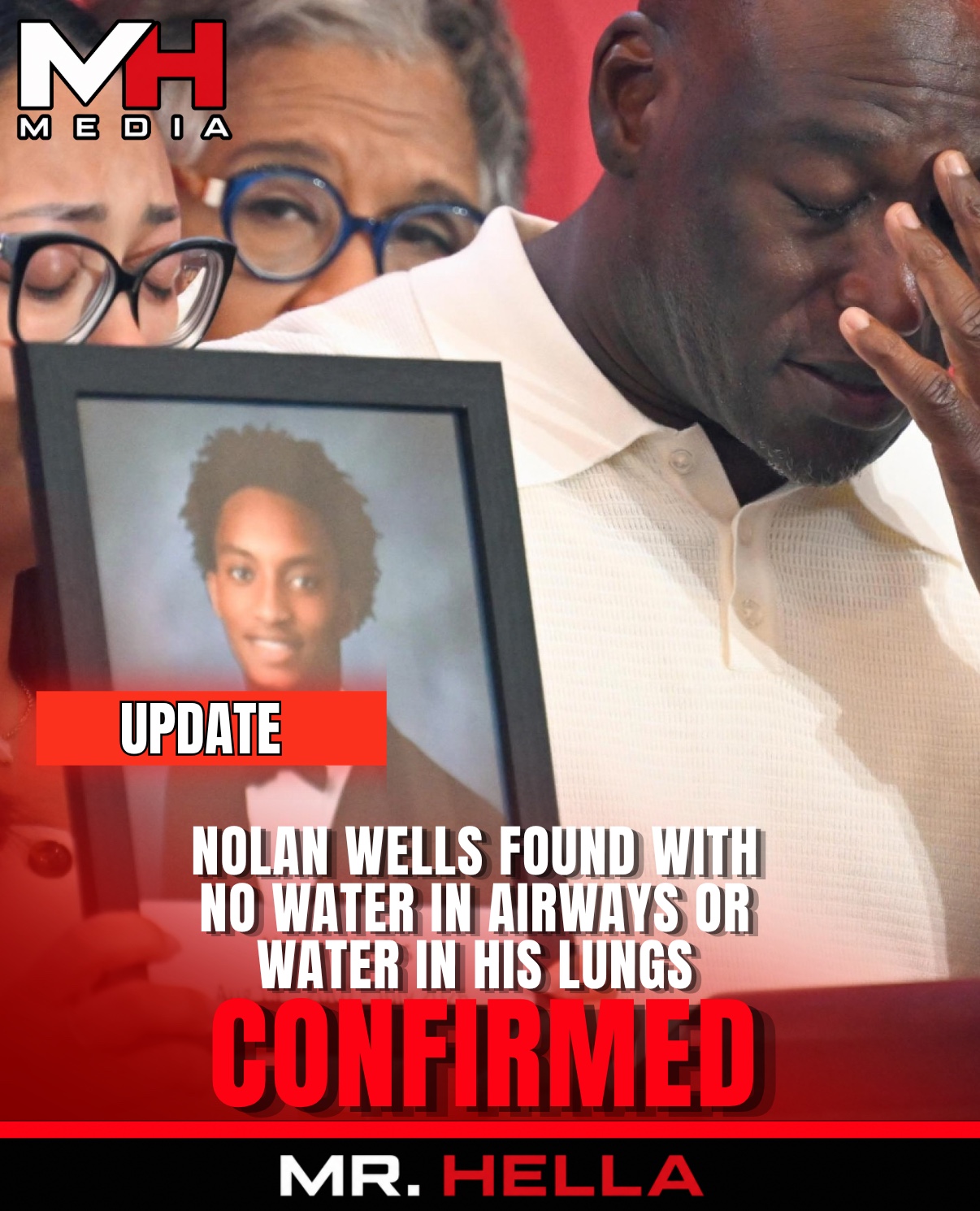
The phone reconstruction was released alongside new details from Wells’ state autopsy.
The state report documented no fluid or debris in his airways and an empty stomach, according to the material presented Thursday.
Wells’ family’s attorneys summarized those findings as no water in his lungs, throat or stomach and argued they raise questions about a drowning explanation.
The report also documented two contusions on the back of Wells’ head.
Those findings do not establish homicide, nor do they medically rule out drowning by themselves.
The official cause and manner remain undetermined. (USA Herald - The People’s Voice)
Combined with the phone reconstruction, however, the information gives the family additional material to examine as it continues challenging whether the investigation fully explains what happened.
The Most Important Timeline
Based on Garrett Discovery’s public reconstruction, the major cellphone movements on July 4 can be summarized this way:
8:24 a.m. — Wells’ phone is at McDonald’s.
8:37 a.m. — The device arrives at another residence.
9:31 a.m. — The phone boards a boat.
11:18 a.m. — The device arrives at Horn Island.
2:17 p.m. — The phone is unlocked and application activity resumes.
Approximately 2:18 p.m. — Garrett identifies this as Wells’ last personal use of the phone.
Approximately 4:35 p.m. — A Sea Tow call appears in the timeline concerning a boat bilge problem.
Approximately 6:30 p.m. — The phone reaches a dock.
Roughly 7 to 7:25 p.m. — The phone reaches and then clears a mainland boat ramp.
Approximately 8:51 p.m. — The device travels to a residence.
Approximately 3 a.m. — Wells’ parents recover the phone. (The NC Beat)
The times provide a reconstruction of the device’s journey.
Only the earlier portion can be confidently connected to Wells himself.
The Gap Remains
The central mystery begins after approximately 2:18 p.m.
Before that point, forensic investigators say they can see Wells using his phone.
Afterward, they can see the phone moving.
What they cannot do from GPS alone is place Nolan Wells alongside it.
By that evening, his device was back on the mainland.
Nolan wasn’t.
His body would not be discovered until two days later.
The grand jury has already determined that the evidence it reviewed did not justify criminal charges and found no credible evidence of foul play or racial motivation. Prosecutors have said the matter can be revisited if credible new evidence emerges. (AP News)
Wells’ family, meanwhile, continues to seek a more complete explanation.
The newly released phone reconstruction does not prove what happened to their son.
What it does is put timestamps and geographic movement around one of the case’s most persistent questions:
How did Nolan Wells’ cellphone make it off Horn Island while Nolan Wells did not?


Comments