

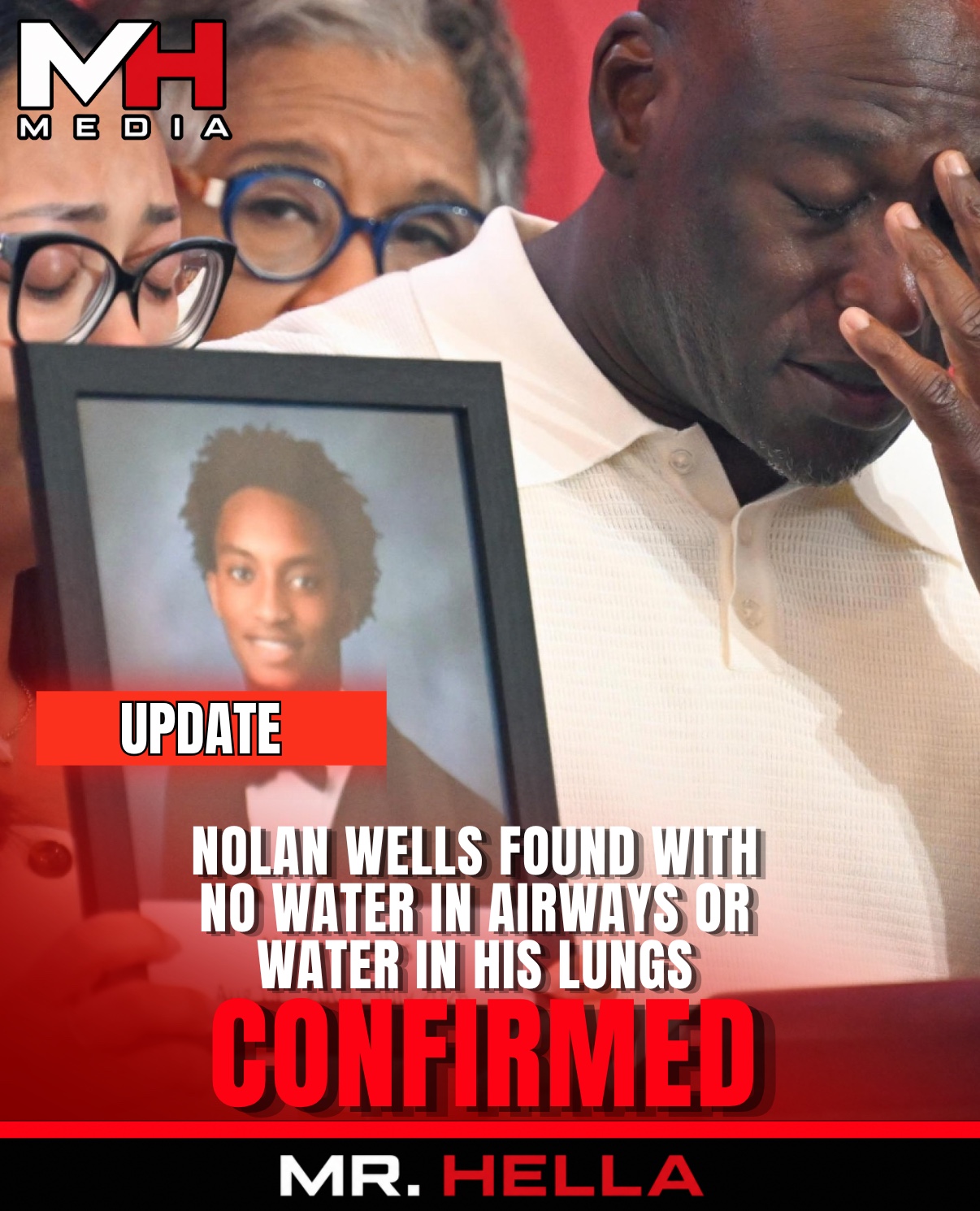
Newly released details from Nolan Wells’ official autopsy are raising fresh questions about what happened to the 18-year-old before his body was discovered off Mississippi’s Horn Island — particularly after his family’s attorneys revealed that the state medical examiner documented no fluid or debris in his airways and an empty stomach.
The findings were publicly discussed Thursday, September 24, by attorneys representing Wells’ family, just days after a Jackson County grand jury declined to indict anyone in connection with his death.
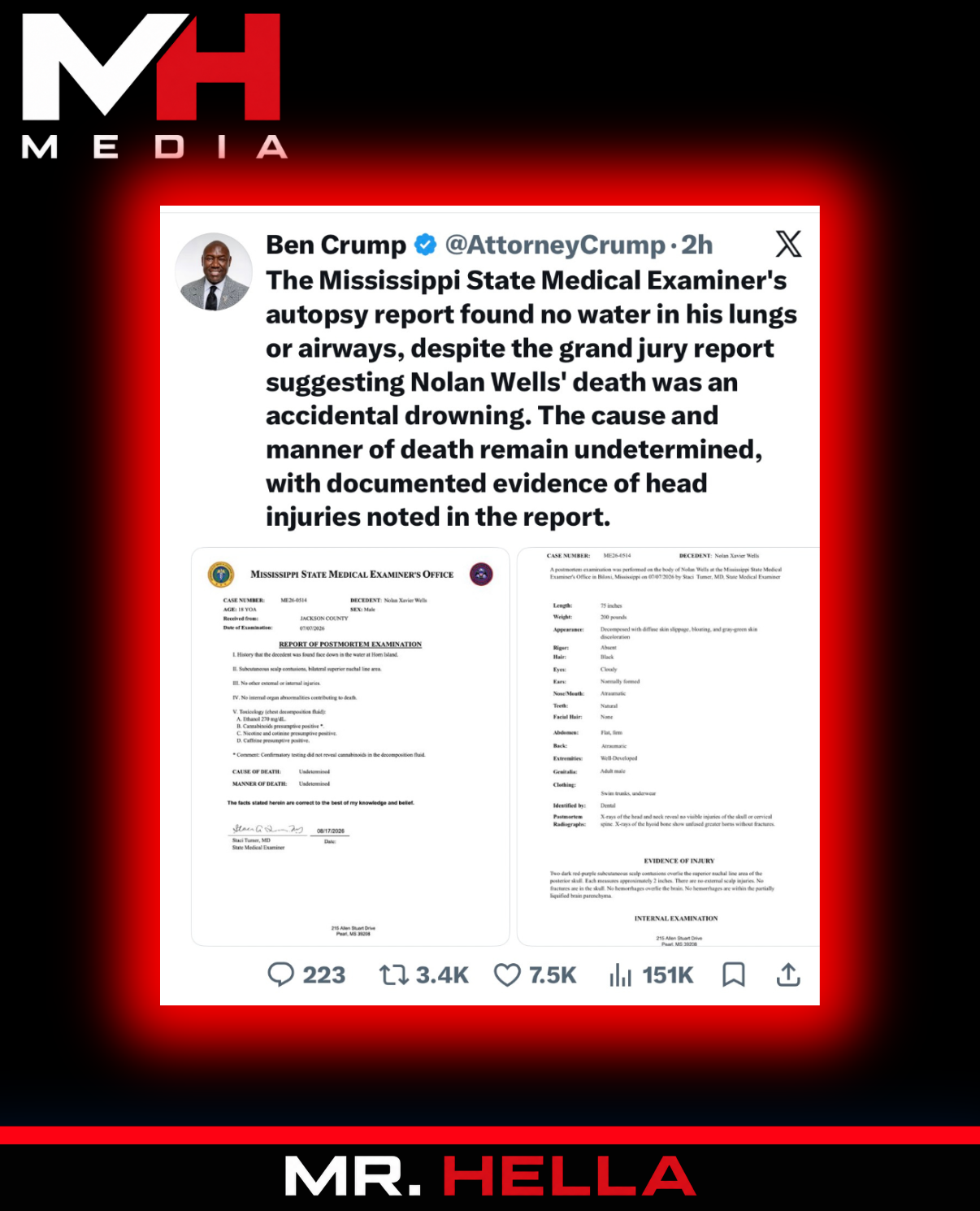
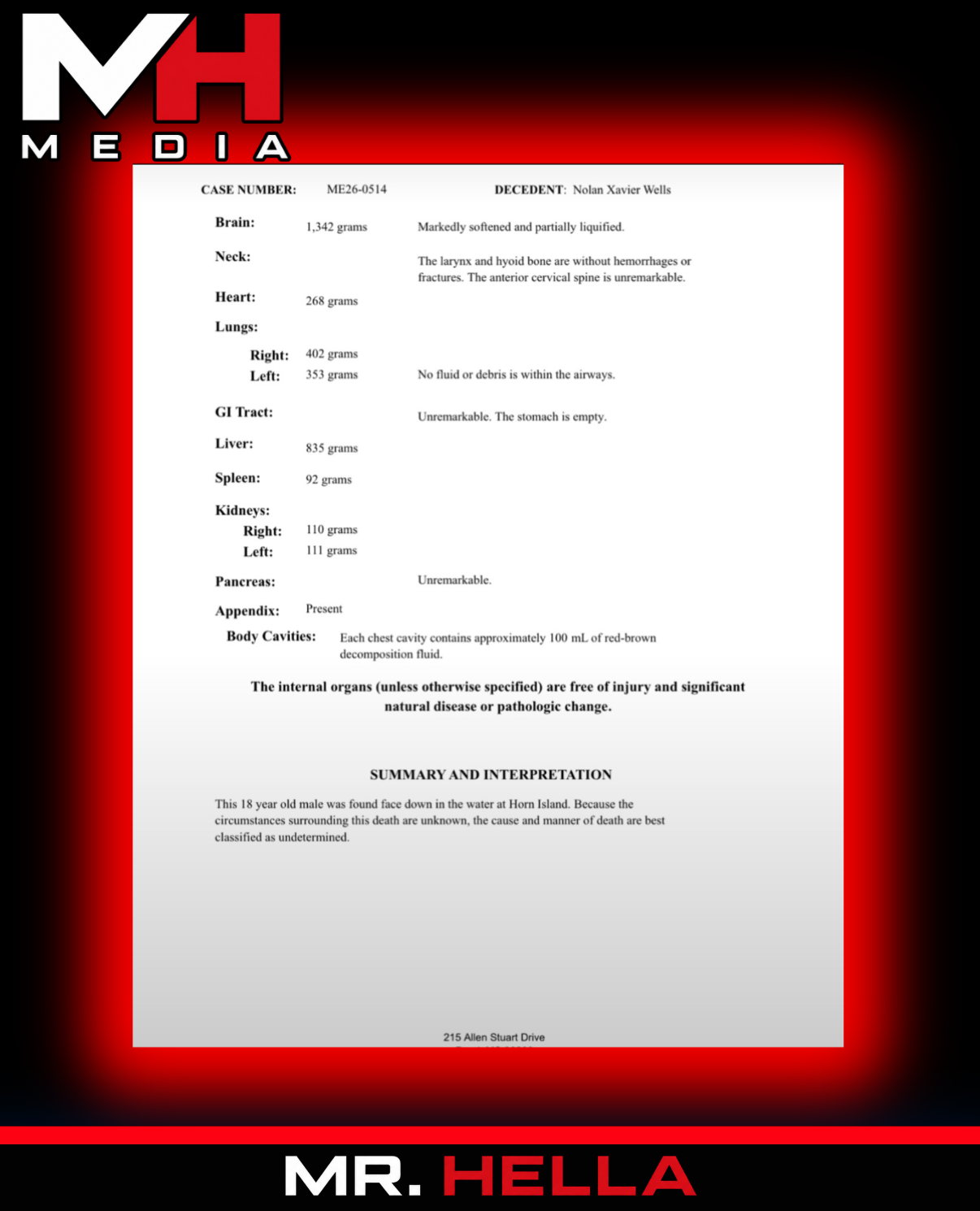
Attorney Liza Park, who is working with civil rights attorney Ben Crump and Wells’ family, highlighted language from the Mississippi State Medical Examiner’s autopsy report indicating there was no fluid or debris in Wells’ airways. The gastrointestinal tract was described as unremarkable, and his stomach was empty.
Park summarized the findings during the press conference by saying there was “no water in the stomach,” “no water in the lungs” and “no water in the throat.”
The distinction is important: those are the legal team’s descriptions of the medical findings. The underlying autopsy language specifically documents no fluid or debris in the airways and an empty stomach.
Neither the state medical examiner nor the independent forensic pathologist hired by Wells’ family has officially determined that Wells drowned.
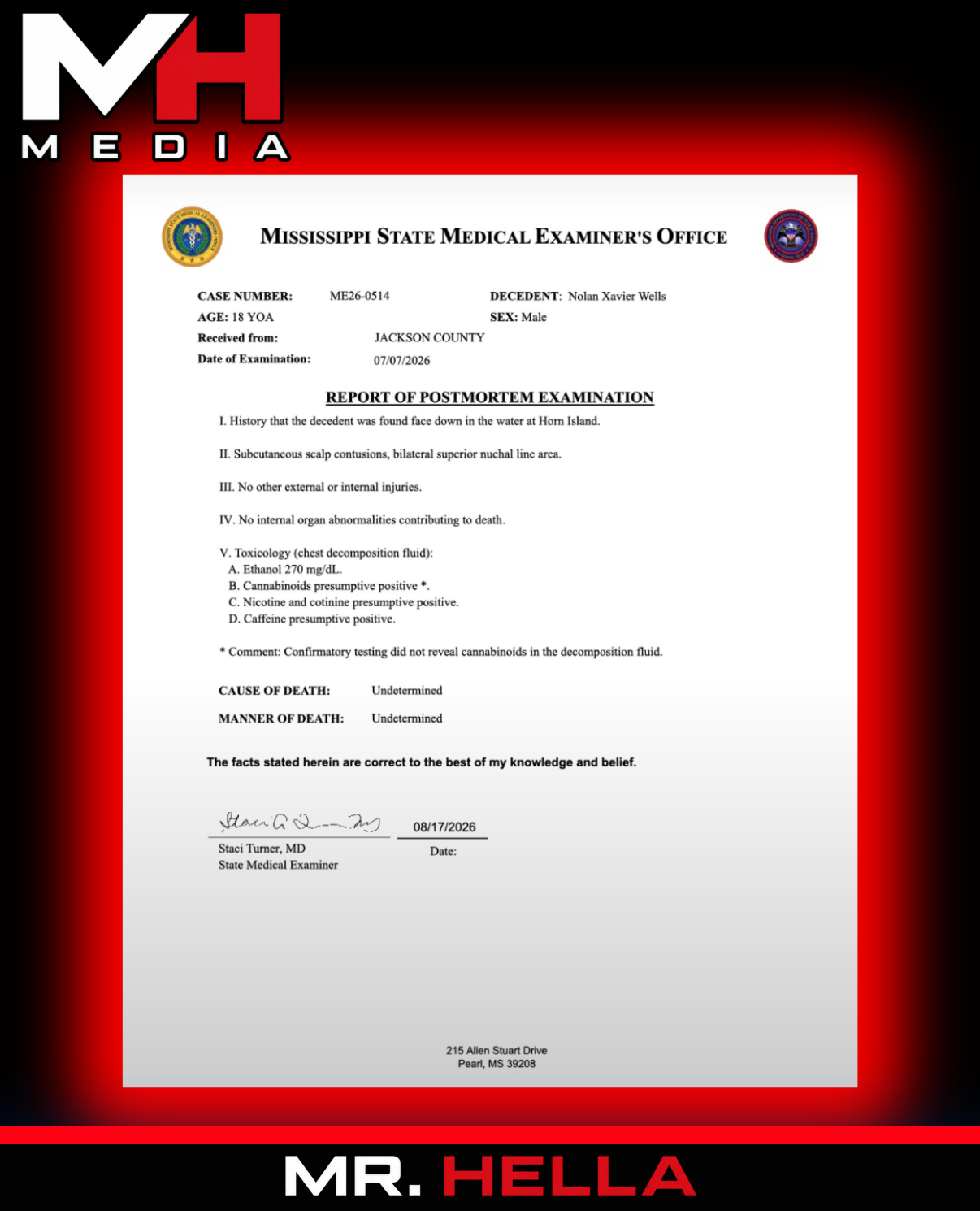
Both ultimately classified his cause and manner of death as undetermined. (ABC News)
That puts the medical findings at the center of an increasingly complicated dispute over what happened to Wells during a Fourth of July trip that ended with the teenager missing and, two days later, dead.
Family Questions How Drowning Became the Leading Explanation
Wells traveled with friends to Horn Island, a barrier island off Mississippi’s Gulf Coast, for the July 4 holiday.
He was last seen alive on the island that afternoon.
The group eventually returned to the mainland without him.
Wells’ mother reported him missing later that night, triggering a search. His body was discovered two days later, on July 6, in the water near Horn Island. (CBS News)
From early in the investigation, drowning emerged as a possible explanation.
But the medical evidence has never produced an official determination that drowning was the cause of death.
The state medical examiner listed both cause and manner as undetermined.
Dr. Roger Mitchell Jr., the independent forensic pathologist retained by Wells’ family, reached essentially the same conclusion after conducting a second examination.
Mitchell has said the available evidence did not establish what condition Wells was in before entering the water, whether he entered voluntarily or involuntarily, whether he was conscious and what ultimately caused him to drown if drowning did occur. (Mississippi Today)
That uncertainty is now receiving renewed attention because of what the state autopsy reportedly did — and did not — find.
State Autopsy Describes No Fluid or Debris in Airways
During Thursday’s press conference, Park walked through portions of the official state autopsy.
According to the report, Wells’ airways contained no fluid or debris. His stomach was empty.
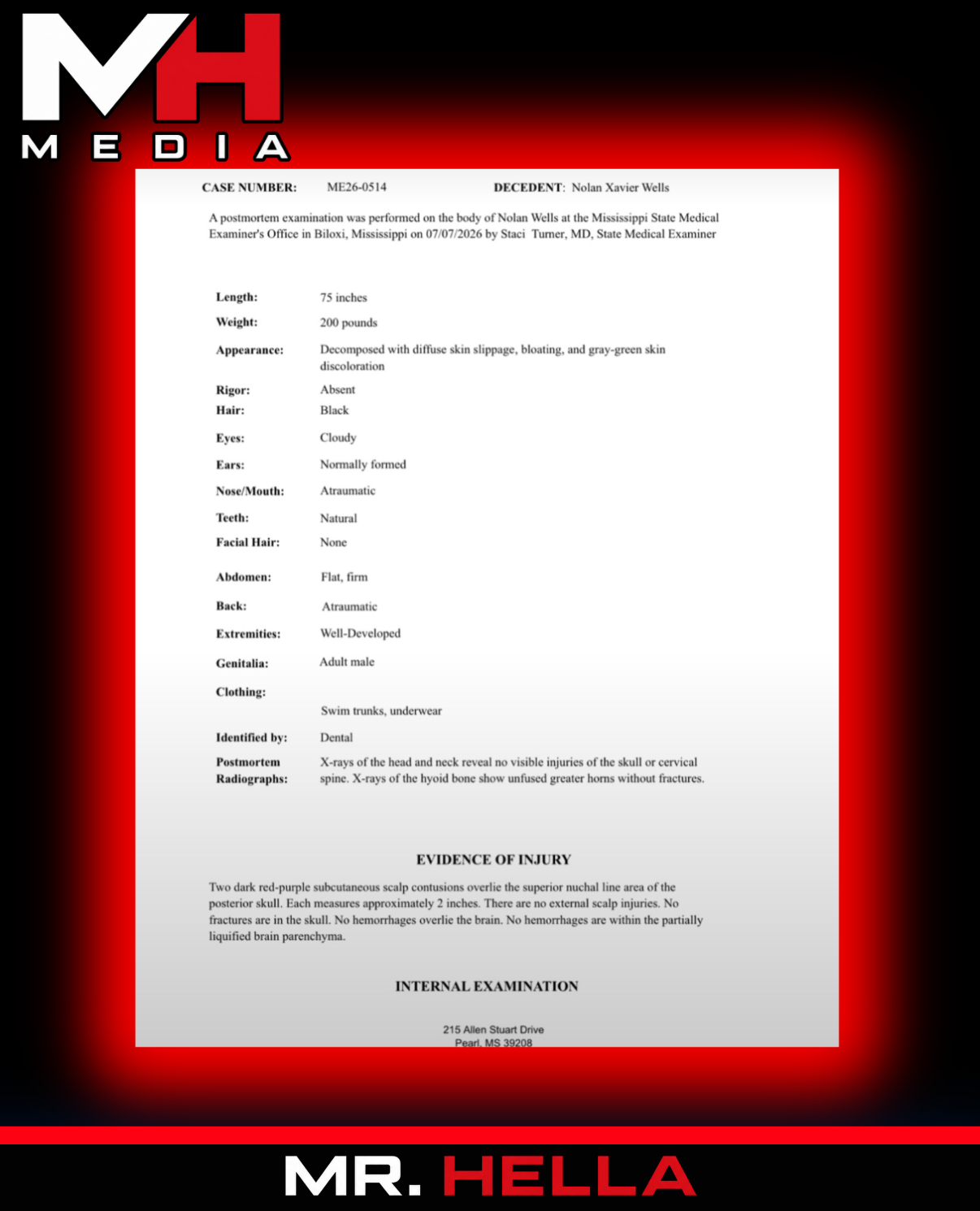
The report also described his larynx and hyoid bone as being without hemorrhages or fractures and found no internal organ abnormalities that contributed to his death. (https://www.live5news.com)
Those findings prompted Wells’ family and attorneys to question how confidently his death can be characterized as drowning.
But they do not, by themselves, establish that drowning was impossible.
Drowning is a complex medical diagnosis and the absence of water in certain areas of the body does not automatically exclude it. That is one reason the precise conclusion of the medical examiners matters more than a single finding from the report.
And in Wells’ case, the official medical conclusion remains unchanged:
Undetermined.
The state medical examiner did not officially certify drowning as Wells’ cause of death. (ABC News)
Grand Jury Reached a Different Kind of Conclusion
The medical uncertainty stands alongside a separate conclusion reached this week by a Jackson County grand jury.
After reviewing the investigation, the grand jury unanimously declined to indict anyone in Wells’ death.
The panel found no credible evidence that anyone involved in the July 4 trip committed a crime against Wells and no evidence establishing that his death was racially motivated.
The grand jury also said the position, condition, location and timing of the discovery of Wells’ body were consistent with drowning.
That is not the same thing as a medical examiner formally determining that drowning caused his death.
The grand jury specifically acknowledged that both the state medical examiner and the family’s independent forensic pathologist classified the cause and manner of death as undetermined. (AP News)
That difference has become one of the family’s central questions.
How, they ask, can drowning be treated as the most likely scenario when neither medical examination definitively reached that conclusion?
Crump has continued to argue that unanswered questions warrant further investigation.
Two Contusions Were Found on the Back of Wells’ Head
The state autopsy also documented injuries to Wells.
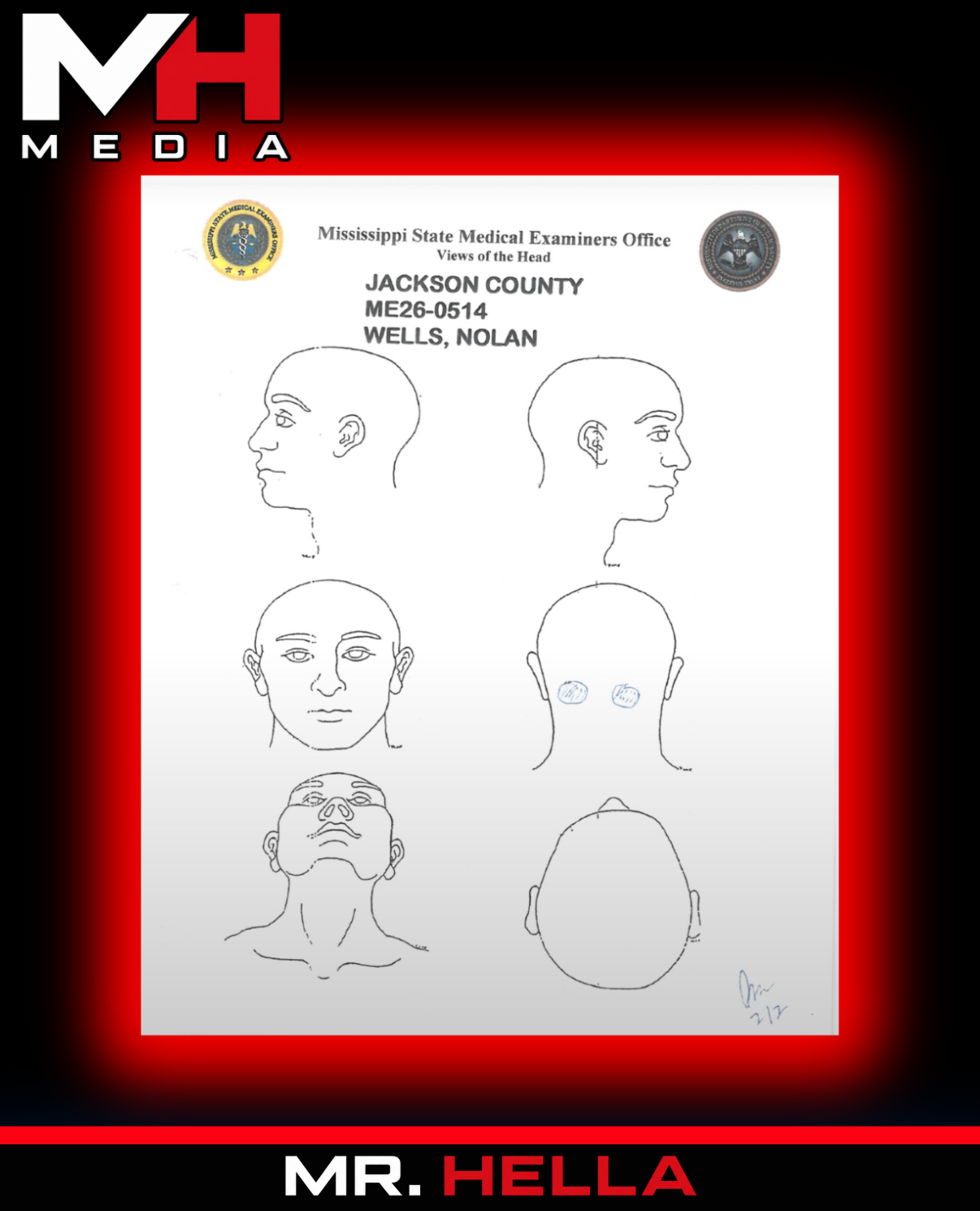
According to reporting on the newly released report, the medical examiner identified two dark red-purple subcutaneous scalp contusions on the back of Wells’ head, each measuring approximately two inches. (WKMG)
The bruises have been another major focus for his family.
The grand jury was aware of the head injuries and addressed them in its findings.
According to the grand jury report, a witness testified that Wells was seen slipping awkwardly from the side of a boat around the time he was last seen. The witness could not say whether Wells hit his head during the fall.
The report said Wells continued socializing afterward and did not appear injured.
The grand jury could not definitively determine what caused the bruising.
It also found no evidence that Wells was involved in a physical altercation or argument on July 4 and concluded there was no fatal injury or organic disease identified on his body. (ABC News)
That means the bruises are documented.
What caused them remains unresolved.
And there is no medical finding establishing that the head injuries killed Wells.
Independent Autopsy Also Raised Questions About the Injuries
The independent examination conducted for Wells’ family had previously identified blunt-force injuries involving the back of his head and other areas of his body.
Mitchell ultimately concluded that there were still too many unanswered questions to determine a cause and manner of death.
His examination also faced a significant limitation.
Because the state autopsy had already been conducted before Mitchell examined Wells, some organs and anatomical structures were no longer available to him in their original condition.
That limited his ability to independently evaluate certain findings that could potentially be relevant to drowning.
Mitchell has therefore stopped short of declaring either that Wells drowned or that drowning was ruled out.
His conclusion remained undetermined. (Mississippi Today)
Wells’ Cellphone Is Now Raising New Questions, Too
The autopsy was not the only major development announced Thursday.
A private digital forensic examination commissioned by Wells’ family also recovered a substantial amount of information from his cellphone.
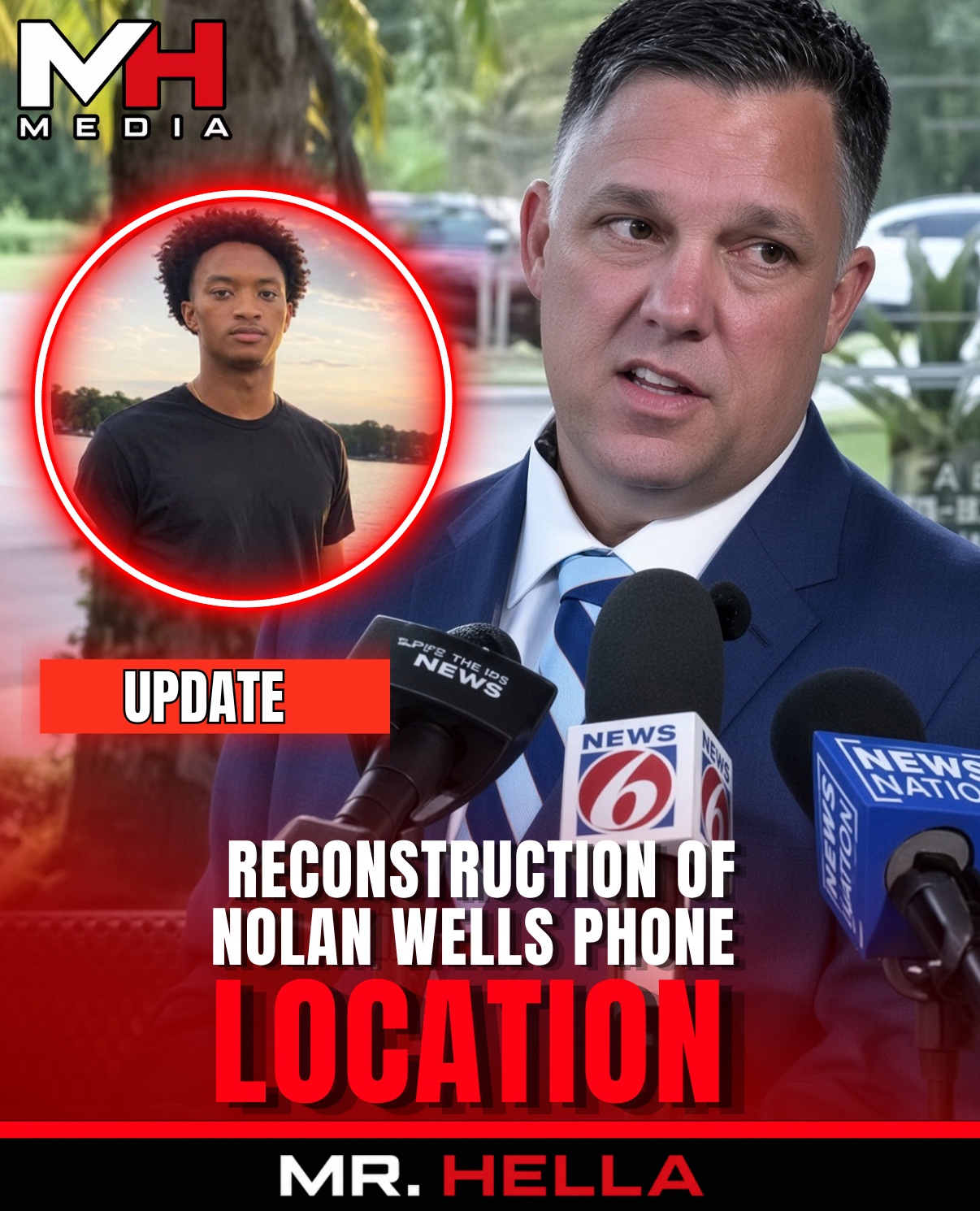
Andrew Garrett, CEO of Garrett Discovery, said his team recovered more than one million digital artifacts from the device, including information involving Snapchat, Instagram, GPS records, phone activity and Apple Health data.
Garrett said his team also recovered 282 pages of deleted Snapchat messages involving Wells’ friend groups.
Most significantly, Garrett said data had been deleted from the phone after Wells last had possession of it.
According to Garrett, deleting that information required a user action. (WKMG)
That finding does not establish who deleted the information, why it was deleted or whether the deleted material had anything to do with Wells’ death.
Those questions remain unresolved.
There is also an apparent tension between the family’s forensic team’s findings and the grand jury report.
The grand jury said its forensic examination found no evidence that Wells’ cellphone had been tampered with. (iHeart)
The family’s expert, however, says data was deleted after Wells last possessed the device.
Those statements will likely receive additional scrutiny as the family continues seeking further investigation.
Phone Reportedly Recorded Activity Back on the Mainland
Another cellphone finding could prove important to reconstructing the timeline.
Garrett said Wells’ phone recorded movement on the mainland after the group returned from Horn Island.
That is significant because Wells himself did not return with the group.
His phone did.
The grand jury addressed the circumstances surrounding Wells’ cellphone, saying it was not unusual for people visiting Horn Island to leave personal items on other boats while moving between groups and socializing.
The panel did not consider the phone being returned to the mainland without Wells inherently suspicious. (MySA)
But the family’s forensic investigators are now attempting to determine exactly what happened to the device after Wells no longer possessed it.
Who had it?
When did it return to the mainland?
What actions were taken on it?
And what information was deleted?
Those questions do not prove criminal activity.
But they add another unresolved element to a case already defined by conflicting interpretations of incomplete evidence.
More Than 280 Pages of Deleted Snapchat Messages Recovered
The recovered Snapchat material could become particularly important.
According to Garrett, investigators manually recovered approximately 282 pages of deleted Snapchat conversations associated with Wells’ friend groups and provided the information to the Jackson County district attorney.
Some recovered conversations reportedly included concerns about people encountered on Horn Island.
Crump said messages showed some of Wells’ friends discussing concerns that people on the island could be racist. (WHIO TV 7 and WHIO Radio)
That does not establish that Wells was attacked because of his race.
The grand jury specifically found no credible evidence that his death resulted from racially motivated criminal conduct.
Nor does the existence of deleted Snapchat messages establish that someone was attempting to conceal evidence related to Wells’ death.
But the recovered material is now part of the broader body of evidence the family believes deserves continued examination.
Grand Jury Found No Evidence of a Fight
The possibility that Wells encountered someone on the island has fueled substantial online speculation since his death.
The grand jury rejected many of those theories.
According to its report, investigators found no evidence Wells had been involved in a physical fight or argument on July 4.
The panel reviewed testimony from 43 witnesses, along with phone records, GPS information, medical evidence and other investigative material.
It ultimately found no credible evidence of criminal conduct by Wells’ friends or others involved in the trip. (AP News)
The panel also addressed allegations that had circulated online and warned that rumors had produced harassment and threats against people associated with the case.
Its conclusion was clear: based on the evidence presented, criminal charges were not warranted.
But the grand jury left an important door open.
If credible new evidence emerges suggesting Wells’ death was not accidental, the matter can be presented to a future Jackson County grand jury for reconsideration. (WKMG)
Alcohol Was Detected, but Its Significance Is Unclear
Toxicology has also been part of the investigation.
The state autopsy reported ethanol in chest decomposition fluid, along with presumptive findings involving other substances. However, decomposition can complicate interpretation of postmortem toxicology.
Mitchell previously said the available evidence did not convince him that Wells was too intoxicated to swim.
He specifically cautioned against using the toxicology findings to confidently reconstruct Wells’ condition before his death. (CBS News)
That matters because intoxication could otherwise provide a straightforward explanation for an accidental drowning.
The available forensic evidence has not allowed the medical examiners to make that determination.
The Central Question Remains Unanswered
Nearly three months after Wells disappeared, there is still no official medical answer to the most basic question:
How did Nolan Wells die?
The grand jury found circumstances consistent with drowning.
The state medical examiner did not officially determine drowning as the cause of death.
The independent pathologist did not officially determine drowning as the cause of death.
Both medical examinations classified the cause and manner of death as undetermined. (AP News)
Now the state report has been publicly disclosed, revealing that no fluid or debris was identified in Wells’ airways and that his stomach was empty.
The report also documents two contusions on the back of his head.
And the family’s digital forensic team says it recovered hundreds of pages of deleted Snapchat material while determining that data was deleted from Wells’ phone after he last possessed it.
None of those findings independently proves that someone killed Wells.
None establishes that he was assaulted.
And none identifies another person as responsible for his death.
But they are significant because the medical cause of Wells’ death remains unresolved.
Family Wants Federal Authorities to Take Another Look
Wells’ parents and Crump have continued calling for additional scrutiny, including federal involvement.
Their position is that the absence of criminal charges from the Mississippi grand jury should not end efforts to determine exactly what happened.
Crump has repeatedly emphasized the distinction between proving that someone committed a crime and determining how Wells died.
The grand jury answered the first question based on the evidence it reviewed: it found no credible evidence supporting criminal charges.
The second question remains medically unanswered.
The Associated Press reported that the family and Crump have called for a federal investigation, while Jackson County District Attorney Angel Myers McIlrath has defended the local investigation and stressed that investigators found no evidence supporting claims of racial motivation or criminal wrongdoing. (AP News)
Those positions can exist alongside one another.
The grand jury did not find sufficient evidence to charge anyone.
The medical examiners still do not know Wells’ cause of death.
More Forensic Explanation Is Expected
The public may soon get a more detailed explanation of the medical findings.
Crump said another press conference was tentatively planned for next week in Atlanta, where Mitchell is expected to discuss both autopsy reports in greater detail. (WKMG)
That could provide important context about the significance — and limitations — of the absence of fluid in Wells’ airways and stomach.
It may also clarify how forensic pathologists evaluate drowning when a body has spent an extended period in or around water and when decomposition has occurred.
Until then, one point is crucial.
The newly released findings should not be described as proof that Wells could not have drowned.
But they also should not be overlooked.
The official state autopsy did not conclude that Nolan Wells drowned.
It documented no fluid or debris in his airways, an empty stomach and two contusions on the back of his head before ultimately reaching the same conclusion as the independent pathologist:
Cause of death: undetermined.
Manner of death: undetermined.
For Wells’ family, that leaves the question they have been asking since July unanswered.
They know where Nolan Wells was found.
They still want to know exactly how he died.

Comments