

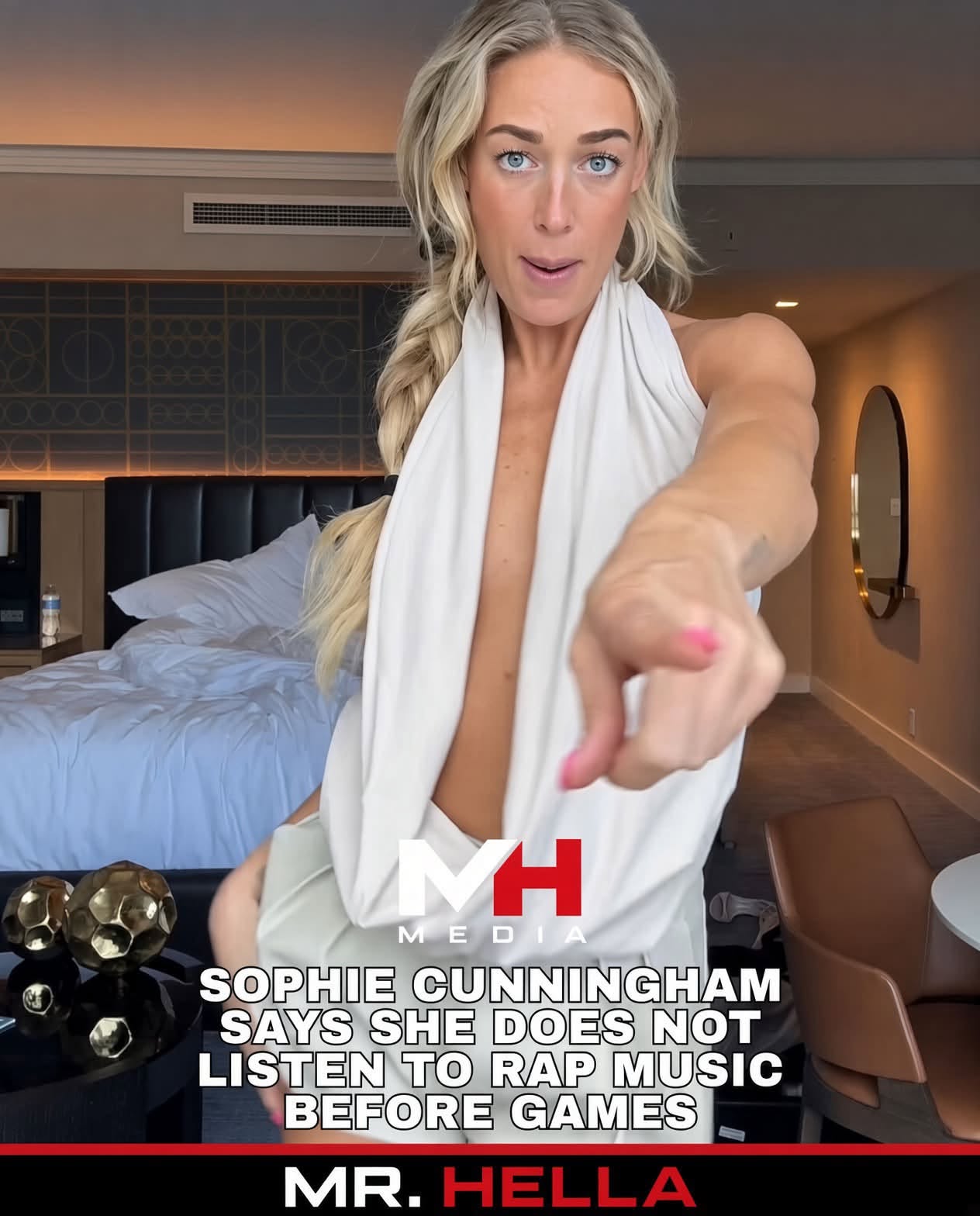
Indiana Fever guard Sophie Cunningham sparked another viral conversation online after revealing that her pregame music tastes don't necessarily match what some fans expect from a professional basketball player.
Cunningham posted a TikTok around the Indiana Fever's August 25 matchup against the Chicago Sky joking about the assumption that she listens to rap music before games. In the video, Cunningham played along with the stereotype before revealing that her actual preference is country music.
The lighthearted post quickly spread beyond her regular audience, generating debate among basketball fans over everything from music preferences to the assumptions people make about athletes based on the sports they play.
Cunningham's message was straightforward: just because she plays professional basketball doesn't mean hip-hop is automatically her soundtrack.
According to Yahoo Sports, Cunningham's TikTok poked fun at the idea that people expect basketball players to listen primarily to rap before games. Instead, she made it clear that country music is more her style. ([sports.yahoo.com](https://sports.yahoo.com/wnba/article/sophie-cunningham-sparks-debate-after-revealing-preference-for-country-music-over-rap-191531773.html?utm_source=chatgpt.com))
Cunningham Was Having Fun With a Basketball Stereotype
The humor of the TikTok depended on an expectation that has become deeply embedded in basketball culture.
Hip-hop and basketball have been closely connected for decades. NBA and WNBA players frequently appear in rap lyrics and music videos, rappers sit courtside at games, players release music themselves, and hip-hop dominates many arena playlists and pregame warmups.
That relationship can make it easy to assume that the players themselves are all listening to the same music.
Cunningham used the TikTok format to play with that assumption.
Rather than making a serious argument against rap music, the video presented her preference for country as the punchline. The joke was essentially that viewers might imagine a basketball player getting ready for competition with aggressive hip-hop playing through her headphones when Cunningham's actual playlist sounds considerably different.
The post quickly generated reactions from fans who either related to her preference or debated the broader idea behind it. ([sports.yahoo.com](https://sports.yahoo.com/wnba/article/sophie-cunningham-sparks-debate-after-revealing-preference-for-country-music-over-rap-191531773.html?utm_source=chatgpt.com))
There is no indication Cunningham was criticizing rap as a genre. Her post was about what she personally prefers to listen to.
That distinction matters because social-media discussions can easily turn a simple music preference into a broader cultural argument that the original post never actually made.
Country Music Fits Cunningham's Background
Cunningham's preference isn't particularly surprising for people who have followed her outside basketball.
She was born and raised in Missouri, played college basketball at the University of Missouri and has frequently embraced a public image that overlaps naturally with country and Western culture.
Her social-media presence often mixes basketball with fashion, humor and pieces of her life away from the court. Country music therefore isn't a sudden interest introduced for the sake of one TikTok.
It is simply a part of Cunningham's personality that some viewers may not have associated with her because of basketball's strong connection to hip-hop.
That contrast helped the video work.
Cunningham understood the expectation and flipped it.
She Has Become One of the WNBA’s Most Visible Personalities
The music discussion also illustrates how much Cunningham's profile has grown since joining the Indiana Fever.
Cunningham arrived in Indiana as part of a February 2025 trade after spending the first six seasons of her WNBA career with the Phoenix Mercury. She quickly became a recognizable part of a Fever roster receiving enormous national attention around Caitlin Clark and the franchise's growing fan base. ([wnba.com](https://www.wnba.com/player/1629498/sophie-cunningham?utm_source=chatgpt.com))
Her visibility expanded beyond her play on the court.
Cunningham developed a large social-media following, appeared regularly in viral clips and became known for an outspoken personality that translated particularly well to TikTok, Instagram and podcasting.
That means even a simple post about what she listens to can quickly become a sports-media story.
The country-versus-rap discussion probably would have remained a minor personal preference coming from many players.
Coming from Cunningham, it became content.
Cunningham Was Already Out for the Season
The timing of the TikTok requires some context.
Although Cunningham posted it around Indiana's matchup with Chicago, she was not preparing to take the floor against the Sky.
The Fever announced earlier in August that Cunningham would miss the remainder of the 2026 season after suffering a right-knee injury. ([wnba.com](https://www.wnba.com/news/sophie-cunningham-injury-update-2026?utm_source=chatgpt.com))
That makes descriptions of the video as Cunningham literally revealing what she was listening to immediately before playing Chicago somewhat misleading.
Instead, she was using the familiar concept of a basketball player's pregame playlist as the setup for the joke.
Her season had already been interrupted by injury, but Cunningham remained active around the Fever and continued interacting with fans through social media.
The TikTok became another example of her maintaining a public presence even while unable to contribute on the court.
Hip-Hop and Basketball Have Been Connected for Decades
The assumption Cunningham was joking about didn't appear from nowhere.
Basketball and hip-hop developed alongside one another as major parts of American youth culture, particularly beginning in the 1980s and accelerating dramatically through the 1990s and 2000s.
Rappers referenced basketball stars.
Basketball players adopted hip-hop fashion.
Allen Iverson became one of the clearest symbols of that cultural crossover during his NBA career, while subsequent generations of players increasingly entered the league having grown up with hip-hop as the dominant popular music of their youth.
The relationship eventually became institutional.
Hip-hop artists perform during All-Star events, appear in league promotions and maintain close relationships with players. Drake became a global ambassador for the Toronto Raptors. J. Cole played professional basketball. Damian Lillard built a legitimate parallel rap career under the name Dame D.O.L.L.A.
The WNBA exists inside that same cultural ecosystem.
Players frequently share rap-heavy playlists and have friendships and relationships throughout the music industry. Megan Thee Stallion, Lil Wayne and other artists have publicly supported WNBA players and teams.
Against that backdrop, Cunningham's country preference becomes funny precisely because it runs against an expectation that feels automatic to some fans.
Country Music Has Its Own Growing Relationship With Sports
At the same time, country music has become increasingly visible across professional sports.
NFL stadiums have long incorporated country into game-day culture, particularly in Southern and Midwestern markets, while country stars routinely perform national anthems and halftime shows at major sporting events.
The genre's commercial audience has also expanded considerably in recent years.
Artists including Morgan Wallen, Luke Combs, Zach Bryan, Jelly Roll and Lainey Wilson have helped country music occupy an increasingly large share of mainstream streaming and touring culture.
That means Cunningham isn't exactly choosing an obscure alternative to hip-hop.
She's choosing one of the largest genres in American music.
The difference is that country isn't typically the genre most closely associated with basketball.
And Cunningham clearly understood that when she made the video.
The Reactions Became Bigger Than the Original Joke
As frequently happens online, the conversation surrounding Cunningham's TikTok quickly became more complicated than the post itself.
Some viewers treated the country preference as funny and unsurprising.
Others debated whether the assumption that basketball players listen to rap was accurate in the first place.
Still others simply argued about which genre was better.
None of those debates require Cunningham to have made a broader statement.
She didn't announce that basketball players shouldn't listen to hip-hop. She didn't claim country music was objectively superior. And she didn't present the video as a serious criticism of rap culture.
She shared her own preference and made a joke about people expecting something different.
The internet supplied the rest.
Cunningham Has Learned How to Turn Small Moments Into Viral Content
The episode also demonstrates why Cunningham has become such an effective social-media personality.
Her biggest posts don't always require elaborate production.
Often, she identifies something fans already associate with her or with basketball culture and turns it into a short joke that can be understood almost instantly.
That style is particularly effective on TikTok.
Viewers don't need extensive context. They understand the setup within seconds: professional basketball player, expected rap playlist, unexpected country music.
The simplicity makes the clip easy to repost, debate and remix.
And because Cunningham already has a recognizable personality online, viewers are primed to react.
Her social-media presence has become a meaningful part of her profile as an athlete, particularly during a period when injury has kept her away from competition.
For Cunningham, It Was Just Her Playlist
The viral discussion ultimately came from a very simple revelation.
Sophie Cunningham likes country music.
The Indiana Fever guard understands that basketball's connection with hip-hop leads some people to expect something different, and she decided to turn that expectation into a TikTok joke.
The timing around Indiana's matchup against Chicago gave the post a basketball backdrop, even though Cunningham's knee injury meant she wasn't actually suiting up for the game.
From there, social media did what social media does.
A personal music preference became a debate.
Fans picked sides.
The video spread.
And Cunningham once again found herself at the center of a viral conversation without needing to play a single minute of basketball.
For all the discussion about country versus rap, her original point remained much simpler:
When Sophie Cunningham wants music, don't automatically assume she's turning on hip-hop.

Comments