

MR. HELLA MEDIA | UPDATES | NOVEMBER 3, 2026
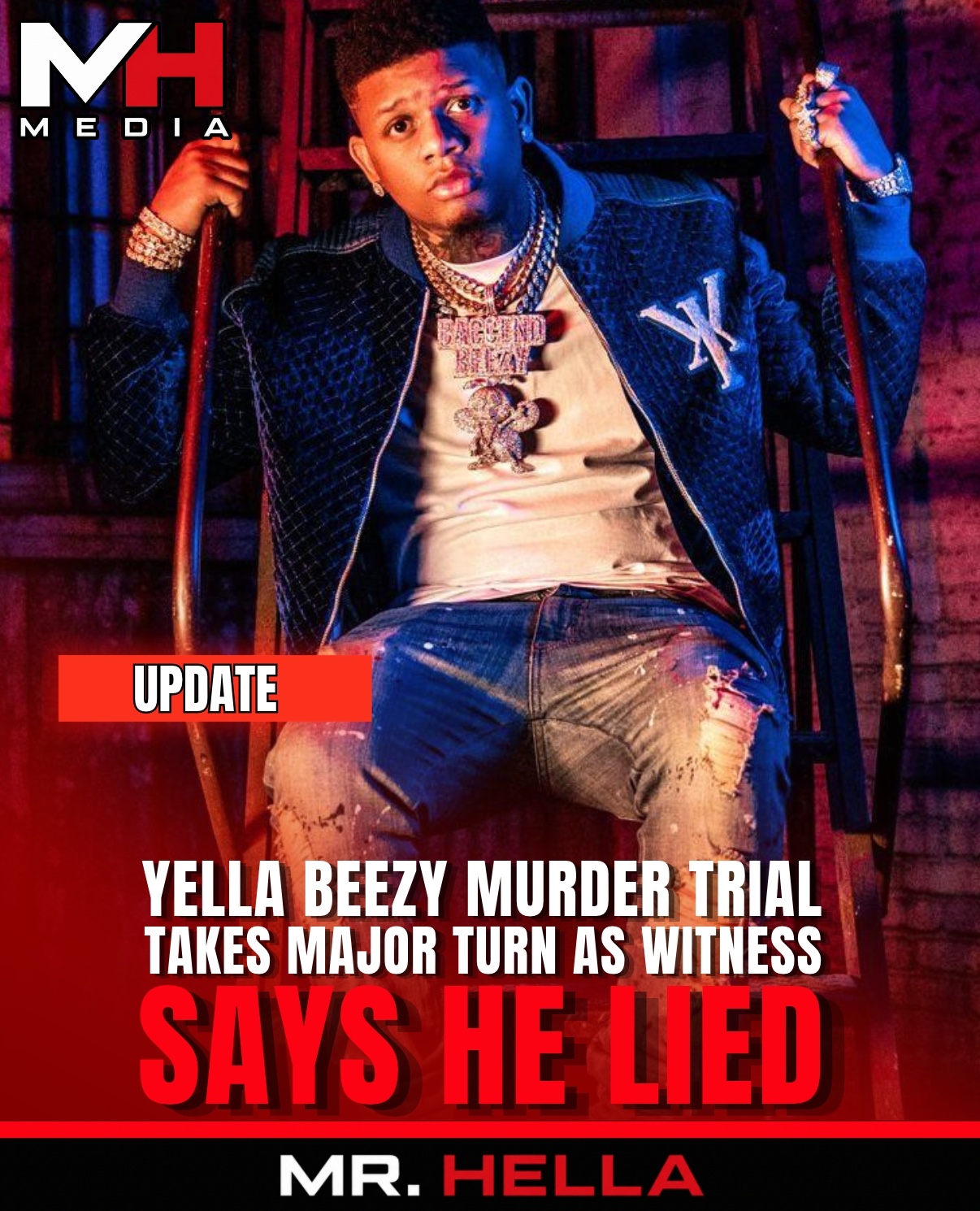
Yella Beezy Murder Trial Takes Major Turn as Key Witness Admits He Lied About Alleged $40,000 Payment to Kill MO3
By Mr. Hella Media
The capital murder trial of Dallas rapper Yella Beezy took a dramatic turn Monday, November 2, when a key prosecution witness testified that he fabricated earlier statements connecting the rapper to an alleged $40,000 payment for the 2020 killing of fellow Dallas artist MO3.
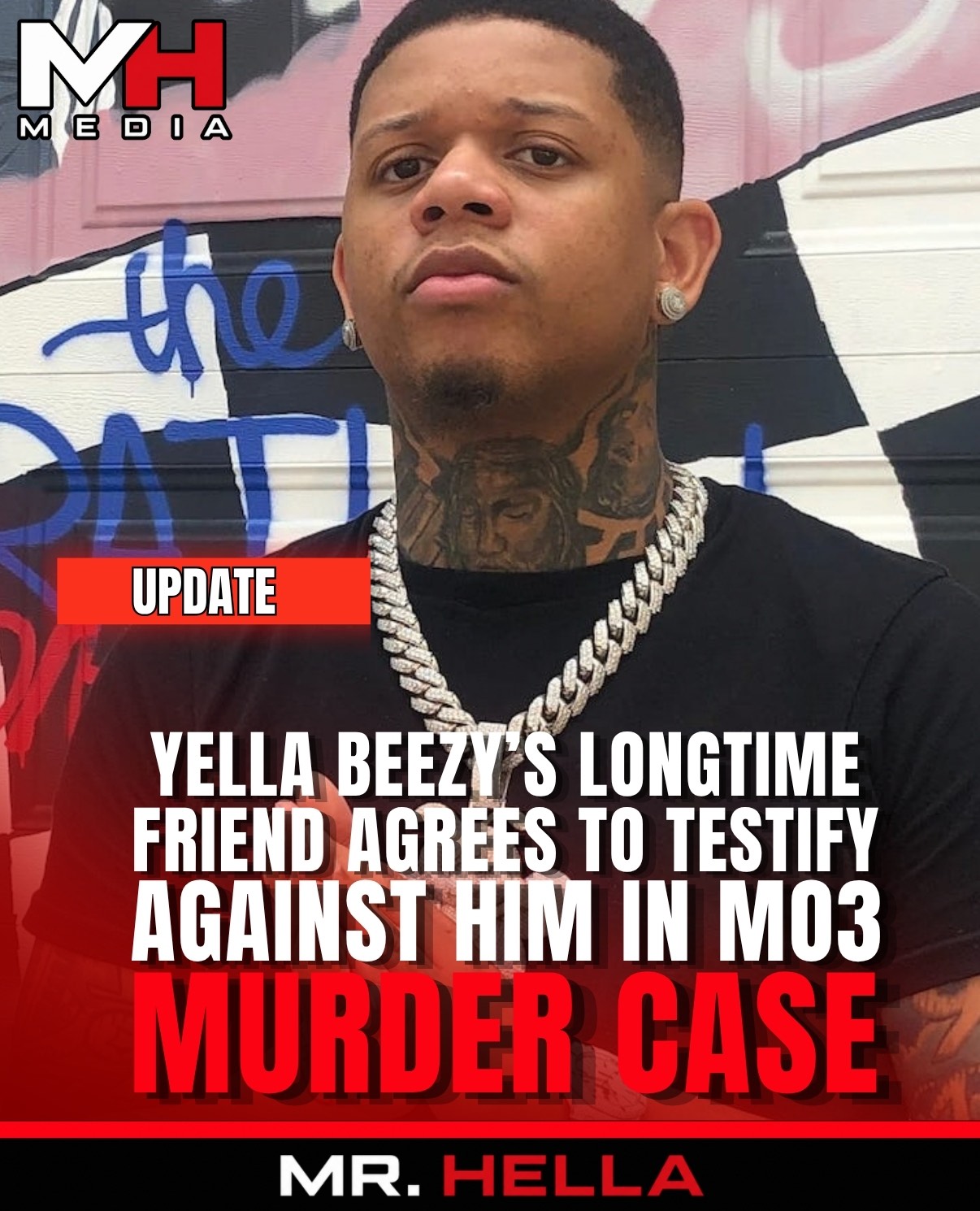
Theodore Thomas, a rapper known professionally as Jose Bodega and a longtime friend of Yella Beezy, told jurors that his previous testimony before a Dallas County grand jury was false. Those earlier statements had helped prosecutors build their case against Yella Beezy, whose legal name is Markies Conway, for allegedly arranging MO3’s murder.
Thomas’s reversal came after he repeatedly invoked his Fifth Amendment right against self-incrimination during court proceedings last week. On Monday, after receiving immunity for his testimony, he returned to the witness stand and directly challenged the account he had previously given investigators.
“I made it up,” Thomas told the court when questioned about his earlier statements concerning an alleged feud between Yella Beezy and MO3.
The testimony immediately created a significant dispute over witness credibility. Defense attorneys argued that Thomas had fabricated accusations while facing pressure from federal authorities, while prosecutors suggested his sudden reversal was motivated by his longstanding loyalty to Yella Beezy.
The development does not mean the murder charge has been dismissed or that Conway has been cleared. However, it introduces a substantial credibility issue involving a witness whose earlier statements were central to the prosecution’s alleged murder-for-hire narrative. FOX 4 Dallas-Fort Worth +2
Witness Says He Lied About Yella Beezy’s Alleged Role in MO3’s Killing
Thomas’s testimony centered on statements he made before a Dallas County grand jury in February 2025.
According to courtroom reporting from FOX 4 Dallas-Fort Worth and XXL, Thomas had previously claimed that Yella Beezy and fellow Dallas rapper Trapboy Freddy wanted MO3 dead.
He also described an alleged financial arrangement involving Kewon White, the man subsequently convicted of shooting MO3, and a reported $40,000 payment for the killing.
During Monday’s proceedings, prosecutor Tommy Adams questioned Thomas about those earlier statements, including his previous claim that money for the shooting originated from Yella Beezy and Trapboy Freddy.
Thomas rejected the allegation.
“That was a lie,” he testified.
As prosecutors continued reviewing his previous grand jury statements, Thomas expressed frustration with being asked to repeat allegations he now insisted were fabricated.
“I told you I lied already, so asking me questions from a paper, it’s like you making me re-lie,” Thomas said, according to courtroom reporting cited by XXL.
The reversal is particularly important because prosecutors have alleged that MO3’s killing was not simply an isolated act of violence but the result of a murder-for-hire arrangement involving a longstanding dispute between Dallas rappers.
Thomas’s testimony directly challenges part of that theory.
However, his new account is itself being contested. Jurors must evaluate whether his original statements were false, whether his current testimony is unreliable or whether other evidence supports the prosecution’s allegations independently of his testimony. FOX 4 Dallas-Fort Worth +1
Defense Claims Witness Was Pressured Into Making False Statements
During cross-examination, Yella Beezy’s defense attorney, Toby Shook, focused on the circumstances surrounding Thomas’s original statements to investigators.
The defense argued that Thomas was facing serious federal legal problems when he began cooperating with authorities and had a powerful incentive to provide information investigators wanted to hear.
According to testimony reported by FOX 4, Thomas had spent approximately 18 months in federal custody and was facing significant prison time on drug and firearm allegations. He also testified that authorities had raised the possibility of additional charges under federal racketeering and violent-crime statutes, potentially exposing him to a life sentence.
Shook questioned whether that pressure had influenced Thomas’s decision to accuse Yella Beezy of involvement in MO3’s death.
Thomas agreed that he had been threatened with more serious federal charges and acknowledged making statements he now describes as false.
The defense also highlighted Thomas’s admission into the federal STEPS diversion program, which ultimately allowed him to leave custody and have his federal indictment dismissed after completing the program.
Shook suggested that Thomas had fabricated his account to secure a more favorable outcome in his own legal case.
Thomas maintained that his purpose in speaking with federal authorities was to establish that he was not involved in MO3’s killing.
The testimony gave the defense an opportunity to argue that one of the prosecution’s most important witnesses had previously made accusations while under extraordinary legal pressure.
However, Thomas’s explanation remains his own account of what happened. His assertion that he lied does not independently establish that investigators improperly coerced him or that his current version of events is accurate.
Prosecutors Suggest Witness Changed His Story to Protect Yella Beezy
Prosecutors offered a sharply different interpretation of Thomas’s reversal.
Rather than accepting his explanation that he had fabricated the accusations under pressure, prosecutor Tommy Adams questioned whether Thomas was now attempting to protect a longtime friend.
During Monday’s proceedings, the state introduced photographs documenting the relationship between Thomas and Conway, including images of the two together during their high school years, at family gatherings and while traveling on a private jet.
The photographs were intended to demonstrate that their relationship extended well beyond a casual association.
Adams also questioned why Thomas had maintained his earlier statements for an extended period, including after his federal legal situation had improved.
According to FOX 4’s courtroom reporting, prosecutors challenged the timing of his decision to withdraw his previous allegations, suggesting that his change of position could be influenced by loyalty rather than a desire to correct false testimony.
The state also questioned Thomas about statements made during paid interviews with online personalities, highlighting potential inconsistencies between his public comments and sworn testimony.
Thomas responded that those interviews had not been conducted under oath.
The exchange left jurors with competing explanations for the same witness’s contradictory accounts.
The defense wants the jury to believe Thomas’s earlier accusations were fabricated to obtain favorable treatment from federal authorities. Prosecutors want jurors to consider whether he is now denying those accusations to protect Conway.
Neither explanation has been established as fact.
Judge Issues Important Warning About Earlier Grand Jury Testimony
One of the most consequential moments of Monday’s proceedings came when Judge Chika Anyiam instructed jurors on how they could evaluate Thomas’s earlier statements.
The judge explained that jurors could consider inconsistencies between his previous testimony and his current statements when deciding whether he was a credible witness.
However, she specifically warned that his earlier grand jury testimony could not be treated as substantive evidence establishing Conway’s guilt.
That distinction matters because Thomas’s original statements included allegations directly connecting Yella Beezy to the supposed murder payment.
The judge also permitted prosecutors to question Thomas as a hostile witness after he contradicted his earlier account.
In practical terms, the ruling means jurors can examine whether Thomas has been truthful, but they cannot simply rely on his earlier grand jury accusations as proof that Yella Beezy arranged MO3’s killing.
The prosecution must still establish its case through admissible evidence.
The instruction could become particularly significant during jury deliberations because Thomas’s credibility is now being challenged by both sides for different reasons.
Witness Denies Seeing Kewon White Receive Money
Thomas also disputed details concerning Kewon White, the man convicted of carrying out MO3’s killing.
According to XXL’s courtroom coverage, Thomas testified that he never personally witnessed White receiving payment for the murder.
He also denied having advance knowledge that MO3 would be killed on November 11, 2020.
Thomas described White as unpredictable and aggressive, suggesting that the convicted gunman was motivated by a desire for street recognition rather than simply following instructions from people associated with Yella Beezy.
That characterization is Thomas’s testimony, not an established finding about White’s motive.
The defense may use those statements to challenge the prosecution’s argument that White acted as part of a coordinated murder-for-hire arrangement.
However, White’s conviction remains in place.
In September 2026, a Dallas County jury convicted White of capital murder in connection with MO3’s death and sentenced him to life in prison.
Thomas’s reversal in Conway’s trial does not overturn that verdict.
A third defendant, Devin Brown, also faces a capital murder charge related to the case. His guilt has not been established.
What Happened to MO3 in November 2020?
MO3, whose legal name was Melvin Noble, was killed on November 11, 2020, in a shooting on Interstate 35 in Dallas.
The 28-year-old rapper was driving on the highway when an armed man approached his vehicle.
Video evidence presented during the criminal proceedings showed the attacker pursuing MO3 after the rapper left his vehicle and attempted to escape.
MO3 was shot multiple times and died from his injuries.
The killing shocked the Dallas hip-hop community, where MO3 had developed a significant following through emotionally charged street records and collaborations with artists including Boosie Badazz.
His music had attracted national attention, and his death became one of the city’s most widely discussed hip-hop tragedies.
Investigators eventually identified Kewon White as the gunman.
Prosecutors subsequently developed a theory that the shooting had been arranged by Yella Beezy following an alleged dispute between the two Dallas rappers.
Conway was charged with capital murder in 2025.
He has consistently denied arranging the killing and has pleaded not guilty.
The ongoing trial is intended to determine whether prosecutors can prove his alleged involvement beyond a reasonable doubt.
Financial Records, Jewelry Purchases and Travel Evidence Also Presented Monday
Although Thomas’s testimony dominated attention, prosecutors presented additional evidence during Monday’s proceedings.
Karim Ali, the owner of Manhattan Jewelers in Arlington, testified about jewelry purchases associated with Conway and individuals connected to the investigation.
According to FOX 4, prosecutors introduced records involving approximately $76,000 in custom jewelry orders, including pieces associated with the Get Rich Cartel name.
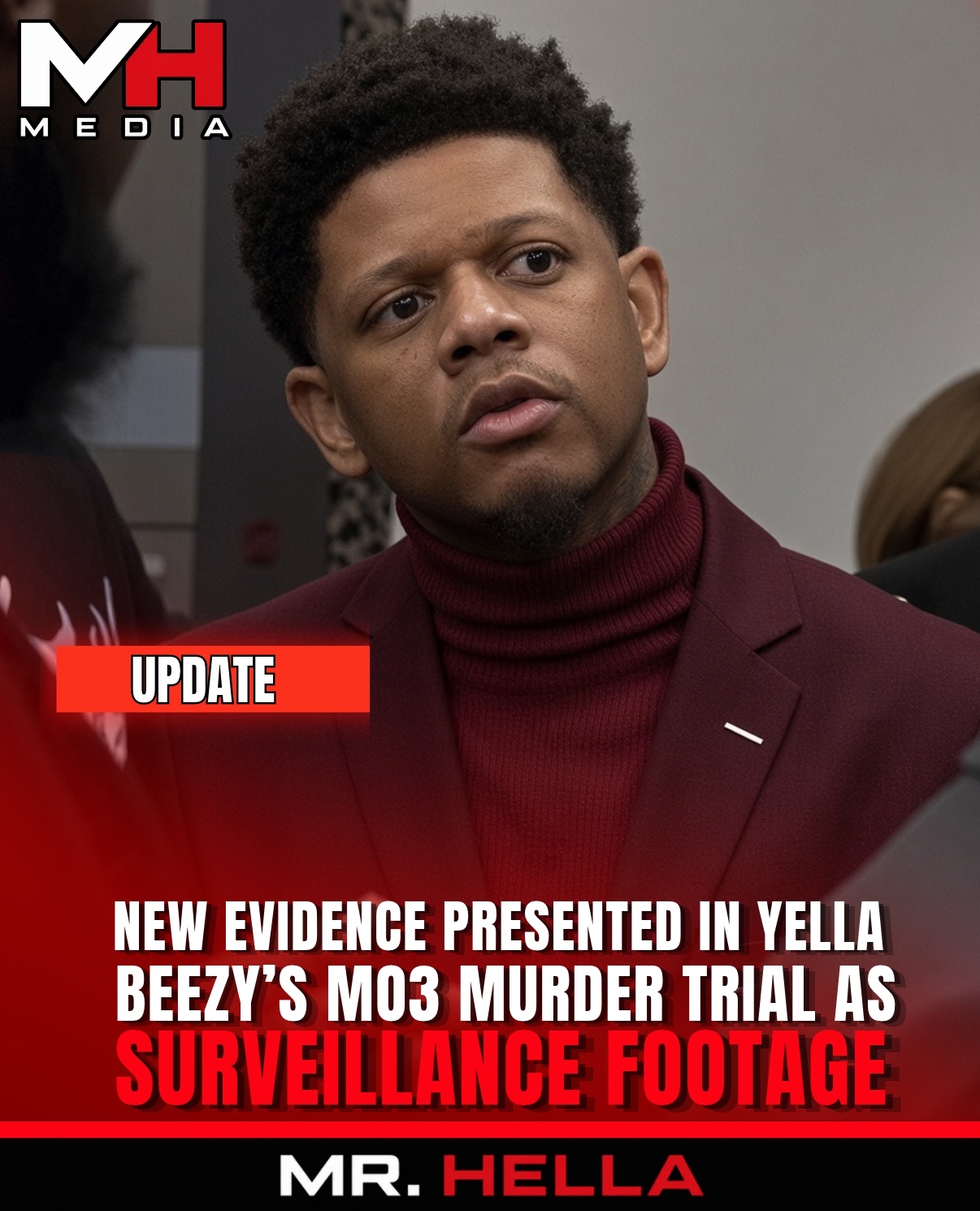
The court also reviewed surveillance footage and records involving cash purchases by White in November 2020.
Prosecutors examined those transactions as part of their broader effort to establish financial connections among individuals involved in the case.
The defense challenged the significance of the transactions, emphasizing that substantial cash purchases were not unusual among customers working in the entertainment industry.
An American Airlines investigator also testified about travel records involving Conway, Thomas and another associate around the time of MO3’s killing.
The records showed Conway and Thomas traveling from Dallas to Los Angeles on November 10, 2020, one day before the shooting.
Prosecutors questioned the timing and circumstances of the travel arrangements.
Defense attorneys responded by introducing evidence that Conway regularly booked flights on short notice, arguing that the travel patterns were consistent with his professional lifestyle.
The jury also heard testimony concerning the circumstances of arrests made during the investigation.
These additional pieces of evidence remain part of the prosecution’s case, regardless of Thomas’s reversal.
Earlier Testimony Raised Questions About the Murder Weapon
Last week’s proceedings also included testimony from a firearms examiner with the Texas Department of Public Safety.
The examiner testified that 44 cartridge cases recovered from the shooting scene had been fired from the same unidentified weapon.
However, none of the firearms submitted for comparison matched those cartridge cases.
That testimony gave the defense another issue to explore when challenging the physical evidence.
It does not establish that Conway was uninvolved, nor does it negate White’s conviction. It does, however, illustrate the importance of distinguishing evidence directly linking a defendant to a crime from evidence that establishes other aspects of the investigation.
Prosecutors have also introduced surveillance footage, witness accounts, cellphone evidence and financial records as they attempt to establish their broader theory of the killing.
The case will ultimately depend on how jurors assess the complete body of admissible evidence, rather than any single witness or disputed transaction.
Why the Witness’s Reversal Could Be Significant
The importance of Thomas’s testimony extends beyond the fact that a witness changed his story.
His original statements reportedly connected several central elements of the prosecution’s case: an alleged feud between Yella Beezy and MO3, a financial arrangement involving the gunman and the claim that Conway helped fund the killing.
By rejecting those statements under oath, Thomas has created a substantial credibility dispute concerning an account that prosecutors previously considered important.
For the defense, his testimony provides an opportunity to argue that investigators relied on information from a witness facing powerful incentives to cooperate.
For prosecutors, the challenge is to demonstrate that Thomas’s latest account is unreliable while continuing to establish the allegations through other admissible evidence.
The judge’s instruction adds another layer of complexity because jurors have been told that Thomas’s previous grand jury statements cannot themselves establish Conway’s guilt.
However, a witness recanting earlier testimony does not automatically result in an acquittal.
Jurors may consider other testimony, financial records, communications and physical evidence when evaluating the prosecution’s case.
The significance of Monday’s development will become clearer as the remaining witnesses testify and both sides present their closing arguments.
What Happens Next in Yella Beezy’s Murder Trial?
The trial is scheduled to continue Tuesday, November 3, in Dallas.
Both the prosecution and defense are expected to continue addressing the evidence surrounding the alleged murder-for-hire arrangement.
The prosecution must prove that Conway participated in the capital murder offense as charged. The defense is attempting to establish reasonable doubt concerning his alleged role.
Thomas’s testimony will likely remain an important issue because of the direct conflict between his original grand jury statements and his new account.
The trial has already featured surveillance footage, forensic analysis, financial records, travel documentation and testimony from people connected to the investigation.
A verdict has not been reached, and Conway remains presumed innocent.
The latest development does not resolve who allegedly arranged MO3’s killing, but it raises serious questions about the reliability of a witness whose previous statements helped shape the case.
For Yella Beezy, Monday’s testimony represents a potentially significant development in his defense. For prosecutors, it creates a new challenge: convincing jurors of their murder-for-hire allegations after a key witness publicly disowned his earlier accusations.
Comments