

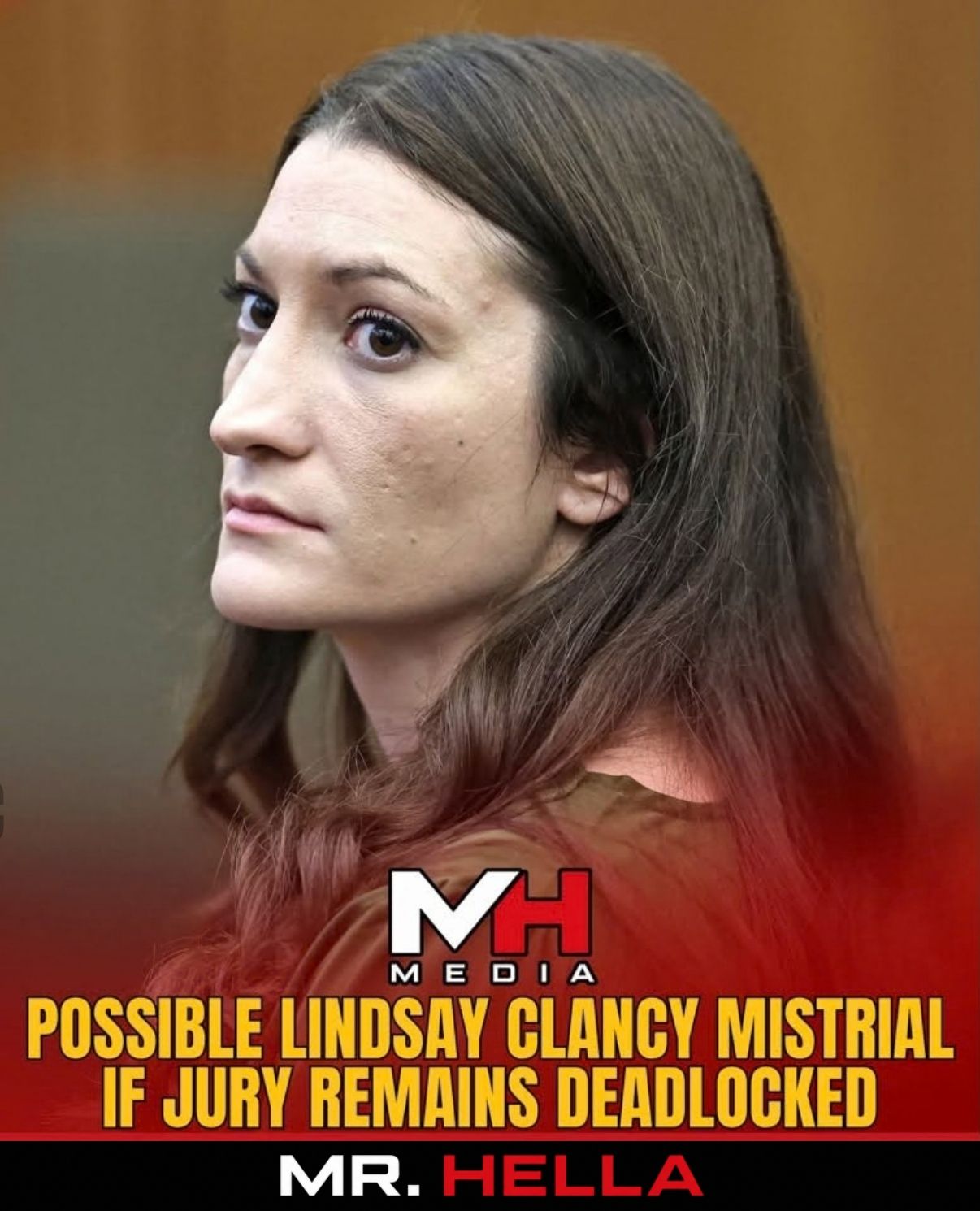
The murder trial of Lindsay Clancy is facing the possibility of a mistrial after jurors told the judge they have been unable to reach a unanimous decision following four days and approximately 23 hours of deliberations.
The 12-person jury delivered the message Tuesday, Sept. 1, in the first clear indication that deliberations in the closely watched Massachusetts case had reached an impasse.
“After many hours of deliberation, we are unable to come to a unanimous decision,” the jury wrote in a note presented to Plymouth Superior Court Judge William F. Sullivan.
Sullivan, however, declined to immediately declare a mistrial.
Instead, he acknowledged the length and complexity of the case before instructing the nine women and three men on the jury to return to the deliberation room and continue trying to reach an agreement.
“I’m going to ask you to go back out,” Sullivan told the panel.
Four Days Without a Verdict
Jurors began deliberating Friday and had spent approximately 23 hours considering the case by the time they were dismissed Tuesday afternoon.
They are expected to return Wednesday morning and continue deliberations.
The deadlock raises the possibility that the case could end with a hung jury if the panel ultimately determines it cannot unanimously agree on a verdict. But as of Tuesday afternoon, Sullivan had not reached that point and the trial remained unresolved.
Clancy, a former labor and delivery nurse, is charged in connection with the January 2023 deaths of her three children, Cora, 5, Dawson, 3, and Callan, 8 months, at the family's home in Duxbury, Massachusetts.
The central question facing jurors is not whether Clancy caused the children's deaths. Her defense acknowledges that she did.
Instead, the trial has centered on whether she should be held criminally responsible for her actions.
Clancy has pleaded not guilty by reason of lack of criminal responsibility, with her attorneys arguing that severe postpartum mental illness left her unable to appreciate the wrongfulness of her actions or conform her conduct to the law.
Prosecutors have challenged that defense, arguing that the evidence shows Clancy understood what she was doing.
Jurors Face Competing Accounts of Clancy’s Mental State
The jury's difficulty reaching a decision follows more than four weeks of testimony in a trial dominated by conflicting accounts of Clancy's psychiatric condition.
Jurors heard from approximately 80 witnesses and were presented with hundreds of exhibits as prosecutors and defense attorneys offered sharply different interpretations of her mental state surrounding the children's deaths.
The defense has focused heavily on postpartum psychosis and Clancy's deteriorating mental health, while prosecutors have argued that her actions showed planning and an awareness of right and wrong.
Those competing arguments have left jurors with several possible outcomes.
They could find Clancy guilty of murder or a lesser offense, or they could find her not guilty by reason of lack of criminal responsibility. Any verdict must be unanimous.
If the jury remains unable to reach that unanimity despite further deliberations, Sullivan could eventually determine that the panel is hopelessly deadlocked and declare a mistrial.
That possibility became significantly more immediate Tuesday when the jurors themselves informed the court that they could not agree.
For now, however, no mistrial has been declared and no verdict has been reached.
The jury is scheduled to return Wednesday morning, leaving one of Massachusetts' most closely watched criminal trials hanging on whether 12 jurors can overcome their differences and reach a unanimous decision.



Comments